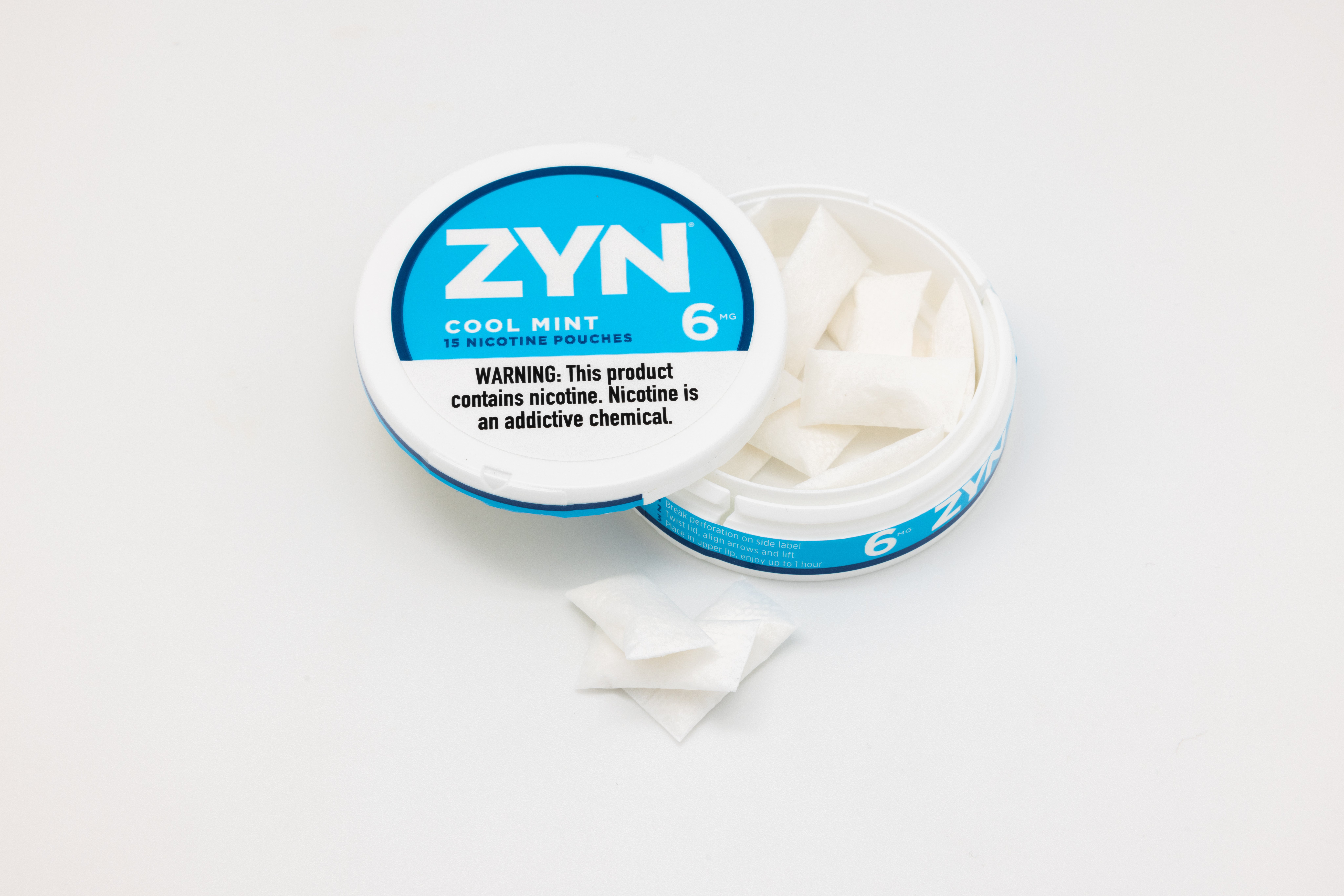

WASHINGTON — Seven weeks after the Trump administration pushed out the food and drug commissioner who would not sign off on fruit-flavored vapes, the agency he left behind delivered the decision he had spent months resisting. On Tuesday the Food and Drug Administration told Swedish Match USA that its Zyn nicotine pouches, all 20 of them, can now say on the can that switching from cigarettes lowers a smoker’s risk of mouth cancer, heart disease, lung cancer, stroke, emphysema and chronic bronchitis.
It is the first time a nicotine pouch has cleared that bar. The exact language the agency approved reads: “Using ZYN instead of cigarettes puts you at a lower risk of mouth cancer, heart disease, lung cancer, stroke, emphysema, and chronic bronchitis.” Bret Koplow, the acting director of the FDA’s Center for Tobacco Products, framed the order as a public health tool rather than a marketing favor, saying it allows the products “to be marketed with a modified risk claim that informs adults who smoke about the lower risks.” The ten flavors covered, Chill, Cinnamon, Citrus, Coffee, Cool Mint, Menthol, Peppermint, Smooth, Spearmint and Wintergreen, were already for sale under a separate 2025 authorization; what changed Tuesday is that Philip Morris International, which owns Swedish Match, can now put that specific health claim in advertising and on packaging for five years, subject to renewal.
Why this particular Tuesday matters is less about the pouches than about who signed off on them. Marty Makary resigned as FDA commissioner on May 12 after weeks of pressure from the White House over a separate but related fight: two fruit-flavored e-cigarettes the administration wanted approved and Makary, by his own account to associates, could not bring himself to authorize because of their appeal to teenagers. He was replaced on an acting basis by Kyle Diamantas, the agency’s deputy commissioner for food, who had previously served as a liaison between the FDA, the Department of Health and Human Services and the White House. The Zyn order is the first major tobacco-marketing decision to emerge from the agency since that reshuffle, and it grants the exact category of industry-friendly claim that had put Makary at odds with the administration in the first place.
Mike Seilback, who runs nationwide advocacy for the American Lung Association, does not accept the FDA’s framing. “It is appalling that the FDA would authorize flavors like citrus, cool mint and cinnamon as modified risk tobacco products, which attract kids,” he said, calling on the agency to reverse the order outright. His objection is not theoretical. The FDA’s own 2025 National Youth Tobacco Survey found that 1.7 percent of middle and high school students had used a nicotine pouch, more than one in six of them daily, and Zyn was the single most popular brand among them.
The scientific case is not as tidy as the can’s new label suggests. Dr. Pamela Ling, who studies tobacco at the University of California, San Francisco, points out that some Zyn pouches carry up to 6 milligrams of nicotine, well above the 2 to 4 milligrams in FDA-approved Nicorette gum, and that repeated exposure at that level trains the brain to grow more nicotine receptors over time. “Nicotine addiction is not trivial,” she said. Dr. Adam Goldstein at the University of North Carolina raises a narrower but arguably more damaging problem for the FDA’s rationale: the modified-risk claim assumes smokers switch entirely to pouches, and in practice they mostly do not. “You have to have complete switching, and that’s something that we haven’t seen,” he said, describing a pattern in which people use Zyn alongside cigarettes rather than instead of them, which would blunt or erase the health benefit the label now advertises.

The FDA has not ignored that risk on paper. The order carries a five-year term, requires Swedish Match to run postmarket surveillance and behavioral studies tracking how people actually use the product, and reserves the agency’s authority to pull the claim if youth uptake keeps climbing or if the promised population-level health benefit fails to materialize. What the order does not do is explain how an agency now run on an acting basis, weeks after losing a commissioner over almost this exact dispute, will have the institutional will to enforce that reversal clause if the data turns against the company.
Markets read the decision as a win regardless of the caveats attached to it. Philip Morris shares dipped slightly the day the order was announced, but Goldman Sachs analysts described the move as a positive catalyst likely to accelerate adoption of the brand, projecting Zyn’s gross profit margins at roughly eight times those of the company’s cigarette business. Eastern Herald has documented elsewhere how tobacco regulation can produce outcomes regulators did not intend, and this is a mirror image of that problem: a claim designed to nudge adult smokers toward a lower-risk product, authorized by an agency that just lost a fight over the same category of risk to teenagers.
The order lands against a broader pattern at the agency this year. Eastern Herald has previously reported on how the FDA blocked publication of vaccine-safety research that reached conclusions officials found politically inconvenient, a decision critics said prioritized narrative control over transparency. The Zyn order runs in the opposite direction, granting a claim the industry wanted rather than suppressing one it did not, but the underlying question is the same: whether the agency’s scientific judgment is being shaped by who is asking. What is not yet known is whether Swedish Match’s postmarket studies, due over the coming years, will show the complete switching Goldstein says has never actually been observed, or whether Zyn’s newly authorized promise of a longer life will turn out to depend on a pattern of use the company’s own product all but guarantees will not happen.