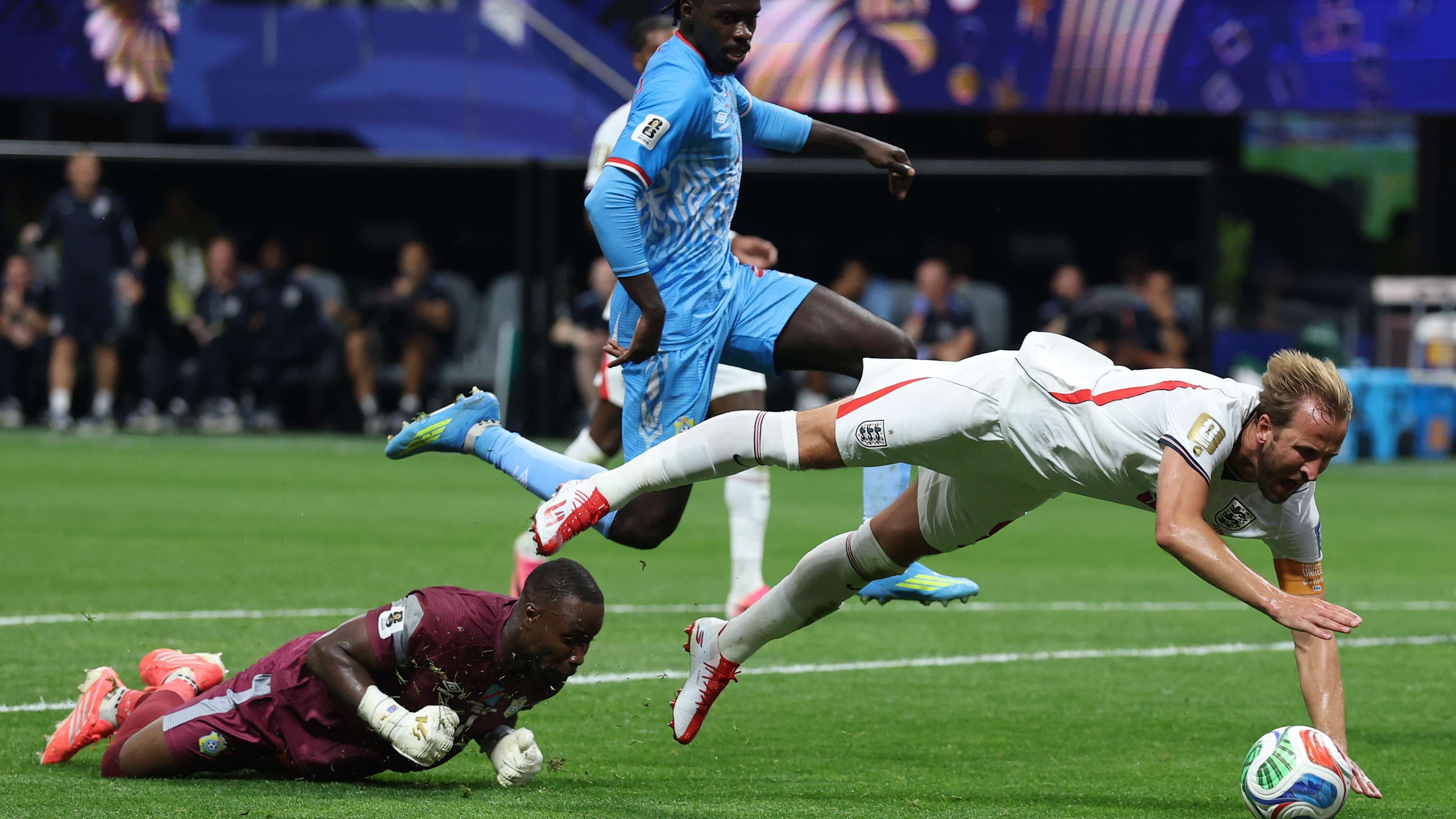

ATLANTA — For eighty-four minutes, Thomas Tuchel’s players wore the look of a team about to become a punchline. Then Harry Kane, twice, made sure they didn’t.
England needed two second-half goals from its captain to beat DR Congo 2-1 in the World Cup’s round of 32 at Mercedes-Benz Stadium on Wednesday, a result ESPN’s match report described as one that flattered a favored side outplayed for long stretches by a team appearing in its first-ever World Cup knockout match. Brian Cipenga’s low finish in the seventh minute, arriving after England’s back line failed to track a run to the far post, put the Congolese ahead of a nation many had installed among the tournament’s dark-horse contenders.
The stakes were not subtle. A defeat would have ended England’s tournament at the first knockout hurdle for the first time since a chastening exit to Iceland a decade ago, and it would have done so against opposition ranked outside the world’s top 60 that had never before advanced from a World Cup group. Instead, England moves on to face co-host Mexico in the round of 16 in Mexico City, in a stadium and in front of a crowd built to intimidate, against a team that has yet to lose on home soil at this tournament.
Kane’s route back into the match began with Anthony Gordon, introduced only at halftime, drifting to the left flank and lofting a cross that Kane met with a header angled inside the far post in the 75th minute. Eleven minutes later, with normal time nearly gone and DR Congo’s back line sagging, Kane took a pass with his back to goal near the penalty spot, turned inside a defender and drove a shot into the roof of the net, the goal that ultimately separated the sides.
Between those two moments, goalkeeper Lionel Mpasi did more to keep the match level than anyone in an England shirt did to break it down, throwing himself across his goal to deny efforts that in another match would have ended the contest by halftime. DR Congo had never before reached a World Cup’s knockout stage, and for most of an hour it looked capable of leaving with more than pride.
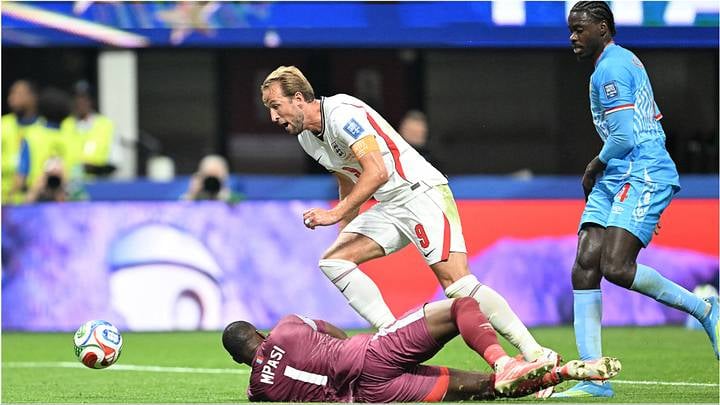
The match’s most argued-over moment, though, came before either Kane goal. In first-half stoppage time, Kane went down in the area under contact from Mpasi and the referee waved the appeal away; VAR reviewed the incident and let the on-field call stand, a sequence Sports Illustrated broke down in detail afterward, noting Kane’s toe caught the turf a stride before he reached the goalkeeper. Alan Shearer, working the match for BBC One, had no doubt watching the replay, saying flatly that there was contact and “for me that is a penalty.” Paul Robinson, on BBC Radio 5 Live, went further, calling the non-award “so wrong,” insisting it had nothing to do with patriotism. Wayne Rooney watched the same footage and reached the opposite conclusion, telling viewers, in comments Goal.com collected alongside the rest of the debate, that Kane “trips himself a bit and jumps into the goalkeeper” and that it probably wasn’t a penalty at all. Nobody connected to English football seemed to agree on what they had just watched, and the disagreement said as much about how differently the game reads contact in the box as it did about the incident itself.
The two late goals also moved Kane into rare company. His tally for the tournament now sits at 13 World Cup goals across three editions, one more than Pelé managed in three tournaments through 1970, and level with France’s Just Fontaine, who reached the same number in a single tournament, 1958, and has held a share of the mark for nearly seventy years. Kane still trails Miroslav Klose’s all-time record of 16, along with Ronaldo Nazário’s 15 and Gerd Müller’s 14, and he has yet to catch the totals being compiled in this same tournament by Kylian Mbappé and Lionel Messi. A counting record built across different eras and different numbers of tournament games measures something real, but not everything.
It is a mark of how differently this tournament had opened for England that the same manager now presiding over Kane’s rescue act had been publicly second-guessed a month earlier over the makeup of this same squad, when Kobbie Mainoo’s inclusion over Phil Foden and Cole Palmer divided opinion before a ball had been kicked.
Marcus Rashford, restored to the squad after a season defined as much by what went unsaid as by what he wore on his shirt, started this one on the bench and never saw the field, a reminder of how far Tuchel is still willing to lean on his most trusted options once a match tightens.
England’s path to this point survived a knockout bracket that FIFA had reshaped around the storylines produced by this year’s round of 32 field, and it now points toward the most partisan venue remaining in the tournament.
Whether an England defense that conceded first in a World Cup match for the first time since the 1966 final can hold up in Mexico City is a different question than whether Kane can keep scoring, and Wednesday supplied an answer to only one of them. Tuchel’s team leaves Atlanta through, not comfortable, with the harder question waiting in the loudest stadium the tournament has left.