
OXFORD — Children under five in sub-Saharan Africa account for the vast majority of the more than 600,000 people malaria kills each year, and the vaccines deployed to protect them stop only part of what the parasite can do. The one most widely used blunts the first stage of infection but cannot reach the parasite once it has moved into the bloodstream and begun multiplying inside red blood cells. On Tuesday, a research team from 24 institutions across four continents reported they had identified 166 proteins the human immune system can target on those infected cells, 75 of which the parasite cannot discard without dying.
The study, published in Nature on July 1, 2026, is the product of collaborative work led by researchers at the Instituto René Rachou in Brazil, the Jenner Institute at the University of Oxford, and the National Institute of Allergy and Infectious Diseases in Bethesda. Using a technique called immunopeptidomics to map every peptide fragment displayed on the surface of parasite-infected blood cells, the team screened 453 candidate peptides before narrowing to 166 proteins visible to the immune system during active infection.
Seventy-five of those proteins carry a property that distinguishes them from every prior malaria vaccine target. The authors describe them as housekeeping proteins: molecules the parasite cannot survive without, present at every stage of its lifecycle, regardless of which Plasmodium species is doing the infecting. Because the parasite’s metabolic machinery depends on them, they cannot be mutated away without killing the organism. That makes them, in principle, immune targets the parasite cannot evade, the category of target researchers have sought and rarely found in a pathogen that has evolved alongside human immunity for tens of thousands of years.
The most widely deployed malaria vaccine, RTS,S, sold as Mosquirix, and its follow-on, R21, both target a single protein on sporozoites, the form the parasite takes immediately after entering the bloodstream from a mosquito bite. Both reduce severe malaria in young children, which matters in a disease that kills at the scale malaria does. But neither reaches the blood stage of infection, where the parasite is multiplying and causing the most acute clinical damage. The WHO malaria fact sheet recorded an estimated 263 million clinical cases in 2023. The blood-stage proteins the new study catalogs have no existing vaccine against them.
The cross-species finding compounds the significance. Malaria vaccine research has concentrated on Plasmodium falciparum, the deadliest species and the dominant cause of death in sub-Saharan Africa. But P. vivax predominates across South and Southeast Asia and much of Latin America, infecting hundreds of millions of people annually through a dormant liver stage that can reactivate months or years after initial illness. A vaccine that addresses only one species solves part of a problem that spans two major continents of high transmission. The team validated its 75 housekeeping proteins against patients infected with both species, confirming the targets are recognized across the parasite’s biological diversity.
One persistent obstacle in malaria vaccine design is HLA variation. Human leukocyte antigen genes differ substantially across populations, and those differences determine which peptide fragments CD8+ T cells can detect and attack. A vaccine built around targets that activate immune responses only in specific HLA types would protect some populations and miss others, a problem with particular weight for a disease concentrated in Africa, where HLA diversity is greater than anywhere else on Earth. The proteins the new study identified appear to activate CD8+ T cells across a wide range of HLA types, suggesting they could support a formulation applicable across diverse genetic backgrounds rather than optimized for a single ethnic or geographic group.
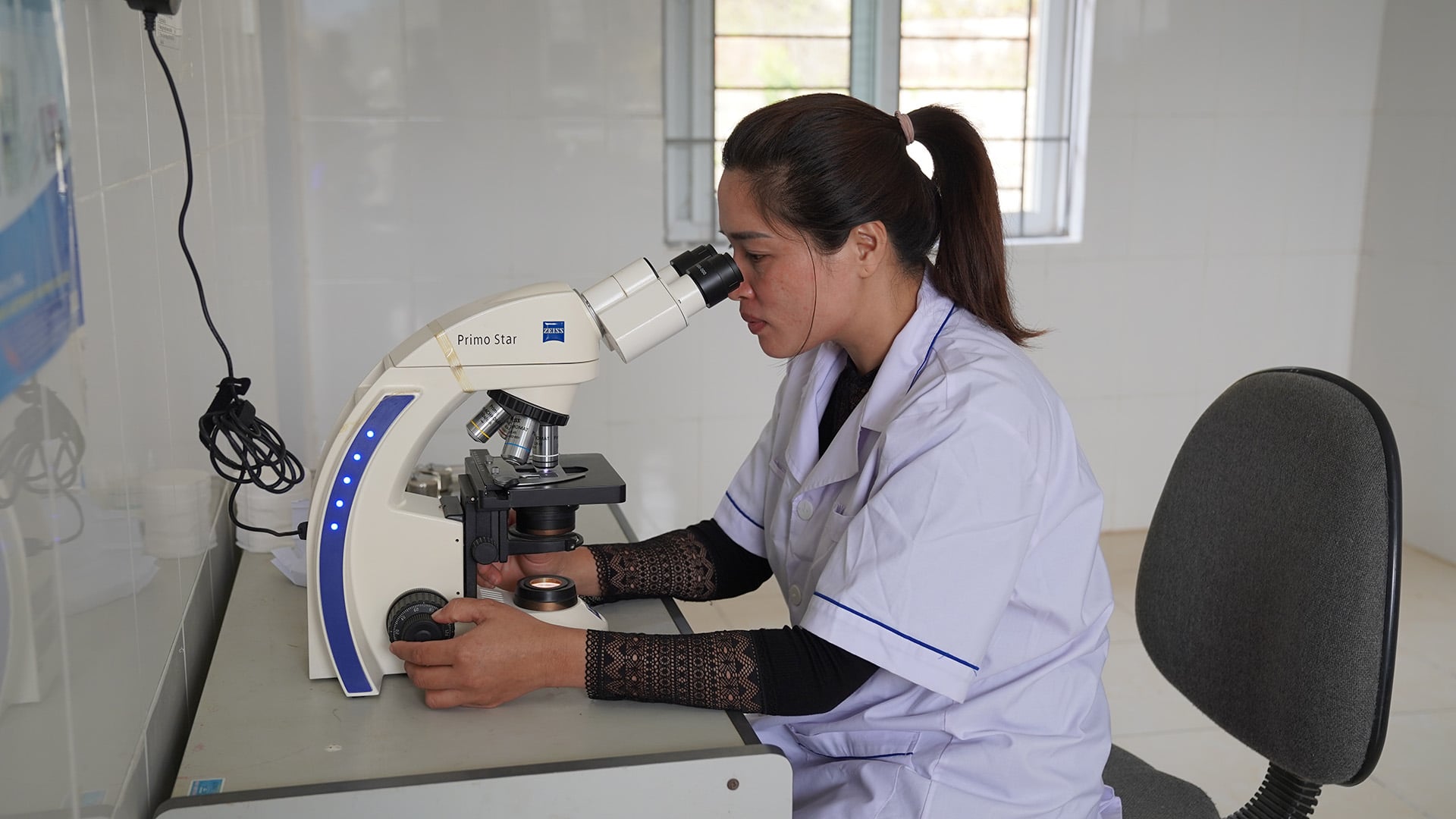
The method the team used is immunopeptidomics, a technique that catalogs every peptide fragment a parasitized cell displays on its surface, the alarm signals a sick cell broadcasts before it is destroyed. The team applied this to reticulocytes, the immature red blood cells that P. vivax preferentially infects, and to P. falciparum across multiple lifecycle stages. Cross-referencing which proteins appeared consistently across both stages and species reduced 453 initial candidates to 166 proteins, then to the 75 housekeeping proteins that satisfy both criteria while being associated with measurable CD8+ T cell responses.
The Mali component of the research provides the field dimension. Researchers from the Malaria Research and Training Center in Bamako contributed patient samples from a setting where children absorb dozens of infected mosquito bites each transmission season, and where the immune responses observed reflect natural exposure rather than controlled laboratory conditions. CD8+ T cell responses to the identified peptides were detectable in those patients. That confirmation matters: vaccine candidates that look promising in animal models and controlled human exposure studies have failed repeatedly when tested in populations with intense natural exposure in endemic regions.
In animal models, some of the 75 proteins were associated with protective immunity, reducing parasite load or preventing severe disease after experimental infection. The researchers are careful about what that means for human prospects. Rodent malaria models are biologically distant from the human-infecting species, and the record of animal-model results translating into vaccine efficacy in Phase 3 trials has been poor. The protective signal adds to the case for clinical development. It does not settle the question of whether the protection will hold.
The path from protein catalog to licensed vaccine requires systematic pre-clinical formulation work, Phase 1 safety trials, Phase 2 efficacy testing, and Phase 3 trials in endemic populations, a pipeline measured in years under the best circumstances. None of the 75 proteins has been formulated into a candidate yet, and no clinical program has been announced. Researchers working in parallel on complementary strategies have not waited: the release of Wolbachia-infected mosquitoes to suppress disease-carrying species and Alphabet’s program to deploy sterile male mosquitoes across US states represent the vector-control track running alongside vaccine science. The malaria burden at its current scale almost certainly requires both approaches to advance simultaneously.
What no study at the protein-identification stage can answer is whether any of these targets will survive contact with the parasite’s full field diversity at the scale of a Phase 3 trial. Plasmodium falciparum has evolved under immune pressure from human populations for tens of thousands of years. The history of malaria vaccine development is populated by targets that performed well in pre-clinical models and failed when exposed to the diversity of infection in endemic settings. The 75 housekeeping proteins are a more defensible class of target because the parasite cannot abandon them. Whether that constraint holds across the populations, HLA profiles, and transmission intensities of a multinational Phase 3 study is the question the Oxford-Brazil-NIAID consortium has opened. Someone will still have to run the trial to find out.