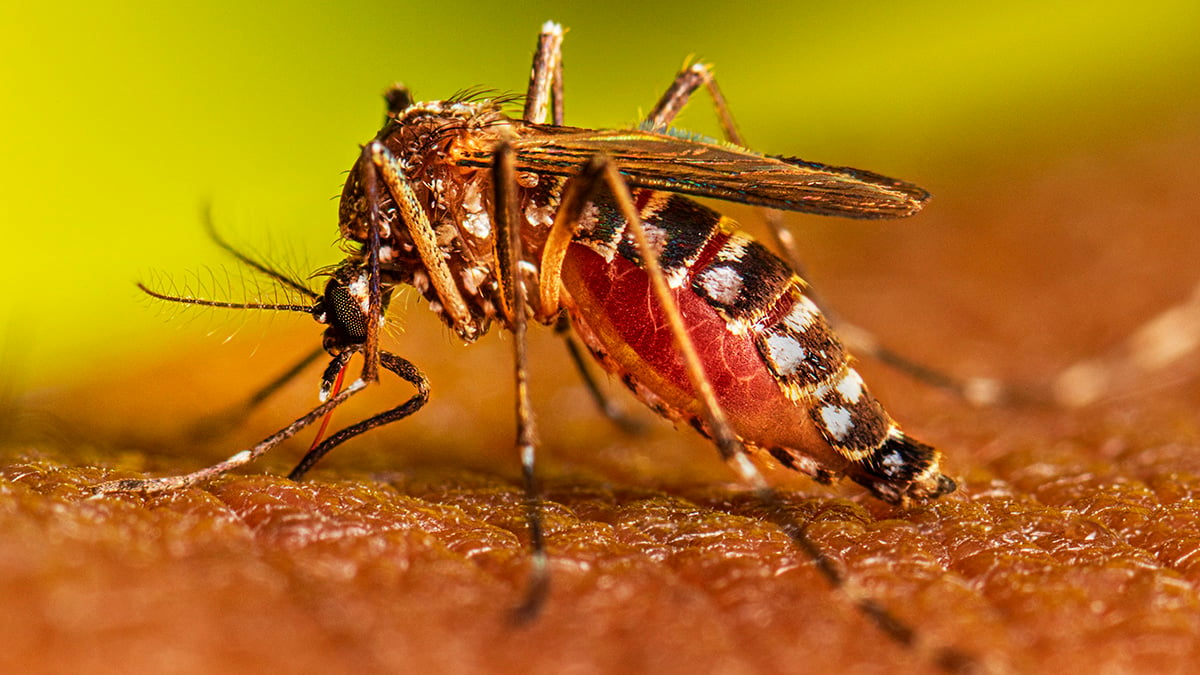

WASHINGTON — By the time summer peaks in August, the outdoor restaurant owners and backyard gardeners of greater Washington will have noticed the same thing they notice every summer: the Asian tiger mosquito is back. What they will not know is that since June, a Maryland company has been setting 600,000 extra ones loose in their neighborhoods on purpose.
Bee Safe Mosquito Control, based in Maryland, has launched a season-long program to suppress the Asian tiger mosquito population in the Washington metropolitan area by flooding it with males carrying a naturally occurring bacterium called Wolbachia. According to Gizmodo, which reported on the program, the mosquitoes are branded “ZAP males” by their manufacturer. They do not bite. And if the science holds, they will make a significant portion of the female mosquitoes in DC unable to reproduce.
The mechanism is precise enough to seem counterintuitive. Wolbachia pipientis is a bacterium that lives inside the cells of a wide range of insects; an estimated 50 to 70 percent of insect species naturally carry some strain of it. The strain used in this program, however, creates a specific mismatch when infected males mate with uninfected females: a phenomenon called cytoplasmic incompatibility. The modified sperm kills the eggs after fertilization. Because female Aedes albopictus mosquitoes typically mate only once in their lives, a female that mates with a Wolbachia-carrying male produces no viable offspring for the rest of her life.
Bee Safe is contracting with MosquitoMate, a University of Kentucky research spinoff, to supply the lab-raised insects. Todd Montgomery, the owner of Bee Safe, said the technique “has been tried time and time again” and “it’s worked really well against many species.”
The US Environmental Protection Agency authorized this specific technique in late 2023, after MosquitoMate completed its review under the EPA’s biopesticide registration pathway. The evaluation addressed questions about environmental risk, non-target species effects, and the ecological consequences of reducing the Asian tiger mosquito population in treated areas.
Aedes albopictus is an invasive species in the United States, originating in Asia and establishing permanent breeding populations across much of the eastern and southern states over the past four decades. Culex mosquitoes carry West Nile virus, which is on track for its worst season in more than two decades. But unlike Culex, Asian tiger mosquitoes are aggressive daytime biters with a short flight range that keeps them close to human settlements. They are the species a person encounters while weeding a garden at noon. They can carry dengue fever, Zika, and chikungunya, all of which produce painful and sometimes debilitating illness. Dengue in particular has seen dramatic geographic expansion across the tropics in recent years, and the tiger mosquito’s presence in Washington is part of the pathway through which tropical diseases could gain a foothold in temperate North American cities.
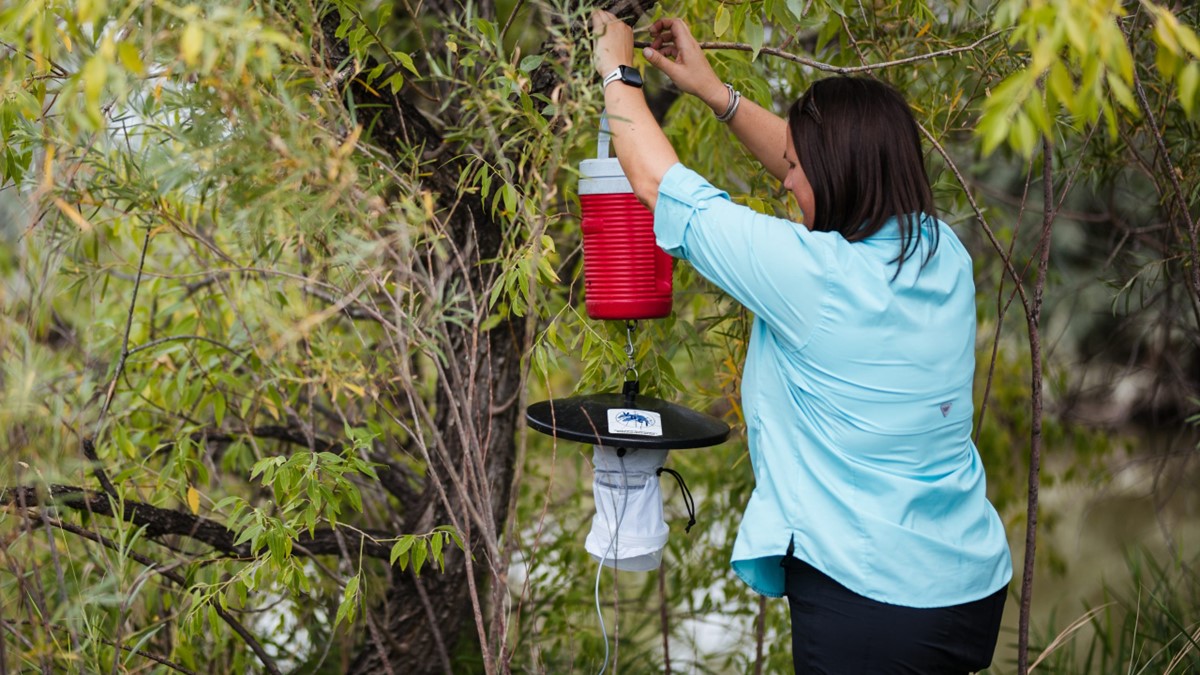
The DC program is not the largest of its kind under development. Alphabet, Google’s parent company, has been testing a similar approach through its Debug project, which has announced plans to release up to 64 million Wolbachia-infected male mosquitoes in communities in California and Florida. Those programs target Aedes aegypti, the yellow fever mosquito, which is the primary dengue vector in the Americas and a species gradually expanding its range northward in the United States.
The Wolbachia concept has a parallel application that works on an entirely different principle. The World Mosquito Program, a nonprofit operating in more than a dozen countries, distributes a different Wolbachia strain not to sterilize mosquitoes but to make them resistant to dengue. This strain, once established in a wild mosquito population, blocks the dengue virus’s ability to replicate inside the insect, effectively turning the local population into a self-sustaining disease barrier. Programs in Colombia, Vietnam, Brazil, and Australia have shown significant dengue reductions using this method. Singapore and Thailand use population suppression through sterile-male release, similar to the Bee Safe approach.
What neither approach can easily answer yet, in any city, is how many releases are needed for sustained population reduction, and whether the suppression persists after releases end. Wolbachia-infected male programs require continued releases because they do not establish naturally in wild populations. When the releases stop, uninfected females that survive begin reproducing again. MosquitoMate’s field trials have shown meaningful reductions in targeted areas during treatment periods. But urban-scale programs in dense American cities are still relatively new. Whether 600,000 males is enough to make a measurable dent in DC’s tiger mosquito population, which numbers in the hundreds of millions across the metropolitan area during peak summer, is not something July data can tell.
Asian tiger mosquitoes bite throughout the day, which removes the dusk-and-dawn protective window that applies to Culex and West Nile virus. For dengue, Zika, and chikungunya, no vaccine is available to the general US public. Protection depends on EPA-registered repellents containing DEET or picaridin, long sleeves outdoors, and eliminating any standing water in the yard. A bottle cap holds enough water for breeding. The biocontrol program from Bee Safe is a supplement to those measures, not a substitute.
The releases will run through September. MosquitoMate has not published specific release data for the DC program, and Montgomery did not specify which neighborhoods in the metro area are receiving releases or how density is distributed across the treatment zone. The summer program will conclude before any meaningful population comparison data is possible. Whether it worked will be a question for next year’s mosquito season.
Related Posts