
BETHESDA, Md. — Somewhere inside a single federal database now sits the whole genetic code and years of medical history belonging to more than 747,000 Americans, nearly half of them from communities that biomedical research has historically overlooked. On Tuesday, the National Institutes of Health said that pool of information had become the largest integrated genomic and health-record system on Earth, a milestone ten years and one act of Congress in the making.
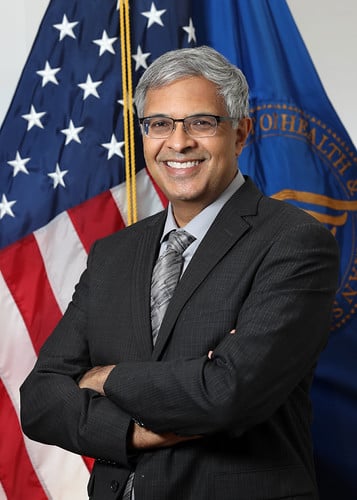
NIH Director Jay Bhattacharya called the resource, known as the All of Us Research Program, “a national treasure,” arguing that the paradox of precision medicine is that treating individuals actually requires very large populations to expose the patterns connecting genetics, lifestyle and disease outcomes. Program CEO Josh Denny framed the same release as a debt rather than an achievement, saying the data “reflects the trust of people across the country who chose to contribute to research to benefit everyone,” a trust that now lives inside one searchable federal system.
The scale is unusual even by the standards of federally funded science. More than 535,000 whole genome sequences are now linked to nearly 482,000 electronic health records, alongside 600,000 physical measurements and the underlying data behind more than 1,400 peer-reviewed papers already published from earlier releases, according to the National Institutes of Health. Congress created All of Us in 2016 with an explicit target of a million or more volunteers. Nine years later, at 747,000 enrolled, NIH is treating Tuesday’s release as proof the model works rather than as an acknowledgment the program still falls short of the number lawmakers wrote into law.
What distinguishes the database from decades of prior biomedical research is less its size than who is actually in it. Nearly half of participants come from groups historically underrepresented in medical studies, roughly a quarter are 70 or older, and volunteers are drawn from all 50 states. Most large genomic datasets assembled over the past two decades have skewed heavily toward people of European ancestry, a bias that has left doctors treating patients whose genetic risk factors were never studied in the first place. All of Us was designed, deliberately, to correct that, which is the strongest part of NIH’s case for calling it a treasure rather than simply a large file.
That framing comes with a caveat Tuesday’s announcement did not mention. Nine months earlier, the Department of Health and Human Services’ inspector general had audited the same program’s cybersecurity and found that the contractor managing its data had not limited employee access in line with program policy, had not prevented staff from reaching the system while working abroad, and had not stopped the bulk downloading of detailed participant records. NIH itself, auditors wrote, had never formally communicated to that contractor the national-security sensitivity of holding genomic data at this scale. NIH concurred with all five recommendations and told auditors it had closed every one of them by mid-April, ten weeks before it announced the program’s record scope.
The gap between celebration and caution is not new territory for American health data. Eastern Herald has previously reported on how the country’s hospitals, insurers and health-tech vendors have built a data-sharing architecture that consistently outpaces the privacy law meant to govern it, and on how genomic datasets, once assembled at scale, can reveal biological truths, such as which patients’ genes make them up to fifteen times more likely to suffer severe side effects from a popular weight-loss drug, that no single doctor’s office could ever have found alone. All of Us runs on that same genomic logic, at roughly ten times the scale of anything that preceded it in the United States.
The announcement also lands inside a specific political moment for federal science, one Eastern Herald has been tracking since it surfaced in a 412-page federal proposal. The same administration whose NIH director is calling this database a national treasure is, through the Office of Management and Budget, pushing a rule that would let political appointees sign off on federal research grants before money moves, and would reduce scientific peer review to a step agencies are free to disregard. Whether a program like All of Us, dependent on federal grants and on the voluntary trust of ordinary volunteers in equal measure, would fare differently under that kind of political gatekeeping is a question nobody at NIH addressed on Tuesday.
What NIH has not said, and what its own materials do not address, is whether the specific fixes closed in April have been independently verified by anyone outside the agency that promised to make them. A federal watchdog found the holes. NIH says it patched them. No outside audit has yet confirmed that the largest store of American genomes ever assembled in one place is actually secure, only that the agency holding it says so.