
RIYADH – Saudi Aramco prefers certainty. Nearly all of the state oil company’s global crude sales run on long-term supply agreements, the kind that lock in buyers, pricing stability, and relationships years in advance. That preference gave way this week as Aramco moved at least 6 million barrels through the spot market, selling to buyers in South Korea, Japan, and China outside its usual contractual framework.
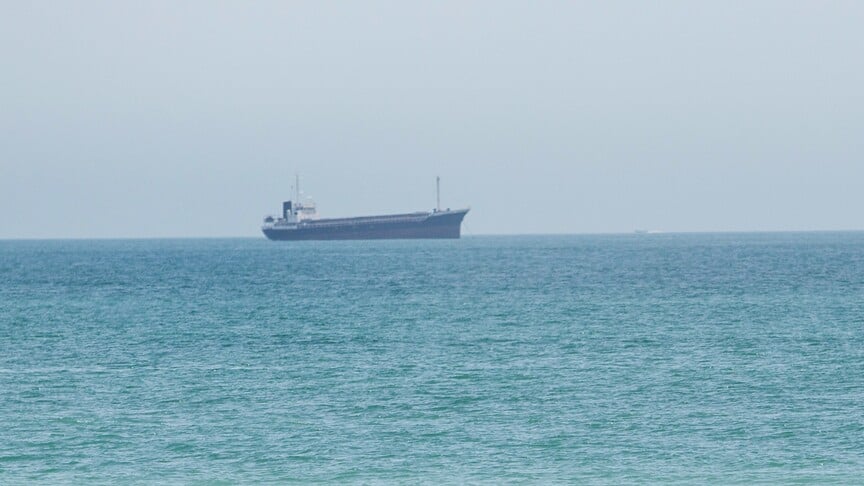
The break from form is the story. Four Saudi-owned supertankers carrying approximately 8 million barrels of crude cleared the Strait of Hormuz on Wednesday, Anadolu Agency reported, the highest volume of Saudi crude exported from the Persian Gulf since Iran’s war with the United States shut the strategic waterway. The spot sales to Asian buyers, described by industry sources as unusual for a company whose commercial model is built around contractual stability, tell the same story the tanker traffic does: Saudi Arabia is moving fast to make up for lost time.
The numbers are specific. At least 6 million barrels went to buyers in South Korea, Japan, and China on spot terms, compared to the long-term contracts with fixed delivery schedules that define most of Aramco’s trade. That four supertankers capable of carrying roughly 2 million barrels apiece were loaded at Ras Tanura, one of the world’s largest crude-export terminals, and cleared Hormuz on a single day places this moment well above what the waterway was moving when Iranian naval operations and the threat of mines made transit an act of commercial calculation rather than routine logistics.
The Iran war truce took effect approximately two weeks before Wednesday’s exports. Two weeks is a short interval between a peace agreement and evidence of volume recovery at full-capacity levels. The vessels are navigating through both US-administered transit corridors in Omani territorial waters and routes closer to Iran’s own coast, moving in convoy, through the chokepoint that controls roughly 20 percent of the world’s seaborne oil supply. The speed of the recovery, combined with Aramco making spot deals that are otherwise structurally unusual, suggests Saudi Arabia concluded it needed to establish export volume quickly, before any revision to the diplomatic arrangements that reopened the strait.
The revenues at stake are large. Saudi Arabia’s budget has always depended on oil income to fund social programs, infrastructure, and the Vision 2030 diversification projects that are meant to reduce that dependence over time. Months of disrupted Hormuz traffic meant not just reduced export volume but compressed pricing power for crude that could not move freely to the customers who needed it most. The spot sales to South Korean, Japanese, and Chinese buyers suggest those customers have demand that was deferred, not cancelled, and that Aramco is working through a backlog of market interest rather than responding to an upturn in structural demand.
OPEC context matters here. Saudi Arabia has been coordinating output decisions with other OPEC members throughout the period of Hormuz disruption, but production decisions and export volumes are not the same metric. Saudi Arabia can produce oil it cannot ship, or restrain production because shipping is constrained. The export volumes on Wednesday reflect what is actually reaching buyers, not what the kingdom has committed to the cartel. As traffic through Hormuz normalises, the question of whether Saudi Arabia raises production to match its recovered export capacity, or uses the restored route to catch up on volumes previously withheld under OPEC coordination, is one Riyadh has not yet publicly answered.
The Asian buyers’ appetite for spot barrels is not itself unusual. South Korea, Japan, and China have all drawn down strategic petroleum reserves during the Iran war and are likely using the reopening of Hormuz to replenish supplies at current spot prices, which have been suppressed by uncertainty about the durability of the truce. Brent crude has been trading below $70 a barrel, making spot purchases at today’s prices attractive for refiners building inventory against the possibility of future disruption. The spot buyer and the spot seller in this transaction have aligned interests that are not the same as the long-term relationship interests that normally define Aramco’s trade, and both are moving while the conditions favour them.
What the data does not disclose is the specific pricing at which Wednesday’s spot deals were concluded, whether Aramco is discounting below the official selling price to move volume, or how long the company intends to supplement its contractual book with spot market activity. Each of those variables matters to how the revenue recovery is actually landing for the Saudi government, and none of them is in the public record.
The broader signal from four supertankers moving 8 million barrels through a waterway that was closed two weeks ago is straightforward. Saudi Arabia’s oil infrastructure, its loading terminals, and its fleet of crude carriers were not damaged by the Iran war. The constraint was access to the strait. The strait is open. What happens if it closes again, and how quickly mines can actually be cleared, remains an unresolved engineering problem that the current diplomatic arrangements have paused rather than solved. Aramco’s spot sales suggest that lesson was not lost on the company’s commercial team.
Whether the pace of Wednesday’s exports reflects a new normal for Gulf crude shipments or a burst of catch-up activity that will settle back toward pre-war patterns is a question that another two weeks of data will begin to answer. Saudi Arabia’s economy, its budget, and its capital market ambitions all benefit from oil revenue that flows uninterrupted through the world’s most strategic chokepoint. The waterway is open today. The truce that opened it has not been tested by the kind of pressure that originally closed it.