
BOULDER, Colo. — For tens of millions of people living with osteoarthritis, the arithmetic of available treatment has not meaningfully changed in decades. Pain management can quiet symptoms for years. Once it no longer does, the standard recourse is total joint replacement: a metal-and-plastic implant that requires surgery, a hospital stay, months of rehabilitation, and a bill that runs past $50,000 in the United States. There is nothing in between, no therapy that rebuilds the cartilage those joints have lost.
Researchers at the University of Colorado Boulder now say they may have found one. Working under a federal grant designed to fund biomedical breakthroughs too speculative for conventional research programs, they developed a single injectable therapy that reversed osteoarthritis in animal models in as few as four weeks. The results have not been published in a peer-reviewed journal, and no human patient has received the treatment. But the team believes the evidence is strong enough that clinical trials in humans could begin within 18 months.
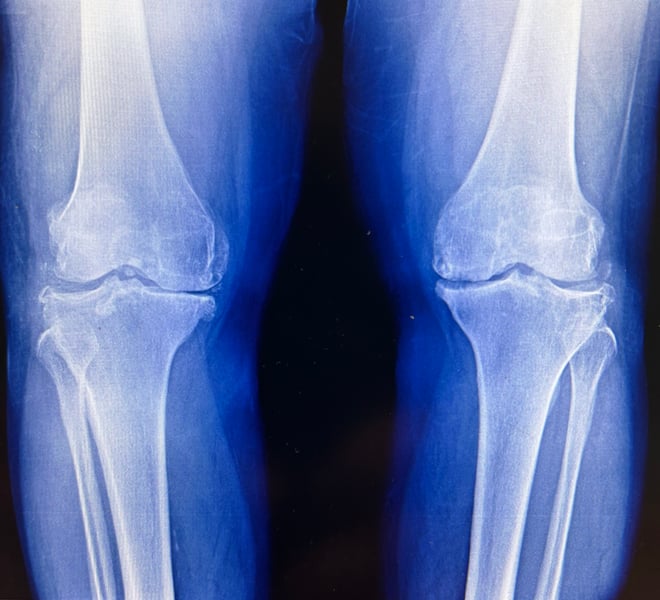
Osteoarthritis is a disease of attrition. Cartilage, the protective tissue between bones, wears away over time, leaving joints to grind against one another with each step. The condition affects 32 million Americans and costs the health system more than $132 billion annually, according to figures from the Advanced Research Projects Agency for Health, the federal body funding this research. Stephanie Bryant, the CU Boulder chemical and biological engineer leading the project, described the pace of progress her team made: “In two years, we were able to go from a moonshot idea to developing therapies demonstrating reversal of osteoarthritis in animals.”
The team developed two distinct injectable approaches within the same program. The first is a particle-based delivery system designed to release therapeutic compounds into the affected joint over a period of months, addressing one of the persistent challenges in joint medicine: getting drugs to remain in a joint long enough to produce meaningful repair. The second is an arthroscopic protein cocktail, delivered directly to damaged cartilage to trigger regrowth. In the animal experiments, both approaches produced signs of joint reversal within four to eight weeks.
Evalina Burger, an orthopedic surgeon and professor at UC Anschutz who collaborated on the research, was direct about what the work is trying to replace. “At the moment, the options for many patients are either massive, expensive surgery or nothing,” she said. That binary has shaped clinical practice around osteoarthritis for decades. Pharmaceutical trials have repeatedly sought a drug that slows cartilage degradation; none has demonstrated sufficient benefit to win regulatory approval as a disease-modifying therapy. The gap between managing pain and curing the disease has remained essentially closed.
The CU Boulder team established a company, Renovare Therapeutics Inc., specifically to move the therapies from the research laboratory toward commercial deployment. The structure reflects a standard feature of ARPA-H-funded research: programs are designed with a commercialization path built in from the start, rather than relying on the technology transfer process that can leave academic discoveries stalled for years between publication and patient access. Bryant was explicit about the ambition behind the work: “Our goal is not just to treat pain and halt progression, but to end this disease.”

The research has not yet appeared in a peer-reviewed scientific journal. The findings described publicly come from ARPA-H program announcements and from reporting by ScienceAlert published on July 2. The laboratory tests on human cell samples, taken from patients who had already undergone joint replacement surgery, were conducted as a secondary validation step alongside the animal experiments, not as a primary clinical study. No regulatory agency has reviewed the data. What the animal experiments demonstrated was reversal of osteoarthritis markers, a significant result, but one measured in animals whose joint biology and immune responses differ from human patients in ways that have repeatedly surprised researchers in regenerative medicine.
The NITRO program formally awarded contracts to three universities: CU Boulder, Duke University, and Columbia University. Each is pursuing a different approach to joint regeneration, covering injectable bone regeneratives, cartilage regeneratives, and living-tissue implants built from human cells. According to ARPA-H’s NITRO program page, human clinical trials are slated to begin in late 2027, consistent with the team’s stated 18-month window. The program also requires that at least 50 percent of trial participants be women, addressing a longstanding gap in musculoskeletal research, which has historically underenrolled female patients despite osteoarthritis affecting women at higher rates and with greater severity after menopause.
Getting from a successful animal model to a human therapy is among the most difficult transitions in biomedical research. Results that hold in rodent and rabbit models have frequently produced disappointing or unexpected outcomes in human patients, whose joint architecture, concurrent health conditions, and immune profiles introduce variables that no animal experiment fully anticipates. McMaster University’s engineered immune-cell therapy for glioblastoma, which eliminated tumors in preclinical models and was published in Nature last week, was explicit on this point: the researchers described the human trial phase as a separate and uncertain chapter, not a formality. The CU Boulder team’s 18-month estimate carries an equivalent implicit condition, that additional animal studies must confirm the reversal before any regulatory submission is made.
What those experiments will need to demonstrate remains, for now, only partially disclosed. The specific mechanism by which the protein cocktail signals cartilage cells to regenerate, the minimum effective dose for the particle delivery system, and whether the reversal observed in animals proves durable over years rather than weeks are all questions the peer-review process and the human trials will eventually have to address. For the 32 million Americans living with osteoarthritis, this is the kind of research the disease has long lacked: not another pain management approach, but a direct attempt to rebuild what the joint has lost. Whether that attempt translates from an animal model to a human patient is the question that the next 18 months of work are designed to answer.