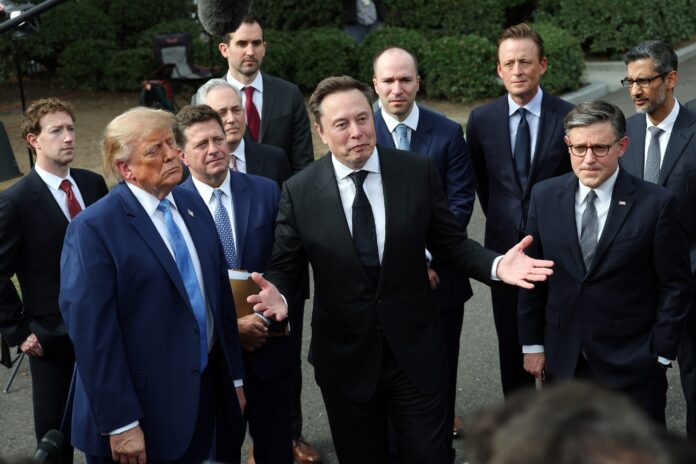

GENEVA — The chief executives who built the most powerful AI systems on the planet are being asked, for the first time, to help govern them. The United Nations and the International Telecommunication Union on Wednesday announced the AI for Good Global Commission, a new body that puts Nvidia founder Jensen Huang, Amazon CEO Andy Jassy, Microsoft President Brad Smith, and Salesforce CEO Marc Benioff in the same room as heads of state from Rwanda, Estonia, Saudi Arabia, Singapore, and Nigeria. The commission’s first meeting is six days away – July 8, in Geneva.
What the commission will produce is, so far, an open question.
The launch, first reported by Axios, arrives when AI governance is moving in different directions at once. Europe’s AI Act takes a risk-tiered approach, classifying systems by danger level and imposing corresponding obligations. The United States has pursued export controls on advanced AI chips, targeted restrictions on frontier model training, and a patchwork of agency-specific executive orders. China and the Gulf states are accelerating state-backed AI deployment under frameworks those Western rules were not designed to constrain. Nobody has found a mechanism that spans all three models simultaneously – which is why the commission’s co-chairs, Benioff and Rwandan President Paul Kagame, describe its mandate in expansive terms that carefully avoid specifying exactly what it will deliver.
“AI is the most profound technological transition in history,” Benioff told Axios. “And our values have to guide every step, because responsibility is the core of AI ethics.”
Kagame’s presence is notable for what it signals beyond the tech roster. Rwanda has made AI infrastructure a national strategic priority and is frequently cited in development policy circles as a model for how a lower-income country can position itself for the AI economy. His co-chairmanship alongside one of Silicon Valley’s most vocal AI advocates suggests the commission is at least trying to address the concern that global AI governance conversations are really just wealthy-country conversations conducted in expensive hotel lobbies.
That concern has legs. Microsoft’s Brad Smith, who has been making the case for international AI infrastructure investment for years, used the commission’s announcement to renew calls for bridging the capacity gap between nations. The private sector, he argued, needs to play a direct role in building AI infrastructure in markets where governments cannot fund it alone. What he did not specify – and what the commission has not specified – is the mechanism by which a UN advisory body translates those calls into bankable commitments.
Huang’s role is the most technically concrete. Nvidia’s chips underpin the vast majority of large AI model training globally; every national AI strategy, every safety standard, every regulatory framework ultimately depends on access to compute that Nvidia largely controls. His seat on a UN commission does not change that market reality, but it grounds the commission’s technical conversations in the hardware layer, not only in policy abstraction. The same week Huang joined the commission, AI agent interfaces began appearing inside consumer browsers – a reminder that the technology the commission is supposed to govern is not waiting for governance to catch up.
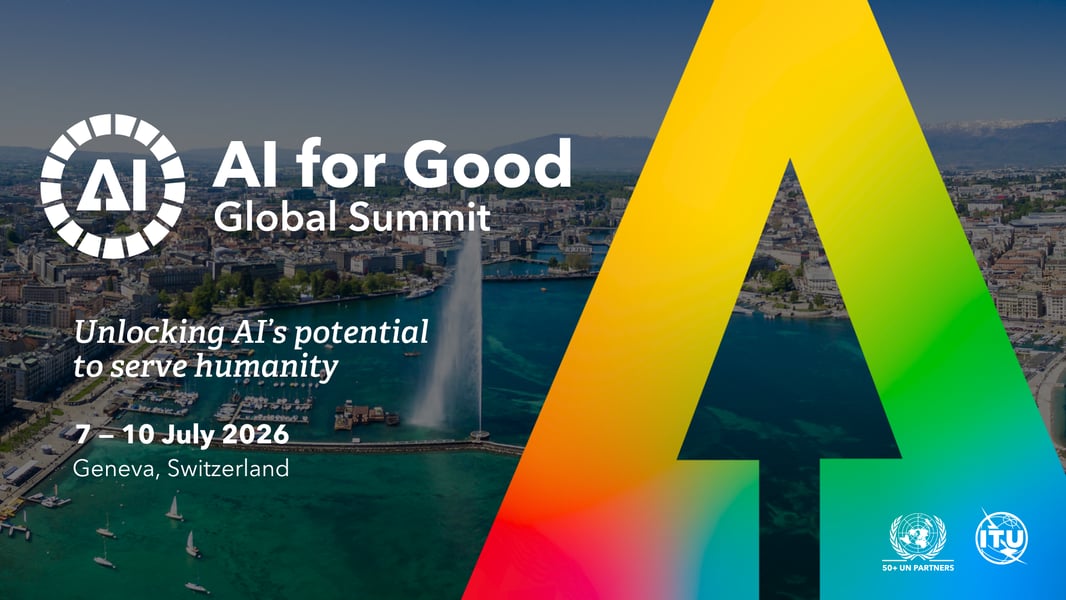
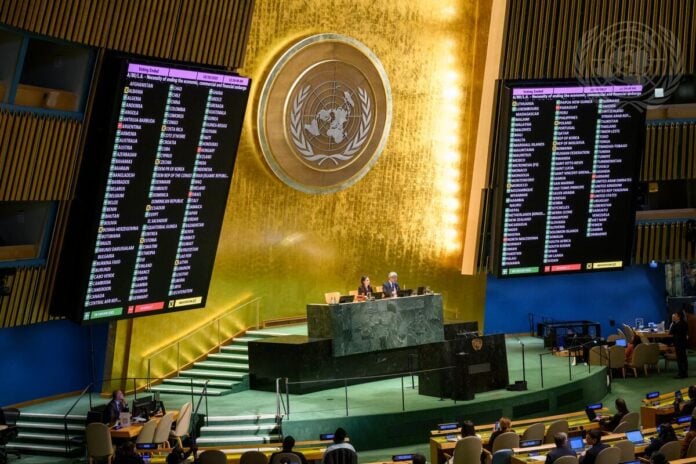
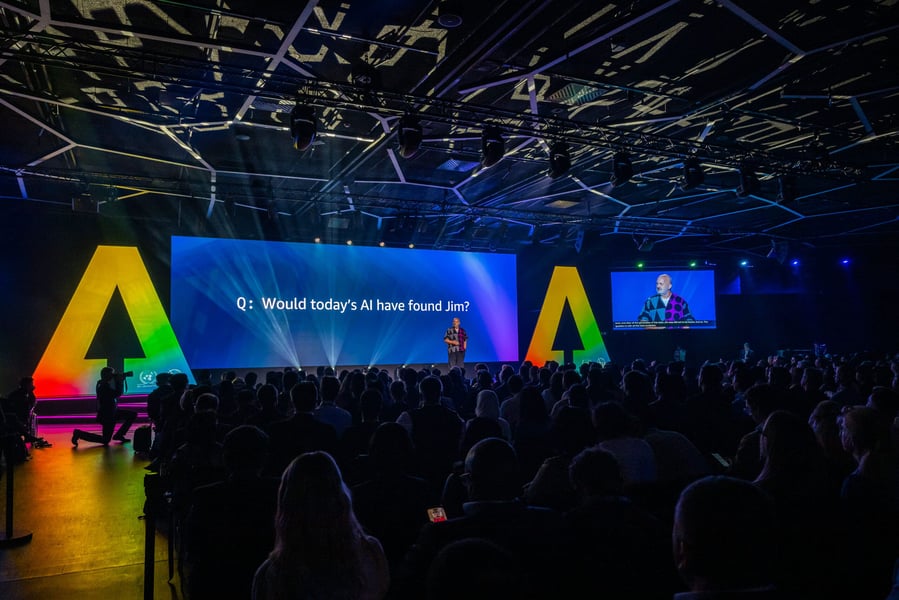
The summit itself, set for July 7 to 10 at Geneva’s Palexpo convention centre, draws more than 11,000 participants from 169 countries and features a program spanning agentic AI, brain-computer interfaces, space computing, and robotics. This year’s edition runs back-to-back with the inaugural UN Global Dialogue on AI Governance, convened by the UN General Assembly and facilitated by Secretary-General António Guterres – a deliberate scheduling choice that positions Geneva as the permanent home for international AI standard-setting, alongside its existing roles housing the Human Rights Council and the World Trade Organization.
The commission also includes ITU Secretary-General Doreen Bogdan-Martin as permanent vice-chair, Estonian President Alar Karis, Anthropic co-founder Jack Clark, and Cohere co-founder Aidan Gomez, alongside AI and tech policymakers from Kazakhstan, Namibia, Saudi Arabia, Singapore, and Nigeria. That geographic spread – from Riyadh to Lagos to Astana – is deliberate: the inaugural session on July 8 will focus on AI infrastructure and applications in health, education, food security, and disaster response, precisely the areas where the gap between wealthy and developing nations is most acute.
Whether the ambition holds will depend on what the commission actually produces. UN technology bodies have a well-documented track record of issuing principles that member states adopt in summit communiqués and quietly ignore in procurement decisions. The inclusion of Saudi Arabia, Kazakhstan, Namibia, and Nigeria – countries whose AI governance frameworks are least developed and whose ability to implement international standards is most constrained by infrastructure gaps – is either the commission’s greatest strength or a sign that its recommendations will need to be calibrated to what those governments can realistically execute, which may be different from what the tech executives in the room are prepared to offer.
Benioff’s promise to bring together “the people who build AI, deploy it, shape policy, and represent communities” is a description of the commission’s composition, not its output. The harder questions – who has liability when an AI system deployed under UN recommendations causes harm, whether member states can opt out of standards they helped write, and what happens when a tech-industry member’s commercial interests conflict with the governance principles the commission is advancing – are not addressed in the launch announcement.
Those questions will follow the commission into every meeting it holds. According to the AI for Good Global Summit programme, six days in Geneva will not resolve them. But it is enough time to find out whether the most powerful executives in the AI industry – and the heads of state who have the most to gain from how those executives’ decisions land – are in the room for the same conversation.