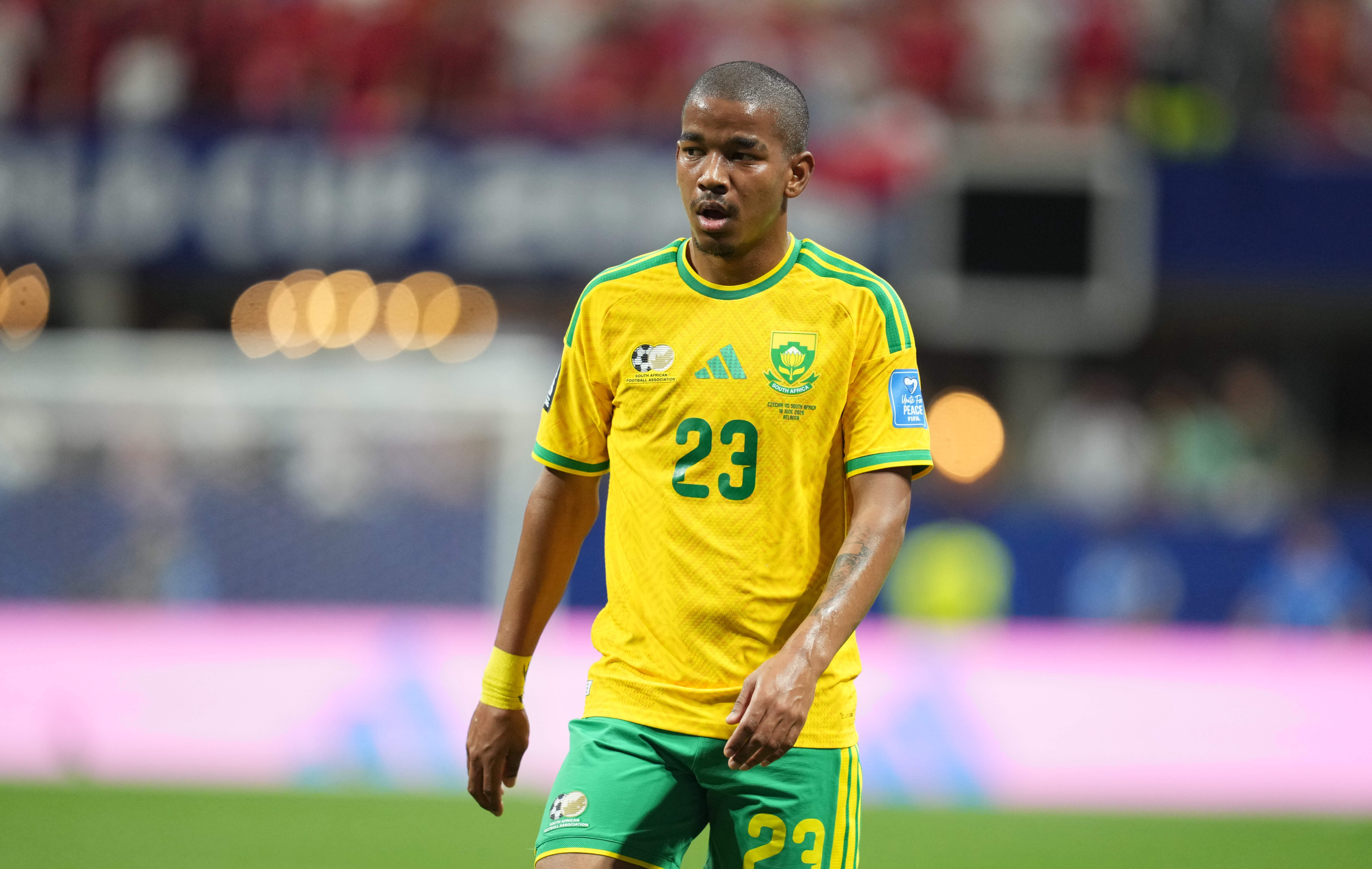

JOHANNESBURG – Two weeks after the final whistle at the 2026 World Cup, Jayden Adams is dead.
The South African midfielder, 25, who started two matches for Bafana Bafana during their group-stage campaign in the United States and Canada, died on Saturday. No official cause has been disclosed by either Mamelodi Sundowns, the club he represented before and after the tournament, or the South African Football Association.
The announcement came from the South African Football Players Union, which confirmed his passing in a statement that offered mourning rather than explanation. “South African football has lost a gifted player, a proud servant of the game and a young life that still had so much to offer,” the union said.
Adams arrived at the World Cup carrying weight that most 25-year-olds do not. The day before South Africa’s opening match against Czech Republic in Atlanta on June 18, his grandmother Marianna died. He started the game anyway. South Africa drew 1-1. When Sports Minister Gayton McKenzie reached out to offer condolences, Adams responded with what the minister described as a depth of character and professionalism well beyond his years.
He started again four days later as South Africa fell 2-0 to Mexico. When the tournament moved on to its final group match, Adams came on as a substitute in a 1-0 win over South Korea that moved his country to the round of sixteen. He was on the bench, unused, on June 28 when Canada eliminated South Africa.
The squad flew home. The World Cup continued without them. Two weeks on, one of their own was gone.
The cause of Adams’ death remained undisclosed as of Saturday. South African football authorities had not provided further public comment beyond the players union statement. Al Jazeera reported that the union said he had “carried the hopes of the nation with pride, courage and distinction.”
Adams came to the World Cup as part of a Mamelodi Sundowns side that had already claimed continental honors, winning the CAF Champions League before the tournament began. It was the kind of achievement that signals a player on the rise: a 25-year-old midfielder, disciplined enough to anchor one of Africa’s most competitive club environments, elevated in the same year to represent his country on the world’s largest stage.
He had arrived at Sundowns from Stellenbosch FC, a club still marked by tragedy. In 2023, his Stellenbosch teammate Oshwin Andries was stabbed and killed. Adams dedicated his CAF Champions League medal to Andries. It was the gesture of someone who understood what it meant to keep playing when the people you played alongside were no longer there.
The World Cup was supposed to be a beginning. South Africa had not qualified for the tournament since their home hosting in 2010. For the generation of players who grew up watching that event, making the 2026 squad was a form of completion, a claim on a legacy that had waited sixteen years. Adams was part of that generation. He played three of South Africa’s four matches, which is more than most players who reach a World Cup ever get to say.
South Africa’s 2026 campaign was modest by elimination-stage standards but historically significant given the country’s long absence from the global stage. The group stage provided three competitive matches, against Czech Republic, Mexico, and South Korea, before Canada ended their run in the round of sixteen. Adams was on the pitch for all three group games.
His age makes the loss harder to categorize. At 25, Adams had won a continental club championship and qualified for a World Cup, and the bulk of a professional career still lay ahead of him. The timeline of his death, two weeks after the tournament ended with no public explanation offered, creates a gap that cannot yet be filled.
The detail about his grandmother, playing through grief without disclosing it before the match, responding to condolences with quiet professionalism, is the kind of fact that resists the easy reduction of sports eulogies. Sports Minister McKenzie noted that Adams’ response showed a depth of character and professionalism well beyond his years. Those years were twenty-five.
The 2026 World Cup continues. Norway have advanced to the semi-finals after beating England on penalties in the quarterfinals. The bracket moves toward its closing stages in stadiums across North America. South Africa watches from a distance, their campaign finished, their bracket story over.
Adams leaves behind a brief, striking record: a CAF Champions League medal, four World Cup appearances across three starts, and a dedication to a murdered teammate that says something about the person who made it. South African football will spend the coming days working out how to grieve someone who was 25, present on the biggest stage just weeks ago, and gone before an explanation arrived. What killed him has not been made public, and that uncertainty will shape how his story is told until an answer is.
Related Posts