
SEATTLE – The estate of Paul G. Allen has agreed to sell the Seattle Seahawks to a family ownership group led by Vinod Khosla, the Indian-born Silicon Valley billionaire who co-founded Sun Microsystems and helped define the commercial internet’s first decade. The price, $9.612 billion according to people familiar with the terms, shatters the previous record for any professional sports franchise and announces technology wealth as the new currency of NFL ownership.
The deal was confirmed Friday by the Allen estate in a brief statement. Khosla, 70, said his family was “honored to be entrusted as the next stewards of the Seattle Seahawks” and looked forward to “building on the winning legacy Paul Allen created.” Whether that stewardship begins soon or months from now depends on whether the league’s thirty-two owners vote to ratify a transaction that would make the son of an Indian Army brigadier general the most expensive team buyer in American football history.
That approval is not certain. Khosla currently holds a limited partnership stake in the San Francisco 49ers, a direct NFC West rival of Seattle’s. NFL rules do not prohibit investors in one franchise from purchasing another, but league policy requires cross-ownership interests to be divested before a full transfer is completed. How quickly Khosla’s 49ers stake can be separated, and whether the current 49ers ownership structure allows a clean exit, remains an open and unresolved question heading into the league’s review process.
The group Khosla is leading includes his son Neal, a technology entrepreneur and co-founder of the AI health company Curai. The precise composition and capital contributions of the broader investor group have not been disclosed. What is public is that no transaction in the 106-year history of the NFL has ever reached this price. The Washington Commanders sold for approximately $6.05 billion in 2023. The Denver Broncos changed hands for $4.65 billion the year before that. Khosla’s offer represents a roughly sixty percent premium over the next-highest NFL sale on record.
Paul Allen, who co-founded Microsoft alongside Bill Gates before devoting his later years to philanthropy and professional sports ownership, bought the Seahawks in 1996 for $194 million. He did it to prevent the franchise from relocating to Southern California, and the investment grew nearly fifty times in the three decades that followed. Allen died in October 2018 at sixty-five. His estate passed to his sister Jody Allen, who oversaw the franchise through three head coaches, two general managers, and the championship that closed the Allen era with unmistakable force.
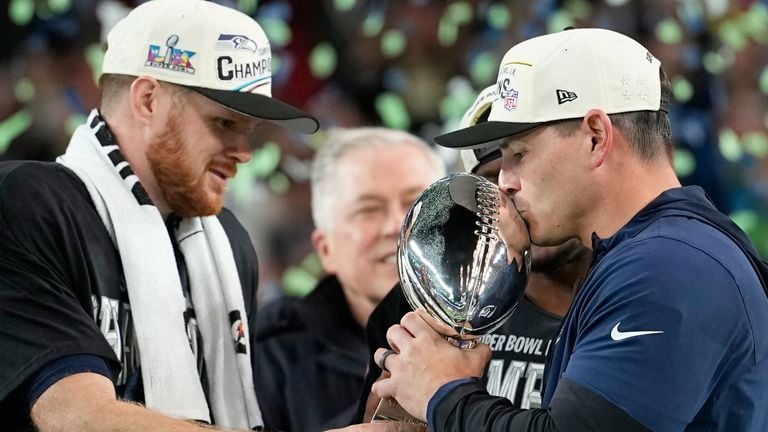
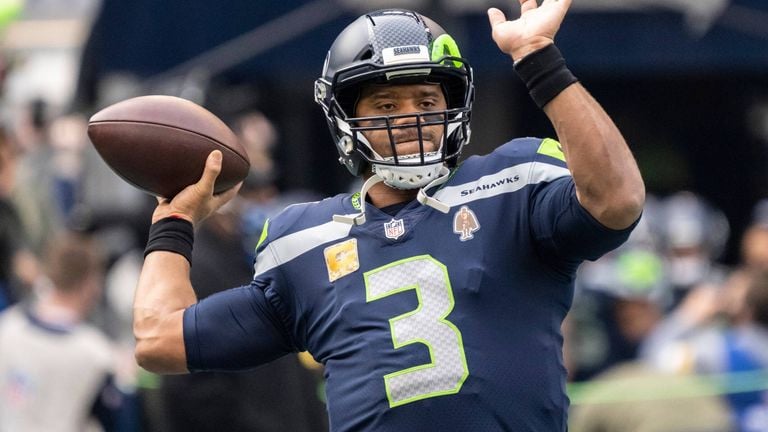
That Super Bowl LX championship, won this past February under head coach Mike MacDonald and quarterback Sam Darnold, is part of what Khosla is paying for. Franchises that have recently won tend to command valuations disconnected from conventional cash-flow analysis, and Seattle enters this transaction with a young roster and a fan base whose loyalty survived the departure of its most celebrated quarterback, Russell Wilson, without losing its identity. Buying the Seahawks now means buying a team at the apex of its recent market cycle.
Khosla Ventures, the firm Khosla launched in 2004 after leaving Kleiner Perkins, manages roughly fifteen billion dollars and has built its reputation on early-stage bets in clean energy, food technology, and health care. His investment philosophy, by his own description, rewards patience and comfort with positions that the market has not yet validated. Whether those instincts translate to the NFL’s more immediate and publicly scrutinized operating environment is a question the league’s vetting process will not attempt to answer.
The Allen estate’s statement expressed confidence that Khosla would “continue to invest in the team and the region,” but no commitments on stadium spending, roster budgets, or relocation were included in the team’s official announcement. The Seahawks play at Lumen Field in downtown Seattle, a stadium Allen rebuilt that has become the central argument for keeping professional football in the Pacific Northwest.
Conspicuously absent from the announcement was any statement from NFL Commissioner Roger Goodell or from the owners who will vote. Ownership transfers of this magnitude typically require several months of financial audits, character reviews, and a three-quarters supermajority vote among the thirty-two teams. That process is now underway, the estate confirmed. No timeline was offered.
For Khosla, the Seahawks represent something that almost no asset in the technology world provides: enforced scarcity. A software company can be copied and competed away within a product cycle. The NFL controls the number of franchises absolutely, shares media revenue across the entire league, and negotiates television rights that make any individual team’s local operations secondary. Buying a seat in that structure is not purchasing a business in any conventional sense. It is purchasing membership in a cartel whose value depends on supply never expanding.
The distance between the $194 million Allen paid in 1996 and the $9.612 billion Khosla is paying in 2026 says something specific about the NFL’s position in American life. No other sport has maintained this kind of valuation pressure across three decades. The Commanders’ sale, which set the previous record three years ago, has already been overtaken by more than fifty percent. At this rate of appreciation, the question of who can afford to own an NFL franchise is becoming as consequential as the question of who deserves to.
Khosla will spend the coming months in front of thirty-one NFL owners who will decide whether he belongs in their circle. He will bring capital, a technology investor’s long horizon, and a championship team with a city fully behind it. What the approval process cannot provide is speed, and what it cannot guarantee is a favorable outcome. Seahawks fans have no vote. They will be watching.