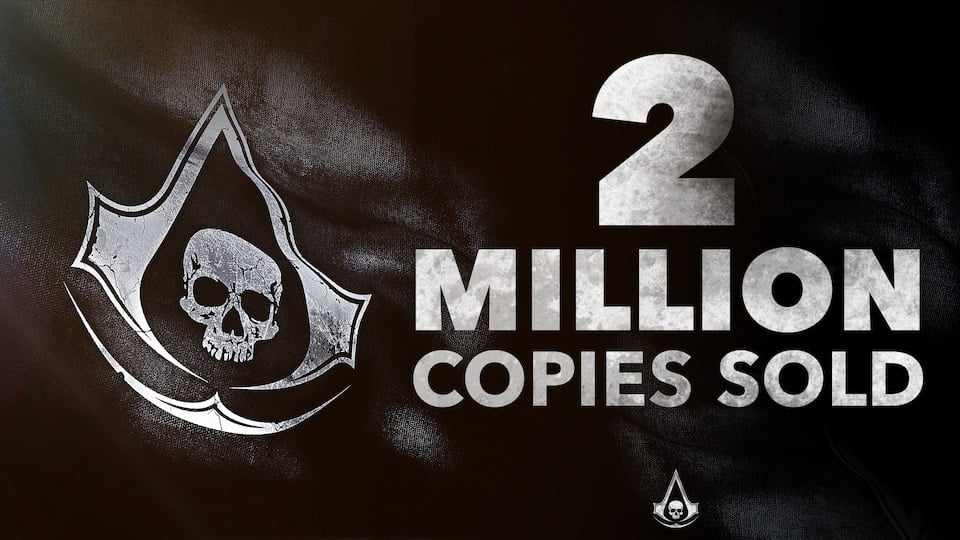

SAN FRANCISCO – The comeback the gaming industry had mostly stopped expecting from Ubisoft arrived on July 9, when Assassin’s Creed Black Flag Resynced sold 2 million copies on its first day of release. No Ubisoft game has reached that milestone at launch in years. The number was not the most striking part.
The most striking part was the critical reception. Assassin’s Creed Black Flag Resynced holds an 85 on OpenCritic and an 84 on Metacritic, making it the highest-rated entry in the franchise since the original Assassin’s Creed IV: Black Flag, which launched in 2013. Thirteen years is a long time for a franchise to go without matching its own best work. This rebuild, developed by Vantage Studios and led by Ubisoft Singapore, apparently managed it.
Black Flag Resynced is not a simple graphical upgrade of the 2013 open-world pirate adventure. It was rebuilt entirely using Ubisoft’s latest Anvil engine, with a reworked combat system centered on parry mechanics, revised stealth and parkour movement, deeper naval gameplay, and new narrative content that was not in the original. IGN gave it a 9 out of 10. Digital Foundry called it “one of the most effective remakes we’ve ever seen.” Those assessments matter precisely because the studio that made it was, until recently, primarily associated with a different kind of outcome.
Ubisoft spent 2025 and the first months of 2026 at the center of a gaming debate that showed no signs of resolution. Assassin’s Creed Shadows, the last mainline entry, generated significant backlash over its dual-protagonist structure and its historical setting in feudal Japan. Sales were not the disaster that some predicted, but the critical reception and the extended post-launch correction effort left the franchise in an uncertain position. Black Flag Resynced was announced as a separate track, a remake developed by a distinct studio rather than the main franchise team. The framing allowed both projects to exist without either one being required to rescue the other.
The launch numbers go beyond the 2 million copies figure. Black Flag Resynced ranked first on Twitch by viewership on launch day. On Steam, it reached 99,451 concurrent players within 24 hours of release, the highest peak concurrent figure any Assassin’s Creed game has achieved on the platform. For a franchise that began primarily as a console property and migrated to PC gradually, that number represents something more than a single launch’s performance.
The game is available on PlayStation 5, Xbox Series X and Series S, and Windows PC through the Ubisoft Store, Steam, and the Epic Games Store. It is also verified for Steam Deck and accessible through Ubisoft+. The breadth of platform coverage reflects Ubisoft’s current distribution model, which prioritizes reaching players wherever they already are rather than relying on platform exclusivity to generate attention. According to Ubisoft’s official announcement, the milestone reflects the game’s broad market penetration on its first day of release.
Martin Schelling, Ubisoft’s head of the Assassin’s Creed brand, said the company was watching “so many players set sail on day one, along with the great reviews from critics.” What the company had hoped for was, presumably, something more than what the franchise had been delivering for the better part of a decade. In that context, 2 million copies and an 84 on Metacritic constitutes a meaningful reorientation.
The remake’s critical success joins a wider pattern in the games industry. Several of the most commercially successful titles of 2025 and 2026 have been remakes or remasters of games from the early 2010s rather than original properties. Publishers are reading that pattern in different directions: some see audience conservatism, others see evidence that the original material had value the industry was slow to monetize. Black Flag, with its open-water navigation, distinct piracy mechanics, and sharper tonal focus than most franchise entries, was a natural candidate for the second reading. Earlier this year, Eastern Herald reported on Assassin’s Creed Shadows’ final content update, which seeded the franchise’s turn toward Black Flag Resynced.
The Ubisoft context this year extends beyond launch numbers. The death of co-founder Claude Guillemot in June preceded the game’s release, giving the milestone a weight beyond a single product’s commercial performance. The company that Guillemot helped build from a small French software distributor into one of the world’s most influential game publishers is, at this moment, delivering one of its better days in years.
Ubisoft Singapore, the lead studio behind Vantage Studios’ development of the remake, built its reputation inside the company primarily through Assassin’s Creed’s naval systems, most notably in Black Flag’s original 2013 release. The choice to have that team lead a remake of the title that established those mechanics has a circular logic to it. The review scores suggest it paid off.
What the 2 million copies sold on launch day does not tell you is how the game will hold its playerbase in the weeks ahead. Launch spikes are a feature of the modern game industry, not a verdict on longevity. The question Ubisoft is unlikely to answer publicly is how many copies went to returning players who originally bought Black Flag in 2013 and how many went to first-time players. That difference matters for assessing what the remake actually achieved: a genuine revival of the franchise’s critical standing, or a nostalgia cycle that fades when the initial wave of returning players runs out.