
CHICAGO – The exterminator arrives, the hotel room goes dark for two days of heat treatment, and somewhere online a guest review lands that mentions bedbugs by name. For Chicago hoteliers, this sequence has become a recurring feature of summer. For the fifth consecutive year, pest control company Orkin has named Chicago the worst city in the United States for bedbugs – a title the Windy City has held so consistently it has begun to feel structural rather than statistical.
Orkin’s 2026 Bed Bug Cities list, which ranks metropolitan areas by the volume of residential and commercial bedbug treatments recorded in company service data, covers the period from May 2025 through May 12, 2026. Chicago led all American cities by a significant margin. Los Angeles came second, followed by Detroit, Cleveland, and Indianapolis rounding out the top five. Nashville and Oklahoma City each climbed ten spots in this year’s rankings, among the most dramatic single-year moves on the list, while Youngstown, Omaha, and Knoxville recorded the steepest declines. Tampa and Myrtle Beach saw increased activity, evidence that coastal tourism destinations are no more immune than inland industrial cities.
The persistence of Chicago at the top has exposed the gap between awareness and action in urban pest management. Over the past decade, mattress encasements, portable heat treatment devices, and bedbug detection training for hotel housekeeping staff have become standard recommendations from the pest control industry and public health authorities. Campaigns in major cities have emphasized the basics: check the mattress at every seam, inspect behind the headboard, report bites immediately. Chicago’s unbroken run at the top of this list suggests those campaigns have not been enough.
Zachary DeVries, an associate professor at the University of Kentucky who studies urban pests, offered a useful caution in how the rankings should be read. “Rankings make it seem like urban areas have all the bedbug problems,” he said, when in reality bedbugs appear in rural and suburban settings with comparable regularity – areas where fewer pest professionals operate and where residents are more likely to attempt home remedies rather than call an exterminator. Orkin’s list, in capturing formal treatment records, measures both actual infestation pressure and the degree to which residents are plugged into the professional pest control system. The distinction matters, and the list does not separate them.
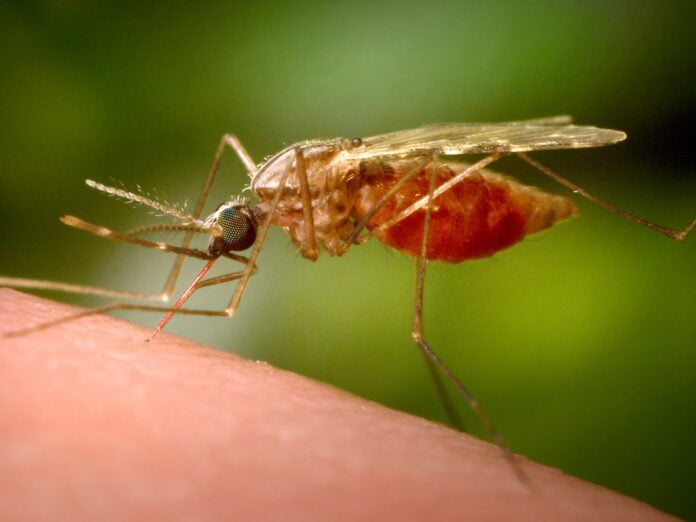
What makes Chicago’s position especially durable is geography as much as anything else. As one of the country’s busiest airport hubs, a major convention city, and a dense metropolitan area with a significant share of pre-1970 rental housing, Chicago presents conditions that pest professionals describe as close to ideal for bedbug persistence. The insects travel in luggage, in secondhand furniture, in theater seat cushions. O’Hare International Airport connects the city to hundreds of international ports – each a potential introduction point. Bedbugs can survive more than a year without a meal and flatten their bodies to the width of a credit card, squeezing into baseboard gaps, electrical outlets, and wall voids that a visual inspection routinely misses.

The Midwest’s dominance in the upper portion of Orkin’s rankings reflects, in part, the region’s housing reality. Older apartment buildings carry more structural crevices than newer construction – loose wallpaper, aging baseboards, the space behind an old radiator – all of which offer harborage sites where an infestation can establish itself before a resident notices. In these environments, professional detection, including trained scent-detection dogs, is often the only reliable early-warning tool. Early-stage infestations in pre-war housing stock are notoriously difficult to catch through visual inspection alone.
The hotel industry carries a particular operational burden. A confirmed infestation forces a room out of service for treatment, disrupts occupancy during peak travel periods, and risks the kind of online visibility that can follow a property for years. Chicago’s hotel sector, which rebounded from pandemic-era occupancy lows to post stronger convention revenue in 2024 and 2025, has found bedbug management a persistent and expensive line item that does not track neatly with the broader hospitality recovery.
Bedbugs are not the only pest drawing attention this summer. The same mild winter conditions that spared bedbug populations from natural off-season die-back have driven an unusually sharp rise in tick activity, with tick season 2026 tracking as the worst in nearly a decade, according to data from the Centers for Disease Control and Prevention. Pest management professionals say the pattern reflects a broader environmental shift: milder winters are compressing the natural population controls that once provided seasonal relief across the spectrum of insects and arachnids that pose risks to human health.
For travelers, Fox News reported, Orkin’s practical guidance has stayed consistent: inspect mattress seams before settling in, check behind the headboard and bed frame, keep luggage on hard surfaces rather than the floor, and use a lint roller on clothing and shoe bottoms when departing. The Centers for Disease Control and Prevention note that bedbugs are not known to transmit disease, though their bites can trigger significant skin reactions – an unwelcome addition to a summer travel season already complicated by shark sightings and beach closures along the East Coast.
What the ranking cannot resolve is whether Chicago’s position reflects genuine worsening or simply compounding measurement effects. Cities with denser professional pest control networks may appear worse on Orkin’s list – not because they have more bedbugs than smaller cities, but because more of their infestations enter the formal treatment pipeline. A confirmed infestation in a rural community where the default response is a hardware store purchase may never appear in this data at all. Until an independent surveillance methodology exists – one that does not depend on service records from a pest control company that also generates revenue from those treatments – the ranking is partly a measure of urban infrastructure as much as it is a count of insects.
Chicago will be in this conversation again in 2027. The bedbugs, historically, have not responded to rankings.