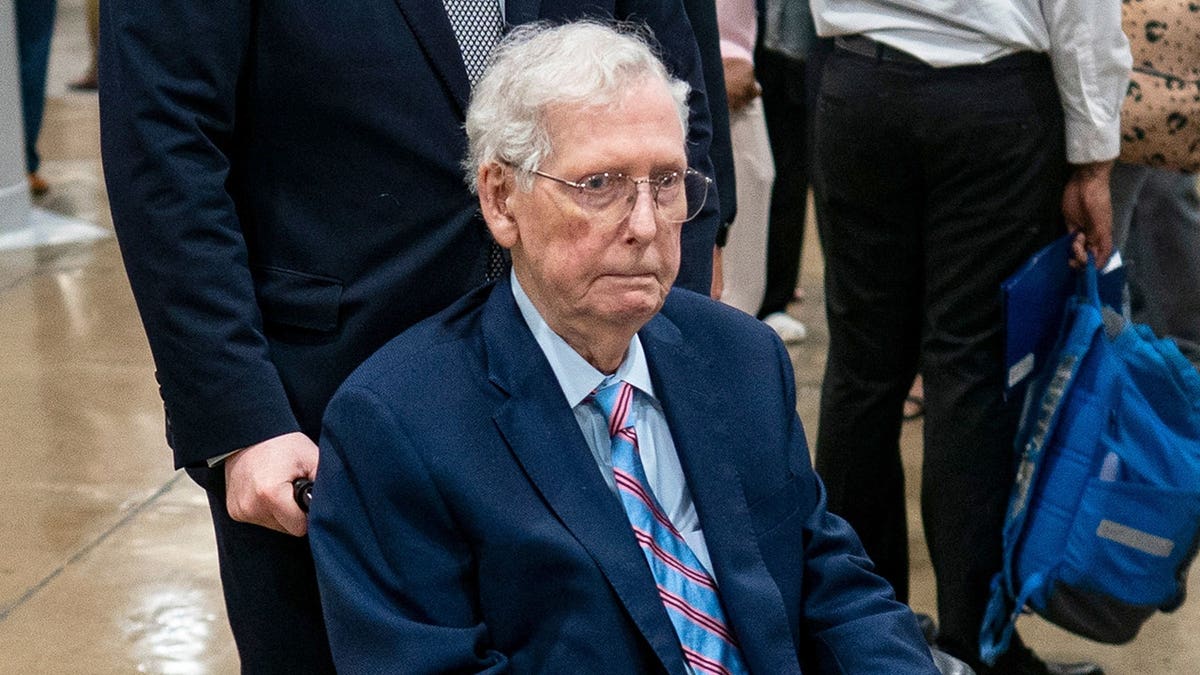

WASHINGTON – Mitch McConnell ended twenty-eight days of official silence on Sunday with a statement disclosing that a fall at his Washington home in June had led to a hospitalization and a subsequent case of pneumonia. The 84-year-old Senate minority leader offered the explanation after weeks in which his office had declined to specify what had kept him away from Capitol Hill, and during which a neighbor’s emergency call had become the most detailed public account of what had actually occurred.
The statement arrived July 12, the same day the Senate was returning to session following a recess. McConnell said he had suffered a fall and developed pneumonia while recovering, and that he was continuing to recuperate. His office did not provide a timeline for when he expected to return to active Senate duties or what his doctors had told him about his prognosis.
The gap between what McConnell disclosed and what was already known was narrower than might have been expected. Scanner audio obtained by ABC News and NBC News and reported in early July revealed that paramedics had performed CPR on McConnell at his Washington home on the morning of June 14, the same morning his office disclosed only a hospitalization. The records showed CPR was in progress by 8:42 a.m. His office had offered no indication of the severity of the situation at the time.
The fall narrative McConnell offered Sunday does not resolve what the CPR audio captured. A fall, a loss of consciousness, and a cardiac event are not mutually exclusive. Whether he fell and lost consciousness or experienced something more acute is not resolved by a statement attributing his absence to a fall and subsequent pneumonia. Those remain the specifics McConnell has not addressed.
Kentucky Governor Andy Beshear, a Democrat, had spent the preceding week publicly calling on McConnell to update his constituents. Beshear wrote on Sunday that he was “calling on Sen. McConnell to do the same and provide voters an update on his own health,” drawing a parallel to his prior advocacy around health transparency for public officials during Donald Trump’s presidency. The timing of McConnell’s statement, which followed Beshear’s renewed demand by less than twenty-four hours, was visible regardless of whether the two were connected.
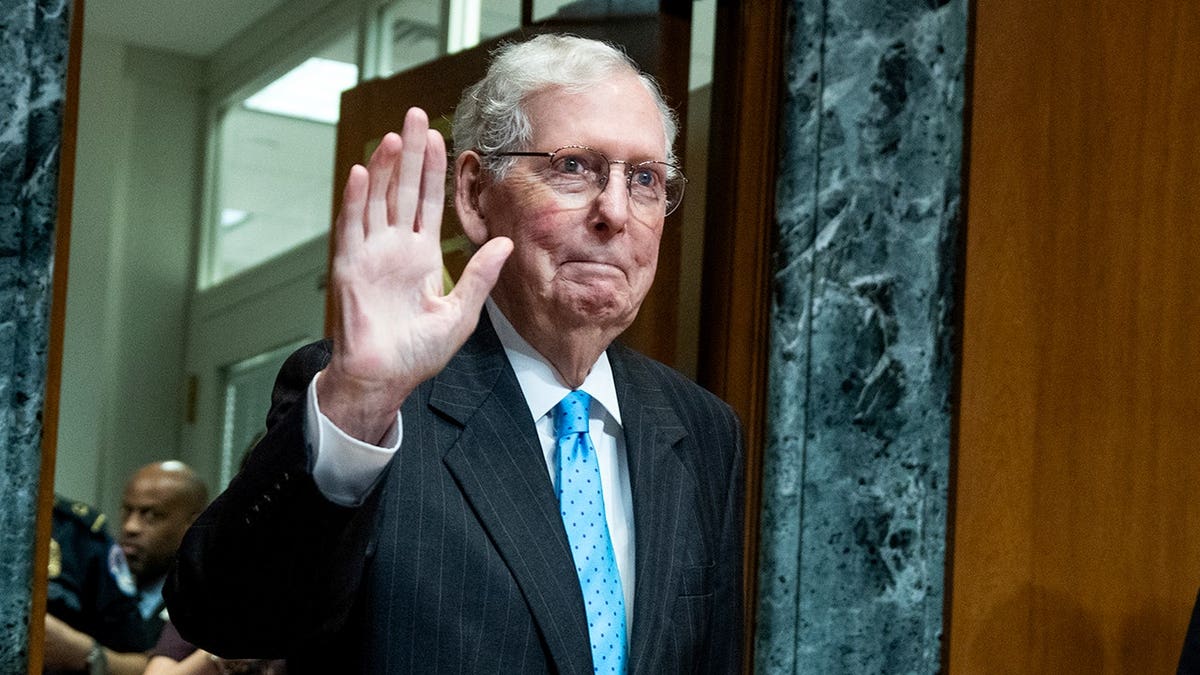
Trump said on Friday that he had “no idea how he’s doing,” a statement notable for what it suggested about communication between the White House and the Senate minority leader during the four weeks McConnell was absent. Senate Majority Leader John Thune and Republican Whip John Barrasso said they had been speaking with McConnell about Senate business and recent Supreme Court decisions, but offered no details about his physical condition or his expected return. Fox News reported that Beshear escalated his public demands on Saturday, citing the precedent set by his advocacy during the Trump administration.
What McConnell’s absence meant for Senate proceedings over four weeks was limited in immediate procedural terms. As minority leader of the party out of the White House, his primary leverage is structural, and Senate Republicans have continued operating under Thune’s leadership. But the months in which McConnell had gone without offering an explanation created their own political weight, separate from the vote count.
The health of senior senators has not receded as a Washington subject. McConnell froze publicly at a press conference in 2023 and again months later, episodes that accelerated his departure from the minority leader post in late 2024. He remains a senator with roughly six years left on his term. The Senate also lost one of its most prominent members last weekend when Lindsey Graham died at 71 following a brief illness, a death that prompted its own questions about what succession and replacement mean for a chamber where age has become a structural feature rather than an outlier.
McConnell has served in the Senate since 1985. He is the longest-serving senator in Kentucky history. The fall and pneumonia he described Sunday represent the kind of setback that can resolve entirely in a matter of weeks or can mark a more sustained change in capacity. At 84, with CPR on his medical record and a condition requiring weeks of recovery, the uncertainty around his return is not the kind that a single statement closes.
What McConnell did not say Sunday was when he would return. That is the sentence his office has declined to write since June. Whether he returns to active duty in days, weeks, or not in any sustained way before 2026 is the question that will determine whether his July 12 statement ended a health episode or began a different conversation about his future in the Senate.