
BUDAPEST — Tamas Sulyok, Hungary’s head of state, on Saturday signed a constitutional amendment that will end his own presidency before it was due to expire, completing a parliamentary push by Prime Minister Peter Magyar that has, in just over two months, begun dismantling the institutional architecture of the Orban era.
In a video address posted to social media after signing the document, Sulyok cast the act not as capitulation but as constitutionalism. “My signature is the ultimate seal of full and unconditional respect for the duties of the Hungarian president and for the institution of the presidency itself,” he said. “I fully adhered to the Hungarian Constitution and never violated it.” He acknowledged he had no “constitutional means” to resist after parliament had passed the amendment. What he did not address is that the constitution he had no means to resist had been changed to apply to him specifically.
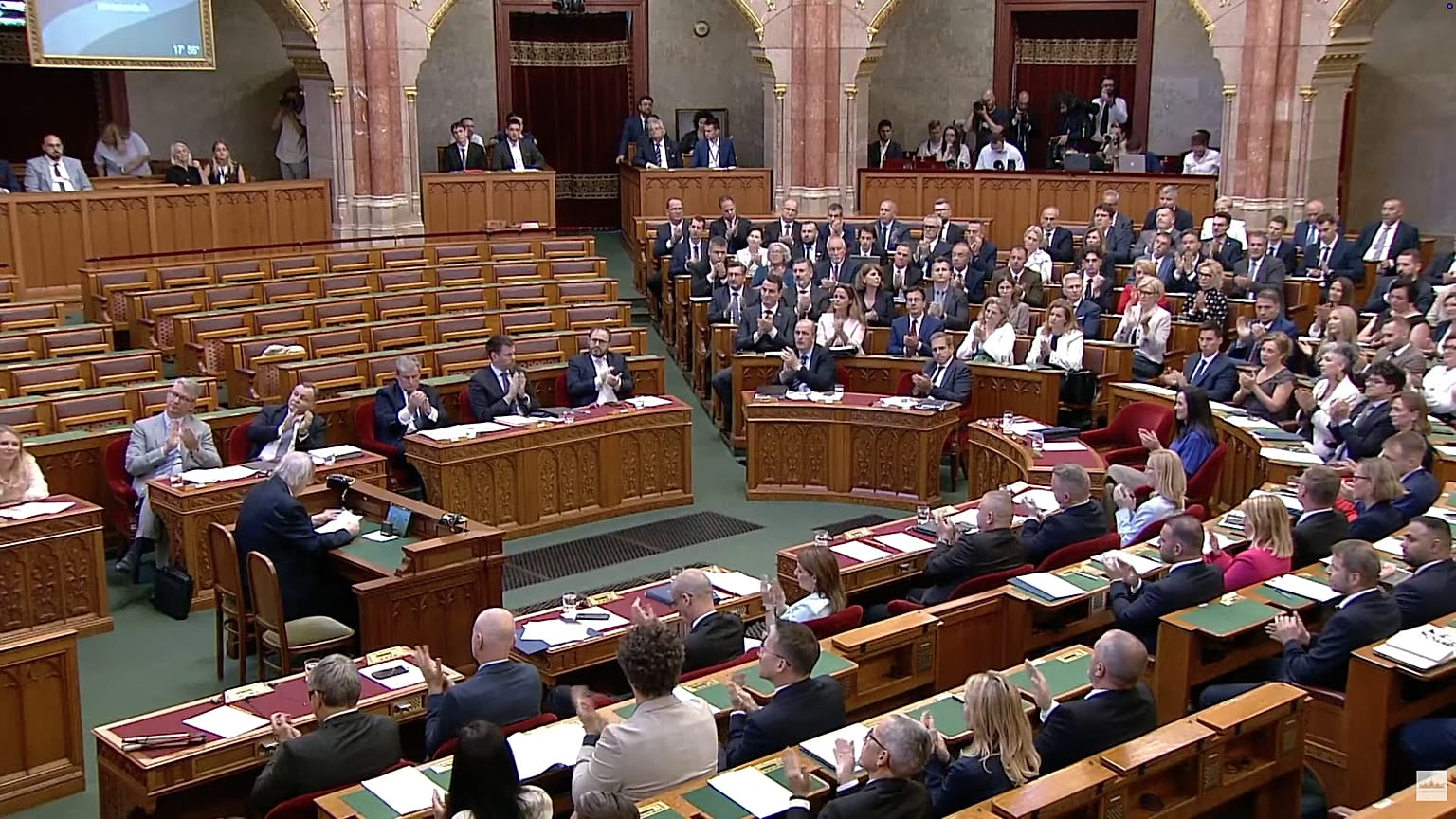
The 17th amendment to Hungary’s foundational law was adopted by the 199-seat parliament on July 13 with 139 votes for and six against. The entire opposition boycotted the session. Magyar’s Tisza party commands a two-thirds parliamentary majority after its landslide victory over Viktor Orban’s Fidesz in April’s elections, the same supermajority threshold required under Hungarian law to amend the constitution. Orban used that instrument to reshape Hungarian constitutional life repeatedly during his sixteen years in power, Al Jazeera noted. Magyar is now using it to undo what Orban built.
Beyond the provision allowing the president’s early removal, the July 13 amendment also introduces a twelve-year term limit on members of parliament, judicial reforms, and the creation of a new office to investigate financial abuses under the Orban government, a broad structural intervention compressed into a single constitutional text.
Magyar had called on Sulyok, along with Hungary’s prosecutor general and the members of the constitutional court, to resign by May 31. Sulyok, whose term was not set to expire until spring 2029, declined, saying he saw no constitutional grounds for early departure. Magyar then instructed parliament to legislate those grounds into existence. Parliament did so. Magyar gave Sulyok five days to sign or face impeachment proceedings. He signed on the fifth day.

Former Prime Minister Viktor Orban, now leader of the Fidesz opposition, responded with a statement that carried both warning and epitaph. “Today, the last barrier has fallen. Arbitrary rule is no longer a threat, but a reality. If this could be done to the president, then tomorrow no one will be safe. God save Hungary!” The intensity was notable for reasons beyond content: Orban, who spent sixteen years using constitutional supermajorities to install loyalists across Hungary’s judiciary, media regulatory bodies, and state institutions, was framing those same tools as illegitimate in his successor’s hands.
That argument has found some echo even among observers broadly sympathetic to Magyar’s project. Several legal scholars and democracy watchdog organizations that once criticized Orban’s constitutional amendments have raised procedural concerns about the current government’s pace, specifically the absence of opposition parties from the July 13 vote and the plan to draft an entirely new constitution for approval by referendum within the next several months. The European Parliament voted in 2022 to declare Hungary no longer a full democracy, Euronews reported; Magyar’s government has aligned itself with Brussels far more closely, but the pace of constitutional change has produced cautious commentary from the same institutions that once led that charge against Orban.
Magyar has said the process of drafting a new constitution will begin in September and that Hungary will have a new president before a referendum approves it. That timeline would see a country replace both its constitutional framework and its head of state within the first year of a new parliamentary term.
What Sulyok will do next is unresolved. His Saturday video address did not include a resignation letter or a departure date. The amendment provides the mechanism for his removal; whether Magyar’s government moves to invoke it on its own schedule, or whether Sulyok departs voluntarily before September, has not been made public.