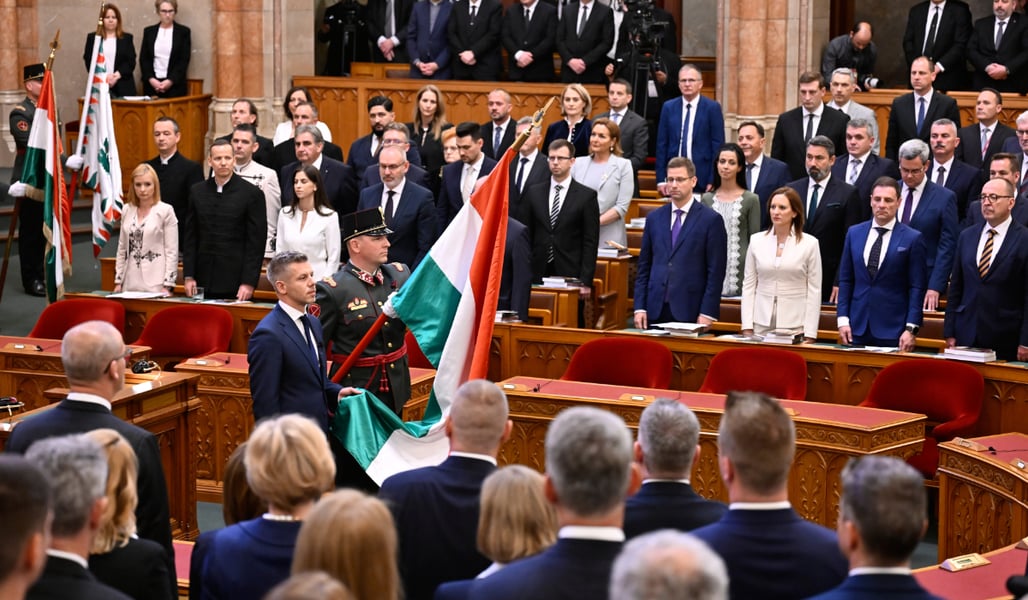

BUDAPEST — The government of Prime Minister Peter Magyar has submitted legislation to tear down and rebuild Hungary’s state media, an attempt to undo what critics at home and across Europe spent years describing as Viktor Orban’s propaganda machine.
The bill, tabled in parliament by Magyar’s Tisza party, would break up MTVA, the sprawling holding company that controls public television and radio, splitting it along its broadcasting lines and re-establishing the MTI wire service as an independent national news agency.
At its centre is a new Independent Public Media Committee, charged with guarding the impartiality of public broadcasting, supervising its budgets and operations, and helping choose its leadership. Seats would be divided on a parity basis among the government, the opposition and representatives of the independent press.
Reforming public media was one of the central promises of Magyar’s campaign, which swept Orban from power in April’s landslide after sixteen years of nationalist rule. The new prime minister has cast the overhaul as a test of whether Hungary can rebuild the institutions his predecessor hollowed out.
Under Orban, the state broadcaster became a byword for one-sided coverage. Watchdogs documented how its news programmes amplified government messaging, marginalised the opposition, and recycled the official lines on migration, Brussels and the war in Ukraine almost verbatim.
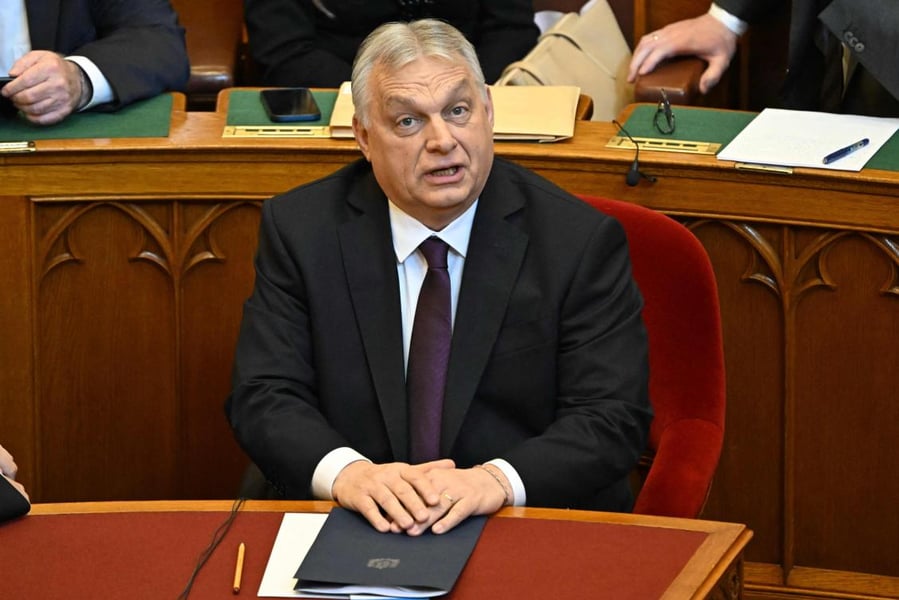
The machinery was vast and well funded. MTVA absorbed hundreds of millions of euros in public money each year and employed thousands, dwarfing Hungary’s surviving independent outlets and giving the government an unrivalled reach into living rooms far from Budapest.
The cracks had already begun to show. The head of the public media resigned ahead of the bill, and thousands of Hungarians have marched in recent weeks demanding an end to what their placards called propaganda, a sign of how raw the issue remains even after the election.
Magyar has paired the media bill with a wider campaign to unwind the Orban system. His government has tabled sweeping anti-corruption legislation intended to satisfy Brussels and unlock billions of euros in EU funds frozen over rule-of-law concerns during the previous administration.
Whether the rebuild delivers genuine independence or simply changes whose hands hold the levers is the question critics are already asking. A committee balanced between government and opposition can guard against capture, but only if the parties treat it as a watchdog rather than a prize to be shared out.
The fight also echoes beyond Hungary. Across the region, the contest over courts, press and public institutions has become the defining struggle of post-populist politics, from Warsaw, where a nationalist president is blocking the government’s reforms, to Budapest, where the roles are reversed.
For now the bill must still pass, and Orban’s party, though out of office, retains a bloc in parliament and a long practice of fighting on procedural ground. Magyar has the votes and the mandate; what he does not yet have is proof that a captured public broadcaster can be made free again, rather than merely captured anew.