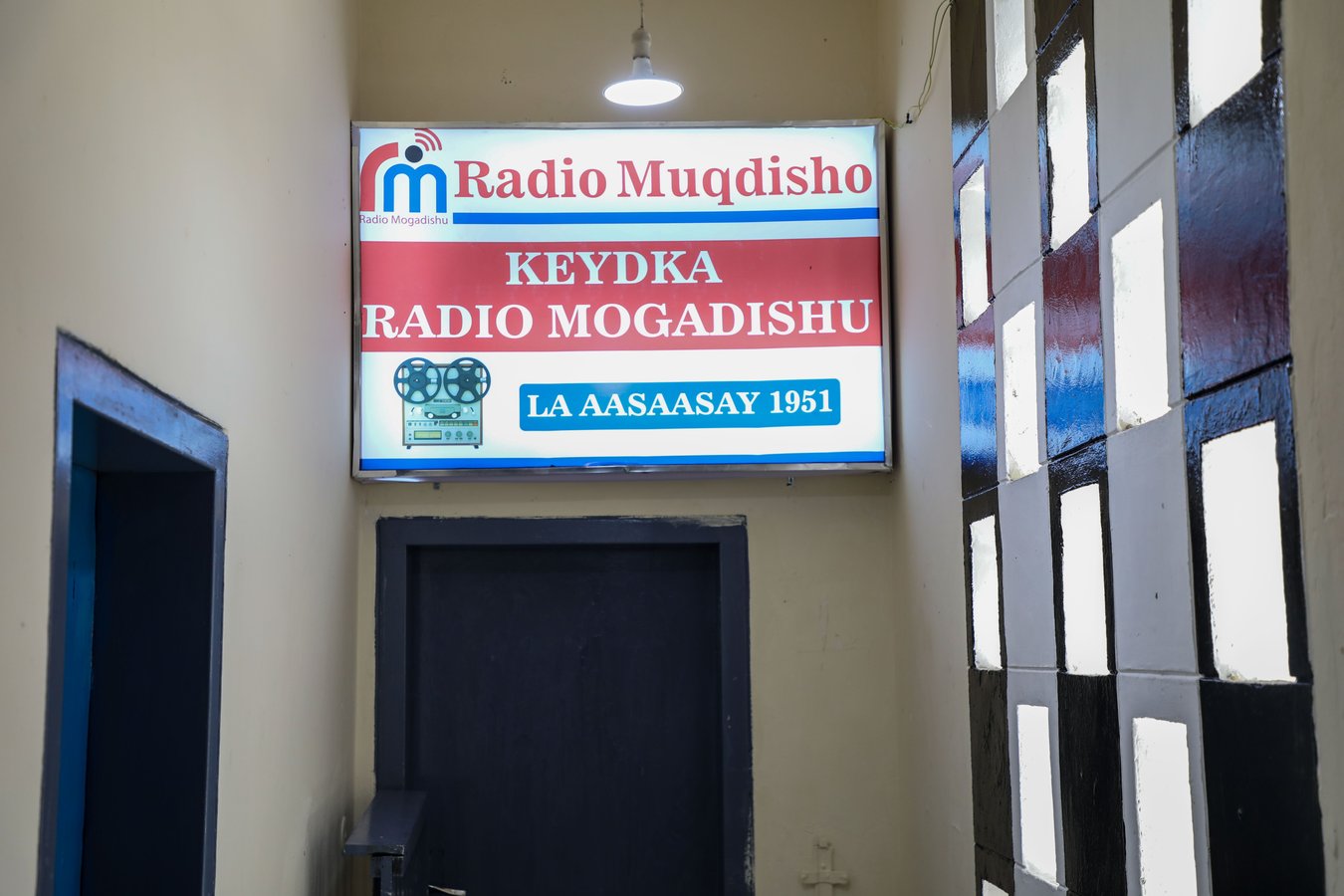

MOGADISHU – Inside a storage room at Radio Mogadishu’s headquarters, magnetic tape is slowly failing. The archive holds approximately 400,000 hours of broadcasts recorded across seven decades of Somali public life, including music, drama, news, oral history and political speeches that document the country’s twentieth century more completely than any other surviving medium. A small team is working through the collection with new digitization equipment, transferring each reel before the magnetic coating flakes off and the audio inside becomes unrecoverable. They have converted roughly 10 percent of what is there.
“This is the world’s largest store of Somali language music, culture, dramas and everything else,” said Abdiqadir Geedi Robleh, one of the archivists working on the project, “and at the moment it is locked away from the public in a kind of prison.” He was not speaking metaphorically. The archive exists. The recordings survive, for now. They are simply inaccessible, unavailable to researchers, unreachable by the public, preserved in a form that is slowly destroying them.
Radio Mogadishu was founded in 1951, during the late phase of Italian Somali trusteeship, and became for several decades the most influential broadcaster in East Africa. Its reach extended to Tanzania, Ethiopia and parts of the Middle East. Hassan Dahir, a former journalist who worked at the station during its peak years, described its impact: “Its reach was so extensive that even nomadic herders followed events as far afield as the Vietnam War and the American Civil Rights Movement.” The station broadcast in Somali and Arabic, and made a notable editorial decision to also broadcast in previously suppressed languages including Oromo and Sidama, spoken by communities who had rarely heard themselves represented on the radio.
The archive is not simply a Somali institutional record. It is a regional document of twentieth-century East Africa, covering the independence movements of the 1960s, the Cold War proxy conflicts that ran through the Horn of Africa, and the social and cultural life of a country that had a thriving modern culture before the civil war of 1991 shattered it. Radio Mogadishu played a documented role in Somalia’s 1972 national literacy campaign, when the government introduced a written script for the Somali language for the first time and launched a mass literacy drive reaching remote populations primarily by radio.
That civil war changed everything. When fighting reached Mogadishu in 1991, the station was damaged and some recordings were lost. An electrical fire in 2018 destroyed further material. What remains is vast, but it is held in formats that were never designed to last this long. Magnetic tape has a finite lifespan, and temperature fluctuations, humidity and the gradual chemical degradation of its coating have already rendered some reels difficult to play. The window for digitization is narrowing.
“In a society that prizes orality above the written word, radio was uniquely effective at creating a common public sphere,” said Iman Mohamed, a historian at the University of Minnesota who has studied Somali broadcasting. She described the archive as “especially problematic for young people” who lack other documentation of their country’s twentieth-century history. The civil war created an intergenerational break in cultural memory. If the archive is preserved, it can partially bridge it. If it is lost, a generation inherits an undocumented past.
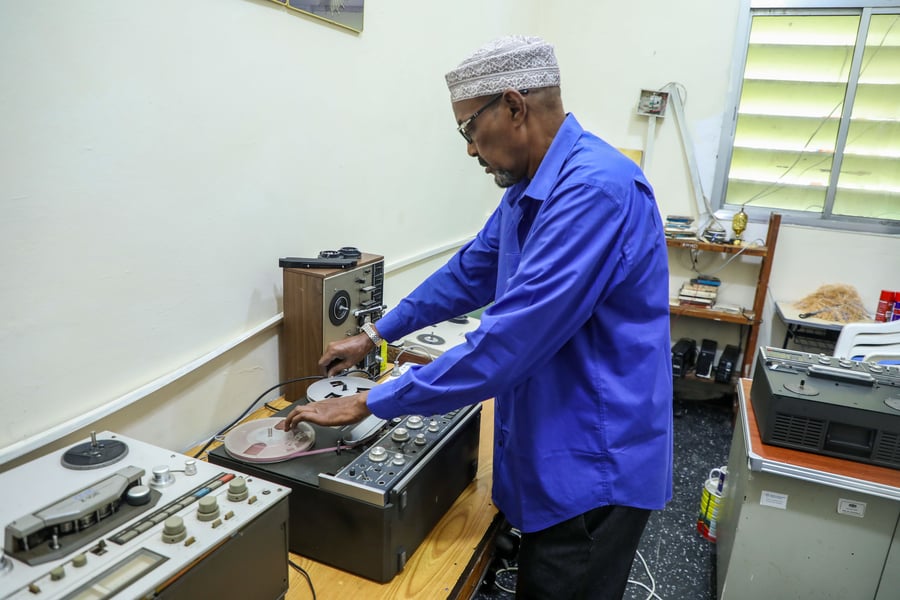
UNESCO’s Memory of the World program is now supporting the digitization effort, with an eventual goal of formally registering the collection through the program’s international recognition process, which acknowledges documentary heritage of outstanding universal value. Guilherme Canela, a senior UNESCO official overseeing the initiative, said that protecting the archive is “relevant for everyone.” The station’s coverage of anti-colonial movements, early pan-African thought, and conflicts now documented only in fragmentary print sources represents a shared historical record that exists nowhere else in this form.
Abdi Jeite, the current station director, said the project has made progress. New digitization equipment has arrived and archivist training has improved. But the work is far from complete and funding remains uncertain. “We’ve got some new tools, and more training for our archivists, but there is still a lot of support needed,” he said. Somalia’s government has limited resources and is simultaneously managing an active security situation across multiple regions. International institutional support has materialized slowly.
The broader context does not help. East Africa is managing intersecting crises, from El Niño–driven floods and famine affecting countries across the region to ongoing political instability in the Horn. Cultural preservation is rarely the first budget priority in an emergency. The deterioration of Radio Mogadishu’s archive is slow, continuous and largely invisible, which makes it precisely the kind of problem that institutions are least equipped to address before the point of no return.
Four hundred thousand hours is an amount that would take a large, well-funded team years to digitize properly, cleaning, cataloguing, verifying and encoding each item. Al Jazeera reported from Mogadishu that Robleh and his team had received new tools and training, but that the scale of what remains undone still dwarfs what has been accomplished. UNESCO’s involvement provides institutional credibility and some resources. It does not answer the question of who will fund the full project, and on what timeline, before the tapes make the decision for everyone.
A station that once shaped the political and cultural imagination of an entire region has become a place where the past is stored in rooms running out of time. Robleh’s description of the archive as a prison was not a complaint. It was a description of a condition that can still be changed, if the people and institutions with the capacity to change it decide the past is worth preserving. Ten percent of 400,000 hours is a significant body of material already rescued from the tape. It is also a reminder of how much remains: 360,000 hours of a country’s life, degrading slowly, waiting for the funding to arrive before the tapes decide the matter themselves.