
KYIV – Ukraine struck three oil storage depots and a fuel distribution facility in Russia’s Stavropol region overnight, President Volodymyr Zelenskyy confirmed Sunday in a statement that extended the geographic perimeter of Ukrainian strike operations deep into Russia’s industrial heartland, more than a thousand kilometres from the front lines of the active ground war.
The Stavropol region, in Russia’s south, sits far removed from the contested territories of Zaporizhzhia or Donetsk where ground combat is concentrated. Strikes reaching this deep into Russian territory signal a deliberate expansion of Kyiv’s targeting doctrine beyond the frontline belt and the border regions that have been the primary focus of Ukrainian long-range operations until recently.
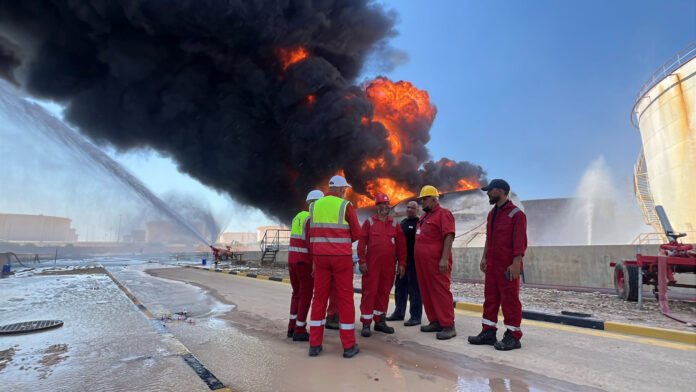
Zelenskyy’s statement provided the target count, three depots and one fuel facility, without specifying the precise locations within Stavropol or the delivery mechanism used. Russia’s reporting on the incident, while framed as a successful interdiction, acknowledged that fires broke out in an industrial zone in the area, which is consistent with the claim that oil storage facilities were struck. Oil and fuel storage fires are difficult to attribute to accidental causes in the context of an active strike campaign with a stated target list.
The strategic logic behind targeting Stavropol’s fuel infrastructure flows from a calculation that has shaped Ukrainian strike planning for months: fuel is the consumable that sustains Russian military operations. Ammunition stockpiling draws significant attention, but armored maneuver, helicopter transport, and artillery repositioning all require diesel and aviation fuel distributed through storage and distribution hubs behind the front. Degrading those hubs, even temporarily, even at the tactical margin, raises the cost of Russian military logistics in the southern and southwestern theaters where Stavropol serves as a supply node.
The Stavropol region is also significant for Russia’s internal energy distribution network. It sits at the intersection of pipeline and road freight routes that distribute fuel from the Caspian and Caucasus production zones northward. Strikes on storage facilities in this corridor affect not only military fuel supply but civilian and industrial consumption in the region, compounding economic pressure on areas already absorbing the costs of the war.
That Zelenskyy chose to publicly confirm the strikes, naming targets and claiming successful operations, reflects Ukraine’s established communication pattern for deep strikes inside Russia. Confirming these operations serves multiple purposes: it demonstrates reach to a domestic audience, communicates strategic seriousness to Western partners evaluating the effectiveness of weapons transfers, and signals to Russian audiences that Kyiv’s strike capabilities extend well beyond the frontline or the border belt.
Russia’s response to the Stavropol strikes, as relayed by state media, characterized the Ukrainian drone attack as having been largely repelled. That framing has been standard in Moscow’s communications about such incidents but is difficult to square with the acknowledgment that fires broke out in an industrial zone following the attack. The pattern across the current conflict phase is that both sides claim defensive success and offensive effectiveness simultaneously, leaving the actual physical outcome somewhere between the two accounts.
This exchange of deep strikes mirrors the pattern of simultaneous aerial operations in both directions. Russia struck Kyiv with 31 ballistic missiles in the same period, targeting residential districts and claiming military logistics targets in the capital. Russian operations against Odesa ports targeted cargo vessels carrying military-designated freight. Ukraine’s Stavropol operation is part of the same bilateral logic: both sides are extending their reach into territory that was not the primary theater of operations in the early phases of the conflict.
What the Stavropol strikes do not resolve is the question of cumulative effectiveness. Single operations against fuel storage can be repaired within days or weeks, and Russia has shown throughout the conflict the capacity to reroute supply chains and reconstitute logistics nodes that have been damaged. Whether Ukraine is conducting operations against the same Stavropol facilities repeatedly, which would be required to create lasting degradation, or striking different nodes in a distributed campaign against the regional fuel network as a whole, is not established by the information Zelenskyy’s statement provides.
According to reporting by Anadolu Agency on the Zelenskyy statement, and Russian reporting confirming fires in an industrial zone near Stavropol, the fuel facility was burning by Sunday morning. That is what can be confirmed. Whether it changes anything durable about the Russian military’s operational capacity in the south of the conflict zone is a question that will only be answered by what happens at the front in the days and weeks that follow.