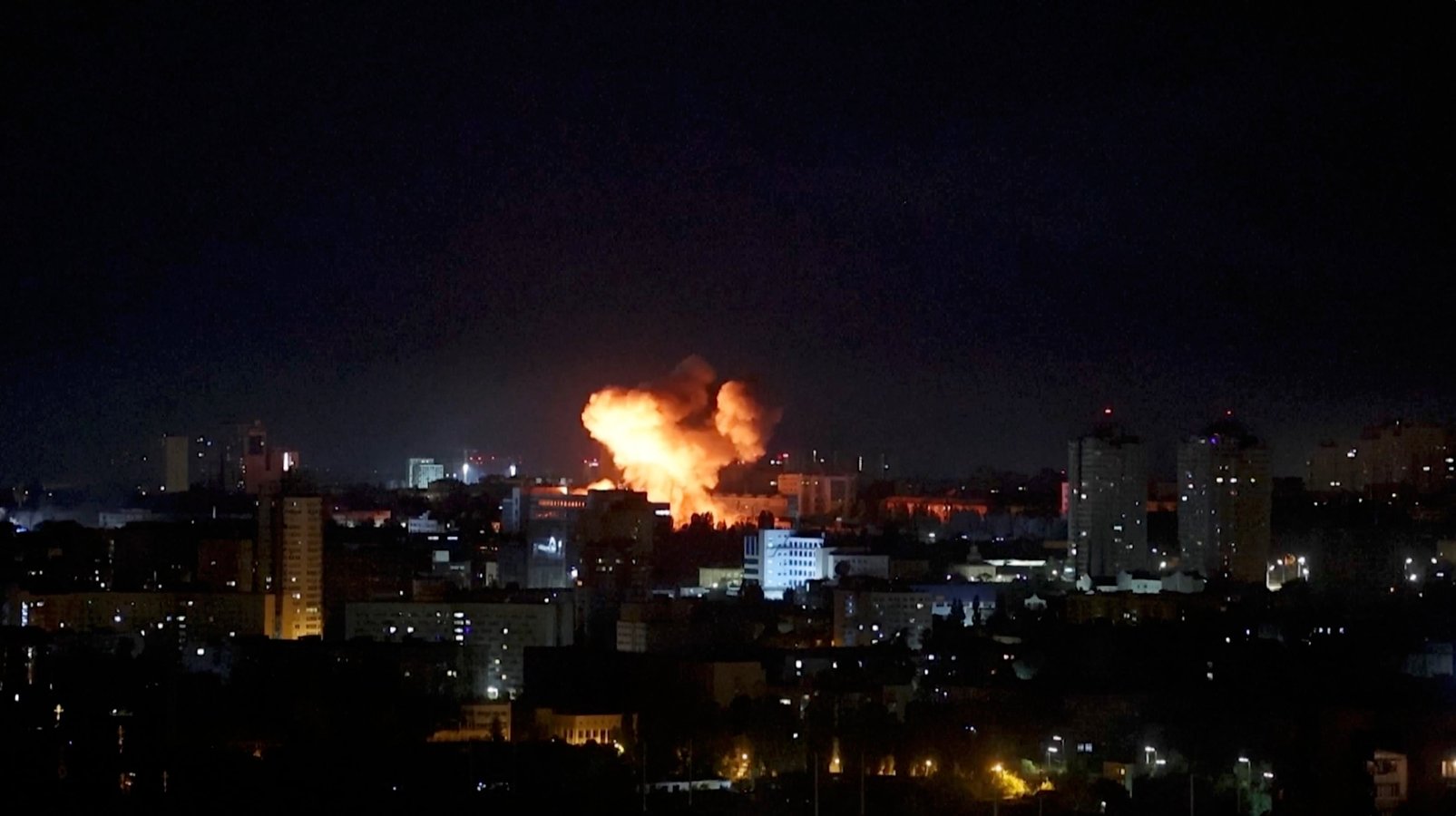

KYIV – The first explosions reached the Desnyanskyi district at 1:30 in the morning. Over the next hour, five of Kyiv’s administrative districts absorbed strikes from a combined barrage of 31 ballistic missiles and at least eight Zircon hypersonic projectiles, leaving vehicle fires in commercial compounds, a three-story administrative wing burning in the Shevchenkivskyi district, and at least seven people in hospitals or receiving treatment at the scene.
The overnight attack on Sunday was Kyiv’s eighth Russian aerial assault in July, arriving one day after Ukrainian drone strikes killed nine people in Kotovsk, deep inside Russia’s Tambov region, and wounded at least 38 across several Moscow-area cities. The exchange illustrated an escalatory pattern in which neither side’s strikes have produced the constraint on the other that either government publicly claims as the strategic objective.
Kyiv Mayor Vitali Klitschko confirmed multiple strike sites across the city. In the Desnyanskyi district, a missile hit the grounds of a commercial property. In Shevchenkivskyi, the three-story wing of an administrative building was on fire. The Dniprovskyi, Solomyanskyi, and Sviatoshynskyi districts also absorbed hits, though the full extent of damage in each area was still being assessed as emergency crews worked through the pre-dawn hours.
Seven people were injured in Kyiv from Sunday’s strikes: six were transported to hospitals, one received treatment at the scene. Five additional people were rescued from damaged buildings. Ukraine had activated air raid alerts across its central and eastern regions before the attack, but the combination of munitions used Sunday placed particular strain on defense systems. Ballistic missiles follow a high-arc trajectory that compresses the interception window to a matter of seconds. Zircon hypersonic missiles travel at speeds that conventional interception systems are designed for but rarely tested against at scale.
The Saturday night Ukrainian operations inside Russia that preceded Sunday’s Kyiv barrage were among the deadliest single-day strikes inside Russian territory in two years. Tambov Region Governor Evgeny Pervyshov confirmed seven killed and 25 injured after Ukrainian drones struck warehouses in Kotovsk. Moscow Region Governor Andrey Vorobiev reported one killed and 37 injured in Elektrostal, and two more injured in Noginsk. Ukrainian drones reached all three locations, continuing a campaign of deep-penetration strikes targeting Russian logistics infrastructure and, in recent weeks, commercial facilities used for drone component storage.
Russia’s strikes on Kyiv this month have followed a pattern Ukrainian analysts have described as targeting civilian and administrative infrastructure. The Shevchenkivskyi district, where a three-story administrative building was set alight Sunday, contains both government offices and dense residential neighborhoods. The Desnyanskyi district, where the first strikes landed, is primarily commercial and residential. The targeting of a commercial property and an administrative building fits what Ukrainian officials have characterized as Russia’s effort to degrade Kyiv’s governance capacity and economic function alongside identifiable military targets.
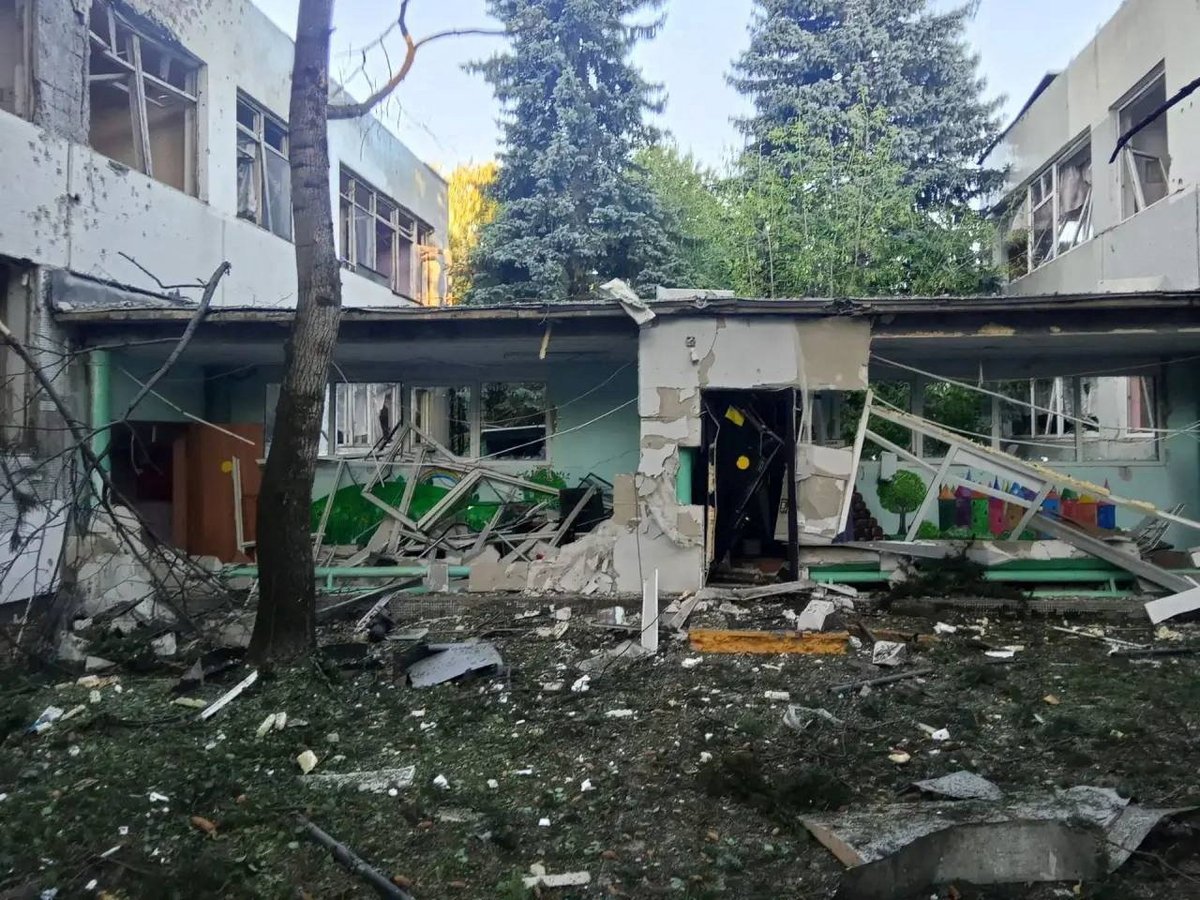
July has been an unusually intense month for Russian aerial operations against Kyiv. The strike on July 17 killed two people and injured six, the seventh attack of the month at the time. Sunday’s barrage is the eighth. Russian forces have used ballistic missiles against Kyiv in each of July’s attacks, with Zircon hypersonic missiles added to the payload in several of them, even as Ukrainian drone operations have reached deeper inside Russia than at any previous point in the conflict.
For Kyiv’s residents, the pattern of attacks has shifted the city’s relationship with night hours. Air raid sirens, underground shelters, and the mathematics of missile interception have become features of daily life rather than exceptional disruptions. The variation is in scale: Sunday’s combined payload of 31 ballistic and 8 hypersonic missiles was larger than the July 17 attack, though the confirmed death toll as of Sunday morning was lower. Whether that reflects interception success, structural luck, or a different targeting pattern could not be determined from Mayor Klitschko’s initial assessment.
According to Anadolu Agency, the first explosions were heard in the capital at 1:30 AM local time as air raid alerts activated across the central and eastern regions. The combination of strike types used Sunday reflects a Russian targeting approach designed to overwhelm layered air defense systems: ballistic missiles that arrive at high speed along a predictable arc, followed or accompanied by hypersonic projectiles whose speed creates a different set of interception problems for the same defensive installations.
What Sunday’s attack did not clarify was whether Russia’s sustained pressure on Kyiv in July would produce any change in Ukrainian drone operations inside Russia, or whether the Ukrainian government would seek any diplomatic channel following the barrage. Volodymyr Zelenskyy had not made a public statement on the overnight attack as of Sunday morning. What the eight July attacks on Kyiv had established, without ambiguity, was that Russian aerial operations against the Ukrainian capital had not decreased in response to Ukrainian strikes, and that the exchange of attacks was the current state of the conflict, not an escalation away from any prior equilibrium.