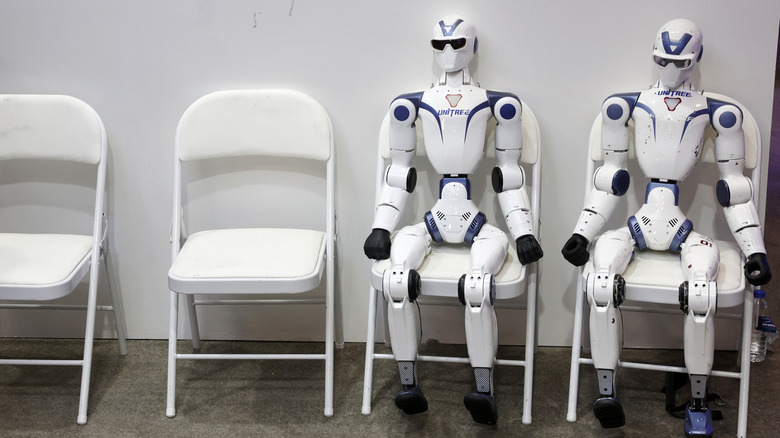

NEW YORK — Three of America’s four largest airlines reached the same conclusion in the span of two months: humanoid robots are a battery-safety problem, not a passenger amenity. Delta Air Lines moved first in June. Southwest Airlines had quietly barred them in May. On July 23, United Airlines became the third major carrier to prohibit humanoid and quadruped robots in both the cabin and checked luggage. JetBlue and American Airlines have not yet followed, leaving an inconsistent national policy at a moment when the category of device being banned is just beginning to appear in the commercial market.
The bans cite lithium-ion batteries. Humanoid robots run on battery packs that exceed the watt-hour thresholds airlines already restrict for consumer electronics. A robot’s battery is larger than a laptop’s and not easily removable in the event of thermal runaway — the technical term for a lithium battery failure that can produce fire. Aviation safety regulators have spent years building rules around lithium battery risks in checked luggage, and airlines have extended that framework to cover a device category the original rules did not anticipate. The logic is straightforward even if the implementation required each carrier to draft new policy language independently.
The practical effect on the robotics industry is currently small. Global humanoid robot shipments in 2025 totaled roughly 15,000 units — the entire market produces fewer units in a year than a regional airport boards passengers in a single busy morning. The commercial deployment of humanoid robots in settings requiring air travel — research institutions, trade shows, corporate demonstrations — is limited but real, and the ban creates a friction point for exactly the early-adopter operators who are most likely to need to move robots between locations.
Ravinder Dahiya, a roboticist at Northeastern University who studies autonomous systems, told CBS News he doesn’t oppose the bans from a safety standpoint. “When it comes to safety, I’m not opposed to the bans at all. But as a researcher, you desire to carry out your research freely, without hindrance,” Dahiya said. The comment captures the tension the policy creates: aviation safety requirements are legitimate, and the same battery technology that makes humanoid robots functional makes them difficult to carry on planes under existing safety frameworks.
The airline bans arrived within days of a broader federal action targeting the category. The FCC added humanoid robots, quadruped machines, and foreign-made power inverters to its national security Covered List last week, prohibiting new imports of foreign-manufactured units on the grounds that remotely operable robots could expose US critical infrastructure and residential spaces to foreign surveillance and control. The FCC action is focused on imports and national security; the airline bans are focused on in-flight battery safety. The two policies arrived simultaneously from different directions but together describe an institutional environment that has not yet worked out how humanoid robots fit into existing regulatory frameworks.
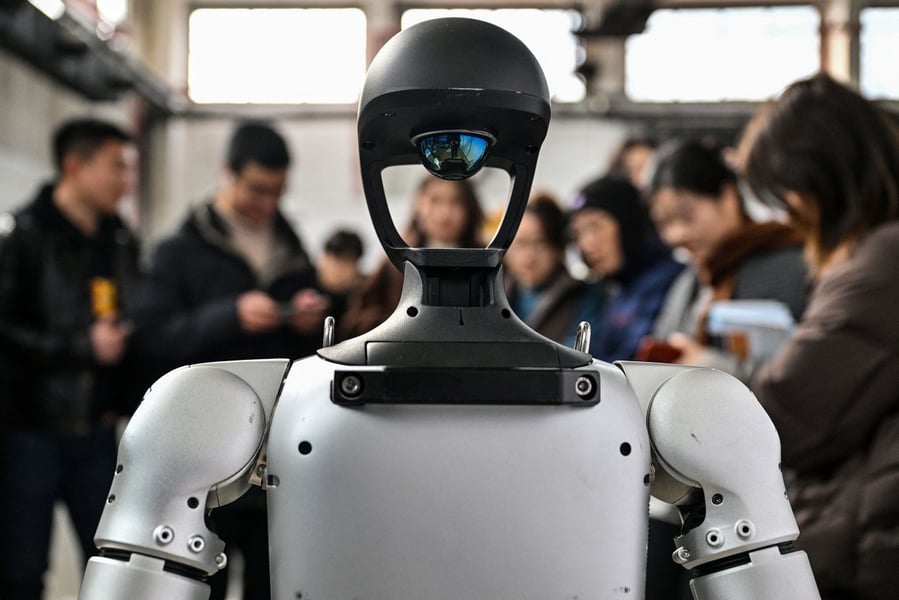
The specific incident that triggered Southwest’s May policy is illustrative. A passenger boarded a Southwest flight with a robot companion — not a research unit or an industrial system but a consumer product marketed as a personal robot — and the airline concluded it lacked the safety evaluation to allow the device. Southwest’s policy change followed that individual incident. Delta’s and United’s bans appear to have been policy decisions rather than responses to specific events, suggesting carriers were watching the category and chose to get ahead of potential incidents rather than wait for one.
The battery threshold question has a technical wrinkle that will matter as humanoid robots become more commercially common. Lithium-ion battery restrictions on aircraft are measured in watt-hours — most consumer laptops carry batteries around 50–100 Wh, and the FAA restricts batteries above 160 Wh in carry-on luggage. Humanoid robots designed for extended operation carry batteries in the 1,000–5,000 Wh range, far above existing airline thresholds. Unless robot manufacturers develop easily removable, aviation-compliant power systems, the battery issue will not resolve itself as the technology improves in other dimensions. A faster or smarter humanoid robot is still a battery-safety problem on an airplane if the power pack is the same size.
The question of what happens to the two carriers that have not yet acted — JetBlue and American Airlines — is the near-term variable. If a humanoid robot battery incident occurs on a flight operated by either carrier, the three existing bans will be treated retroactively as the reasonable standard of care. Neither JetBlue nor American Airlines has commented publicly on whether a ban is under consideration. The practical incentive for both carriers to align with the other three is high; being the airline where a battery fire involving a humanoid robot occurs is not a competitive position.
What the airline bans do not resolve: the question of cargo holds, where robots could theoretically travel as freight under different safety regimes; whether the bans apply to partially disassembled robots where battery packs are removed and shipped separately; and how the policy treats robots shipped by manufacturers to customers, which move through commercial air freight rather than passenger baggage systems. The carriers have drawn a clear line for the passenger experience. The lines around everything adjacent to that experience remain undrawn.