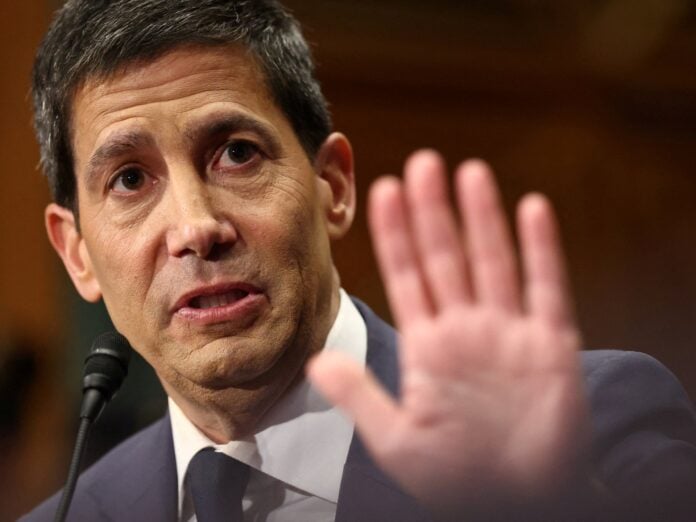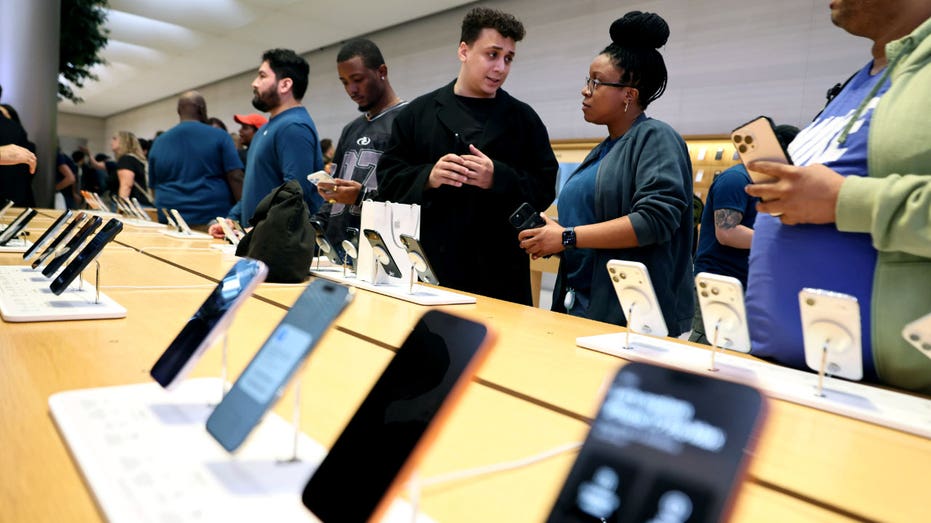

CUPERTINO – Tim Cook’s final earnings call as Apple’s chief executive ran roughly an hour on Thursday, and when it ended, the company he leaves behind on September 1 had just delivered its strongest financial results in any single quarter since he took the position in 2011. For John Ternus, who assumes the chief executive role on that date, the numbers are not a gift. They are a standard.
Apple Inc. AAPL reported fiscal third-quarter 2026 revenue of $111.2 billion, a 16.6 percent increase from a year earlier, topping the Wall Street consensus of $109.7 billion, according to the company’s quarterly earnings release. Diluted earnings per share came in at $2.01 against analyst expectations of $1.94, representing roughly 20 percent year-over-year growth at a scale where sustaining that rate compounds in difficulty with every successive quarter. Gross margin expanded to 49.3 percent.
The quarter delivered two stories at once. The first concerns where Apple’s revenue is coming from and the direction it has been moving. The second concerns who manages the company through whatever comes next, and whether the machine Cook built can sustain itself on institutional momentum or requires the judgment that originally designed it.
Services generated $30.98 billion, an all-time quarterly record. The segment encompasses App Store royalties, Apple Music and TV+ subscription fees, iCloud storage revenue, Apple Pay transaction volume, and the commercial arrangement with Alphabet Inc.’s Google that now powers the rebuilt Siri via the Gemini model. It has grown every quarter for three years and now accounts for more than a quarter of Apple’s total revenue. The Services margin profile runs materially higher than hardware, which means every dollar that shifts toward recurring subscription revenue is also a margin-expanding event. That is the flywheel Cook spent a decade constructing. What transfers less cleanly to his successor is the regulatory exposure attached to it: the US Justice Department’s scrutiny of App Store distribution terms, and European Union Digital Markets Act enforcement actions still working through adjudication, belong now to Ternus.
iPhone revenue reached $56.99 billion for the quarter. The iPhone 17 cycle, built around AI-enhanced camera processing and neural features running on Apple’s Private Cloud Compute infrastructure, sustained demand without requiring the price reductions that some analysts had forecast heading into the calendar second quarter. Greater China revenue rebounded from the compression that weighed on fiscal 2025 results, a recovery Cook has been guiding toward since Apple began expanding its manufacturing footprint in India. The rebound is real. Its durability is a function of trade and geopolitical conditions that neither Cook nor Ternus sets.
Gross margin at 49.3 percent extended a pattern that has persisted for four consecutive quarters. Apple has consistently outperformed its own margin guidance, partly because the pricing discipline Cook imposed after the pandemic-era inventory overshoot held through a rising-cost environment, and partly because the steady shift toward Services revenue carries software-level margins that widen the blended rate across the business. Guidance for the fiscal fourth quarter, which encompasses the iPhone 18 launch cycle, implies continued topline growth and margin stability, though component costs and supply chain conditions introduce variability the headline figures do not fully account for.
Cook’s remarks on Thursday’s call framed the quarter’s Services performance as evidence that Apple’s capital-light approach to artificial intelligence had moved from strategic argument to financial result. The thesis, that distributing AI features through hardware users already own rather than committing tens of billions to the data-center infrastructure that rivals have been building, was now visible in the income statement. The product deal that encodes this most directly is Apple’s billion-dollar Google Gemini partnership announced at WWDC, which rebuilt Siri on a foundation Cook negotiated but will not oversee past September 1. Its commercial impact arrives in the iPhone 18 launch cycle. That is Ternus’s first major product event as chief executive, and the one Cook can no longer shape after the handoff.
Apple shares rose in after-hours trading following the results, extending gains that had begun the previous session. The company had briefly crossed the $5 trillion market capitalization threshold on Tuesday, only the second publicly traded company in market history to reach that level, on a session when AI infrastructure stocks sold off sharply, as Fox Business reported. Thursday’s earnings removed the most immediate risk to that milestone: that the valuation had priced in results Apple had not yet delivered. It delivered them. Whether that $5 trillion reflects a floor or a ceiling for a company changing chief executives at its peak is the question no quarterly report can answer in advance.
Ternus spent years running Apple’s hardware engineering before Thursday’s call. His work is in the M-series chip roadmap, the iPhone 17 product program, and the silicon architecture that makes Apple’s private cloud compute strategy viable. Apple’s next chief executive has indicated that restoring the company’s design culture, which Cook’s operations-first approach subordinated to margin efficiency, is among his early priorities. That is a hardware and aesthetic agenda. The parts of Cook’s role it does not obviously cover are the ones likely to matter most immediately: the regulatory strategy running simultaneously across the United States, the European Union, and South Korea; the capital-markets communications that analysts evaluate as much by tone as by numbers; and the institutional China relationships Cook built through direct, personal engagement with Beijing over fifteen years. Those do not transfer in an org chart.
What Thursday’s results cannot settle is whether the Services momentum Cook generated survives a chief executive who built his career inside a hardware organization. The record $30.98 billion quarterly figure reflects pricing decisions, developer relationship structures, and platform architecture choices made over five years. Many of those are durable. Not all are, particularly as regulatory pressure on the App Store distribution model accumulates across multiple jurisdictions. Ternus inherits the Services revenue as Cook structured it. He does not automatically inherit the institutional knowledge of how Cook structured it, the regulatory relationships Cook held personally, or the instinct for when to defend a platform position and when to cede it. That is a different inheritance than a record quarter. What it is worth depends on the next one.