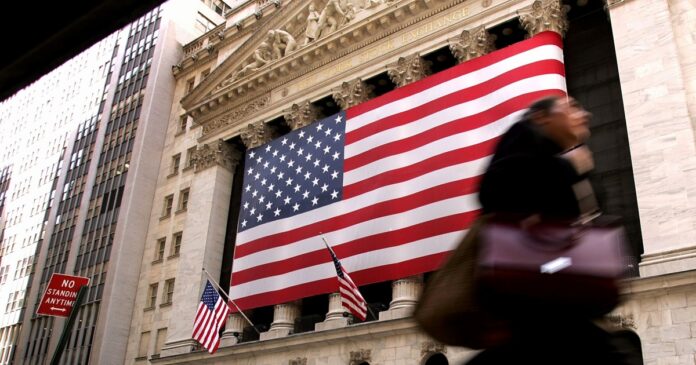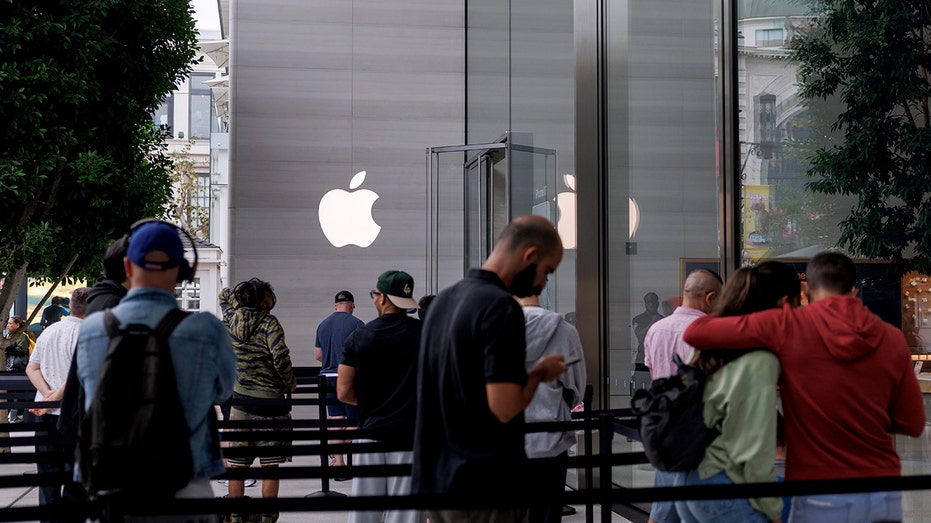

CUPERTINO — On any other Tuesday, the number alone would have been the story. But when Apple Inc. AAPL briefly crossed $5 trillion in market value on July 29, the market was already busy destroying it elsewhere: the Dow Jones Industrial Average was falling 1,153 points, semiconductor stocks were unraveling, and investors were questioning whether the tens of billions being poured into artificial intelligence data centers would ever earn a return. That Apple floated above all of it, if only for an intraday hour, said more about where Wall Street thinks the AI economy is actually going than the figure itself.
Shares of Apple touched $342.89 during Tuesday’s session, the price at which the company’s outstanding shares briefly added up to more than five trillion dollars, only the second time in market history that any publicly traded company has cleared that threshold. The close came in at $340.08, settling Apple just shy of the mark at roughly $4.99 trillion, but the crossing had already happened. The first company to achieve it was Nvidia Corp. NVDA, which surged past $5 trillion on October 29, 2025, lifted by the first wave of enterprise AI infrastructure spending. By Tuesday, Nvidia’s market cap had slipped to approximately $4.76 trillion as investors cooled on the same thesis that once sent it soaring.
The divergence between the two is the crux of what the session revealed. Nvidia and the chip sector, where Micron Technology and AMD were both hit hard on Tuesday, are priced on expectations that AI capital spending will compound indefinitely. When SK Hynix’s quarterly results missed elevated investor benchmarks, the doubt that had been circulating for weeks crystallized: massive infrastructure buildouts require massive returns, and those returns are not yet visible. Apple’s business model makes a different bet. It does not build the data centers. It builds the device in roughly two billion pockets that connects people to whatever the data centers produce.
That distinction, which analysts at TD Cowen called out explicitly in June when the firm raised its price target on Apple to $350 following WWDC 2026, is increasingly valued. TD Cowen analyst Krish Sankar noted that Apple is advancing its AI position by combining on-device processing with more sophisticated work handled through its Private Cloud Compute infrastructure, a capital-light approach that protects margins while still shipping meaningful AI features. The revamped Siri, rebuilt around a partnership with Google’s Gemini, was the centerpiece of WWDC. Sankar’s read, broadly shared on the Street: push AI onto the hardware users already own, let partners absorb the compute cost, keep the services revenue.
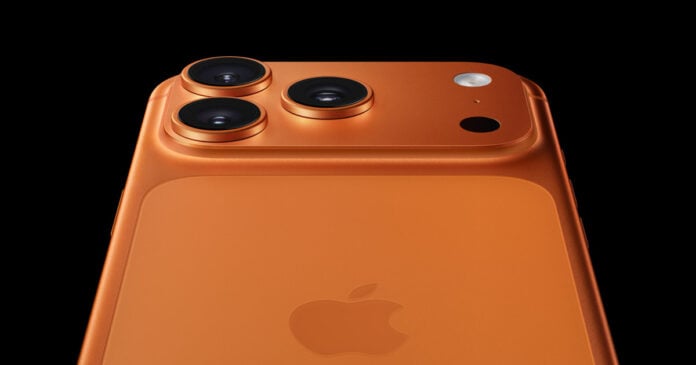
Toni Meadows, head of investment at BRI Wealth Management, told Fox Business in mid-July that Apple is “less exposed to capex intensity and better positioned to monetize AI via services, ecosystem lock-in, and hardware upgrades.” That read has aged well. Apple’s fiscal second-quarter 2026 results, reported earlier this year, showed revenue of $111.18 billion, up 16.6 percent from a year earlier, with earnings per share of $2.01 that beat analyst consensus. Services hit an all-time quarterly record of $30.98 billion. iPhone revenue came in at $56.99 billion, driven by sustained demand for the iPhone 17 family, which incorporated AI-powered features that the company had spent three years positioning as inevitable rather than speculative.
The speed of Apple’s climb from $4 trillion to $5 trillion is striking. Adding a full trillion in market value took under a year: the company crossed $4 trillion in October 2025, less than twelve months ago. Apple’s shares have gained roughly 60 percent over the past twelve months and about 25 percent year to date. For context, since the launch of ChatGPT in November 2022 sparked the current AI investment era, Nvidia is up more than 1,125 percent, Meta Platforms 386 percent, and Alphabet 226 percent. Apple gained 130 percent over the same period, a quieter accumulation built not on a single catalytic narrative but on a hardware cycle, a services flywheel, and the credibility of a company that does not need to promise transformation to grow.
Microsoft’s trajectory over the same stretch underscores the asymmetry. The company, which made the earliest and most visible bet on AI through its partnership with OpenAI, is down roughly 28 percent from its October 2025 peak. That is a reminder that proximity to AI infrastructure spending is not the same as benefiting from it, at least not yet at the pace the market once priced in.
Tuesday’s broader market offered a clear read on the anxiety fueling the selloff. Beyond the AI infrastructure concerns, Brent crude surged approximately 7.3 percent to above $88 per barrel, reigniting inflation concerns and complicating the Federal Reserve’s already uncertain path. Investors fled to US Treasuries, gold, and traditional defensive sectors. The Nasdaq Composite fell 433.97 points, or 1.74 percent. The S&P 500 dropped 112.63 points, or 1.52 percent. In that environment, Apple, which closed higher on the session even as chipmakers fell sharply, functioned less like a technology stock and more like a consumer-staples holding with a $340 price tag and a $500 billion services business.
That recharacterization has limits, and the company is about to test them. Apple is scheduled to report its fiscal third-quarter 2026 results on Wednesday, and the stakes are unusually concentrated. Wall Street consensus sits at earnings per share of $1.89, representing roughly 20 percent year-over-year growth, on revenue of approximately $109 billion. According to NBC News, the bar is demanding: a company worth $5 trillion must deliver, or the milestone becomes a ceiling rather than a floor. Analysts at 24/7 Wall St. who rate Apple a buy acknowledged Tuesday that “21.8 percent YoY earnings growth at this scale is remarkable” while noting the valuation now leaves limited room for disappointment.
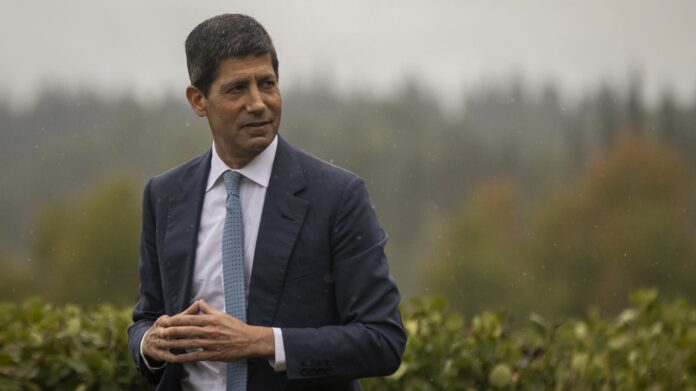
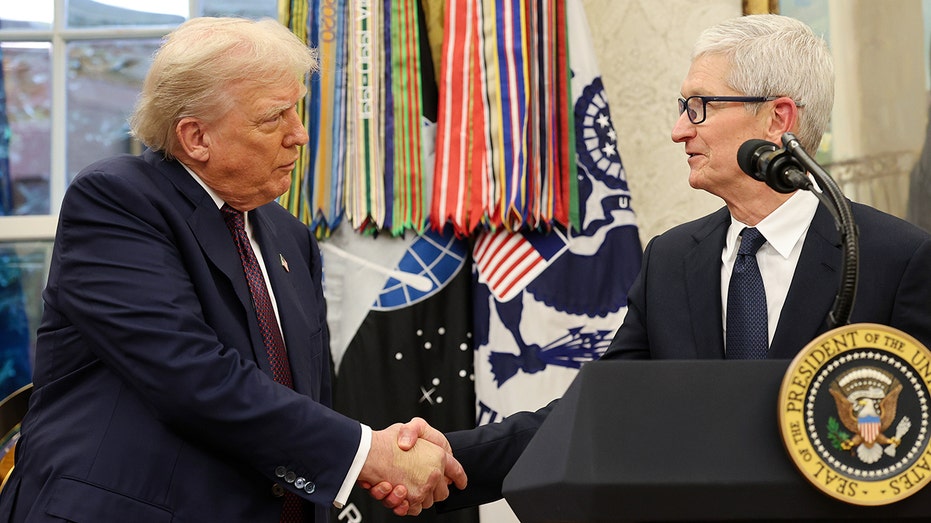
Wednesday will also be Tim Cook’s last earnings call as chief executive. Cook, who has led Apple since 2011, will become executive chairman on September 1, handing day-to-day control to John Ternus, the company’s senior vice president of hardware engineering. The succession was announced earlier this year and is widely expected to be orderly. Ternus has overseen the hardware programs that produced the iPhone 17 and the silicon roadmap that underpins Apple’s private cloud compute strategy. Whether it introduces any instability into a stock priced for continued execution is one of the questions that cannot be answered by Tuesday’s close.
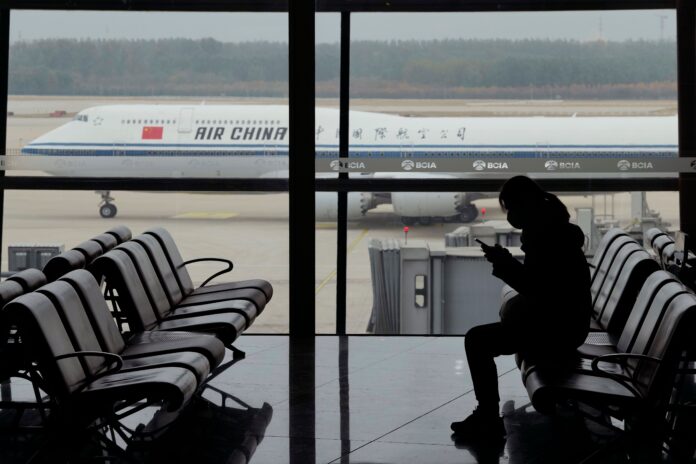
For markets outside the United States, the $5 trillion figure carries a particular weight that goes beyond any single earnings report. A single American technology company is now worth more than the entire listed equity market of most developed nations. Apple’s $30 billion-plus supply commitment to Broadcom for silicon components, the Gemini integration with Alphabet, the manufacturing expansion in India that Tim Cook has spent years cultivating: the company is a node in nearly every major economy’s technology supply chain. The concentration of that value in one ticker is not just an American investing phenomenon. It represents a structural fact about where AI-era economic gains are accruing and which market has captured the most direct claim on them. Whether technology ecosystems in Europe, India, or East Asia can build comparable compounding machines before the window narrows is the strategic question that $5 trillion makes impossible to ignore.
What is not yet answered is whether the investor consensus that carried Apple here is durable. The Siri overhaul with Google Gemini integration has generated enthusiasm but has not yet reached users at scale. Apple’s China revenue, which rebounded to $25.53 billion in the first fiscal quarter of 2026, remains a function of geopolitical conditions that neither Tim Cook nor John Ternus controls. The $5 trillion cross happened on a day when the broader market broke lower, which means it reflects a bet on Apple specifically, not a rising tide. Bets that specific, at valuations that demand perfection, have a way of being retested. Wednesday’s results will be the first one.