
NEW YORK — The market gave American Express Co. a mild rebuke on Wednesday, then kept buying. The stock closed at $320.71, shedding $1.09, while the Dow Jones Industrial Average fell 0.60% to 52,064 and most financial peers absorbed losses double or triple that size. The 0.34% decline was not an accident. It was a verdict on the premium cardholder thesis, six months into the Iran war’s inflation test: the model has not broken yet.
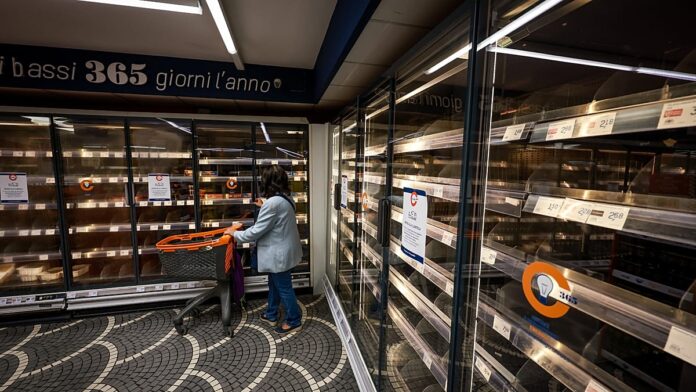
Brent crude held above $102 per barrel on September 10 as Iran war supply disruptions showed no sign of resolution, and 10-year Treasury yields remained at 4.95%, the level compressing valuations across financial services since early August. Consumer confidence retreated to its second-lowest level on record, a data point that struck hardest at issuers exposed to lower-income and middle-income cardholders. American Express is not that issuer.
Chief executive Stephen Squeri has spent eight years positioning the company’s cardholder base toward the segment least vulnerable to $4.40 gasoline: the affluent consumer who earns above $150,000, travels internationally several times a year, and regards the Platinum card’s $695 annual fee as a transaction cost rather than an optional luxury. Through the Iran war’s first six months, that positioning has largely held. The company reported $455.8 billion in billed business during the second quarter of 2026, up 9% year over year, with US consumer spending growing 11%, its strongest organic expansion in eight years outside the post-pandemic rebound.
The quarter’s travel numbers were the most resilient data point. Global AmEx Travel bookings climbed 22% year over year, a figure that should have been disrupted by a Middle East conflict closing major international routes. Affluent travelers rerouted. Business-class fares on alternatives through Turkey, India, and Central Asia went at premium prices as corporate travelers avoided airspace near the Strait of Hormuz. That rerouted spending still ran through AmEx’s network.
JPMorgan Chase described AmEx’s affluent cardholder base as “relatively shielded” from Iran war fallout in an analyst note this summer, then raised its price target on AXP to $400 from $328, implying roughly 25% upside from the September 10 close.
The tension in that thesis is temporal, not structural. The Iran war premium in oil began in April. Six months of sustained $4.00-plus gasoline and elevated grocery prices is a different test than six weeks. The Conference Board reading published this week is not an outlier; it is the latest in a series declining since the conflict began. At some sustained altitude of inflation, even affluent consumers change behavior. Vacations shorten. Restaurant frequency falls. Luxury retail budgets compress. The question AmEx investors are carrying into Q3 is whether that inflection is approaching or still distant.
The Platinum card refresh, introduced across 2024 and 2025 with expanded airport lounge access, hotel status tiers, and dining credits, has extended cardholder retention measurably. Tenured Platinum cardholders renewed at a 99% rate in the first quarter. Millennials and Generation Z now account for more than 70% of new consumer accounts, with spending velocity outpacing older cohorts by a measurable margin. That cohort is both the growth engine and the variable: younger affluent consumers treat AmEx card benefits as lifestyle infrastructure, but they are also more responsive to experiential disruption than older cardholders.
The October 23 earnings report will provide the first clean Q3 read. Full-year earnings per share guidance stands at $17.30 to $17.90, with revenue growth targeted at 9% to 10%. Both figures were reiterated after Q2 results beat consensus expectations. Neither captures how the Iran war premium, sustained through September, has moved through the Q3 billed business data.
The September 10 session produced a clear bifurcation inside financial services. Visa, operating as a pure payment network without credit exposure, fell 1.50%. AmEx’s closed-loop model carries more credit exposure on the downside but more pricing power and cardholder loyalty on the upside. Goldman Sachs fell 2.15%, the starkest illustration of what deal freeze and rate pressure do to a pure capital markets franchise. AmEx’s $1.09 drop was the kind of session the bull case is designed to absorb.
American Express shares entered Wednesday down roughly 5% over the prior month as the Iran war escalation in late August compressed financial services valuations broadly. Year to date, the stock remains up 9%. That performance has been a provisional bet on whether the premium cardholder model can sustain spending velocity through a war now in its second quarter with no clear resolution timeline. On September 10, with Brent above $102 and Treasury yields near 5%, the market held that bet at $320.71.