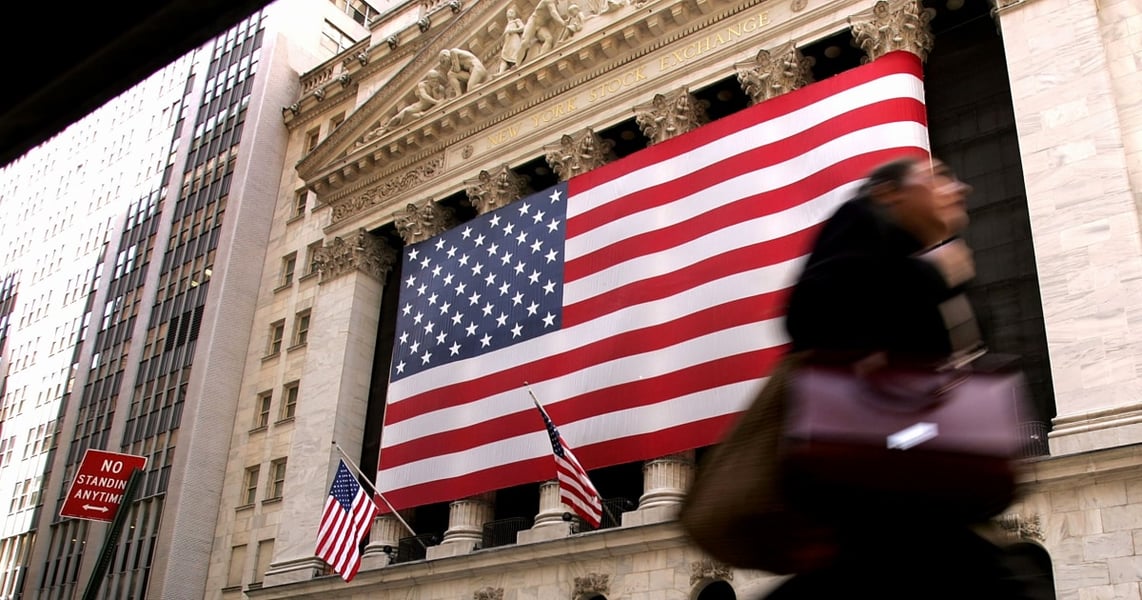

NEW YORK — Goldman Sachs fell $12.35, or 2.15 percent, to $562.15 on the New York Stock Exchange on September 10, a decline that outpaced the broader market and reflected a specific pressure the investment bank faces that differs from every other financial in the Dow Jones Industrial Average: its revenue model depends more heavily on the activity level of capital markets than on the net interest income that rising Treasury yields generate for commercial lenders.
Goldman’s trading desk likely had a reasonable session. Market volatility produces revenue for trading operations whether prices move up or down, and September 10’s 316-point decline in the DJIA created exactly the kind of cross-asset churn that benefits a dealer with large inventory positions in equities, credit, and rates. But that revenue line is not what investors focus on when they price Goldman Sachs. They focus on the investment banking division: advisory fees from mergers and acquisitions, underwriting fees from equity and debt issuances, and the backlog of deals that determines whether those revenues are rising or contracting.
That backlog has a problem. A 10-year Treasury yield at 4.95 percent is not simply a valuation headwind for Goldman’s stock price; it is a direct suppressor of the transactions that generate Goldman’s highest-margin revenue. A corporate board considering a leveraged buyout calculates its financing cost at the prevailing rate. At 4.95 percent on the risk-free instrument, the all-in borrowing cost for a leveraged acquisition runs materially above the return threshold most private equity sponsors accept. Deals that penciled at 3.5 percent yields do not pencil at 4.95 percent. They wait.
The same arithmetic applies to the equity market. A company considering an initial public offering or a follow-on equity offering evaluates the valuation it can achieve against the cost of waiting for a more constructive backdrop. With the market down 316 points on September 10 and the DJIA off more than 8 percent from its July peak, that backdrop is not constructive. CFOs are waiting. And when CFOs wait, Goldman’s underwriting calendar compresses.
What keeps Goldman’s stock from falling further is the same thing that kept it from reaching new highs in July’s equity rally: the balance sheet. Goldman carries substantial equity capital and has been reducing its concentration in illiquid alternative assets, specifically the consumer lending and private equity portfolio positions that damaged returns during the 2022-2023 period. That cleanup has been executed over three years and improved the firm’s return on equity from a low of 8.4 percent in 2023 to an estimated 14.1 percent in the trailing twelve months. A firm earning 14 percent on equity at a 4.95 percent risk-free rate is not expensive on a relative basis, even if the absolute valuation has compressed.
The rate sensitivity narrative is consistent across payment networks like Visa and investment banks like Goldman, but the transmission mechanism differs. Visa loses valuation room because its steady-state cash flows are discounted at a higher rate. Goldman loses deal revenue because the transactions that generate that revenue become economically unattractive to the counterparties Goldman needs to execute them. One is a mathematical consequence of a discount rate; the other is a behavioral consequence of human decision-makers choosing to wait.
Federal Reserve Chairman Kevin Warsh’s warning at Jackson Hole in late August that further rate hikes remained on the table extended that waiting period. Every month of uncertainty about whether rates have peaked is another month of compressed deal activity. Goldman’s fiscal third quarter ends September 30. The investment banking revenue it reports in mid-October will reflect activity through that date, and September is historically one of the more active months of the year for capital markets issuances. Whether the September 10 macro deterioration suppressed that traditional September acceleration is the single most important variable for Goldman’s upcoming earnings call.
Compared with other DJIA constituents on September 10, Goldman’s 2.15 percent decline was consistent with the broader financial sector move. Apple fell only 0.24 percent, insulated by the product-cycle dynamics of iPhone 18 pricing that financial companies do not share. The September session demonstrated again that equities whose revenue depends on human decisions about transacting are more exposed to rate uncertainty than equities whose revenue depends on consumer habit or hardware replacement cycles.
What September 10 left open is the question Goldman’s management is most focused on: whether 4.95 percent on the 10-year is the ceiling of this tightening cycle or a waypoint toward 5.25 or 5.5 percent. If rates hold flat through year-end and the curve steepens, Goldman’s deal pipeline begins clearing in early 2027. If Warsh raises once more, the clearing point shifts further out. The difference between those scenarios, measured in advisory fees and underwriting commissions, is material to Goldman’s 2027 earnings estimate and to the stock’s valuation today.