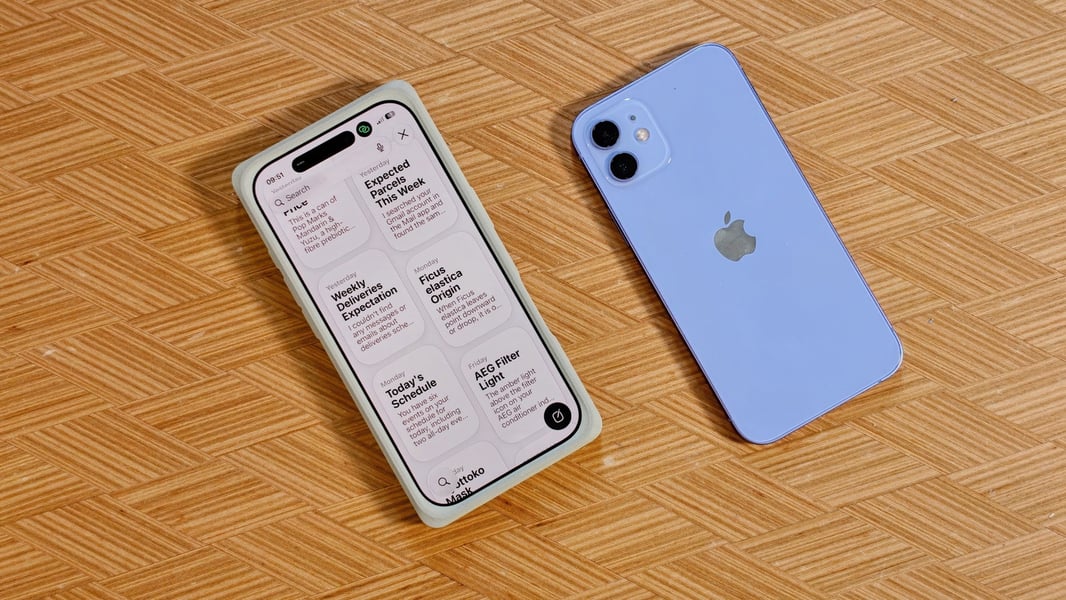

CUPERTINO — Sometime overnight between Sunday and Monday, hundreds of millions of iPhone owners received the same notification: iOS 27 was ready to install. Most tapped “Download” without reading closely. Those who did found a new line in the fine print: Siri AI, Apple’s rebuilt assistant, requires users to opt in—and access may not be immediate.
That friction may be the most revealing part of iOS 27. Apple has rebuilt Siri from the ground up, and the new assistant is genuinely more capable than its predecessor. It can navigate texts, emails, and calendars without requiring users to provide all the context first. It can also complete multistep tasks across apps that would have left the old Siri stalled mid-command. When it understands what is displayed on the screen, it can respond accordingly.
But much of that capability is powered by Google Gemini. For a company that spent a decade arguing that users’ digital lives should remain within Apple’s own ecosystem, relying on Google’s model represents a significant architectural admission.
The update landed September 14. It is John Ternus’s first major product release as Apple’s chief executive. Ternus, who took over September 1 from Tim Cook, who is now executive chairman, spent 25 years at Apple building the physical hardware that carries this software. His opening public statement as CEO was about the assistant: “It’s personal intelligence that’s actually personal.” The word “personal” appeared twice in that sentence. That repetition is not incidental.
What “personal” means in practice is that Siri AI can read your messages and emails to understand context before you ask. It can look at your calendar and recent photos and make connections the old Siri required three separate prompts to approximate. It has on-screen awareness, meaning it can see which application is open and respond in that context. These are genuine improvements. Users who have been in the developer beta since June have described the difference as comparable to switching from a keyword search engine to something that actually parses what you said.
The architectural complication is that Apple has not disclosed how the workload divides between Google Gemini and its own Foundation Models, which run on-device on iPhone 15 Pro and newer hardware. Apple has confirmed Gemini handles heavier reasoning tasks while its models manage local, privacy-sensitive processing. The exact boundary between the two, meaning when a query stays on your device versus when it leaves for Google’s servers, is not public. According to Engadget, Apple has framed this as a feature: using the right model for the right task. That framing also happens to obscure when your data travels.
Apple dropped its earlier exclusive arrangement with ChatGPT, the partnership introduced with iOS 18. The rebuilt Siri operates as an open platform, with any AI service able to integrate via the App Store, and users able to set a preferred model for certain tasks. As the broader AI industry debates how quickly to develop and deploy powerful systems, as Anthropic’s confrontation with China over AI pacing illustrated last week, Apple’s decision to open its assistant platform reflects a structural shift from the closed-ecosystem logic that defined its software strategy for fifteen years.
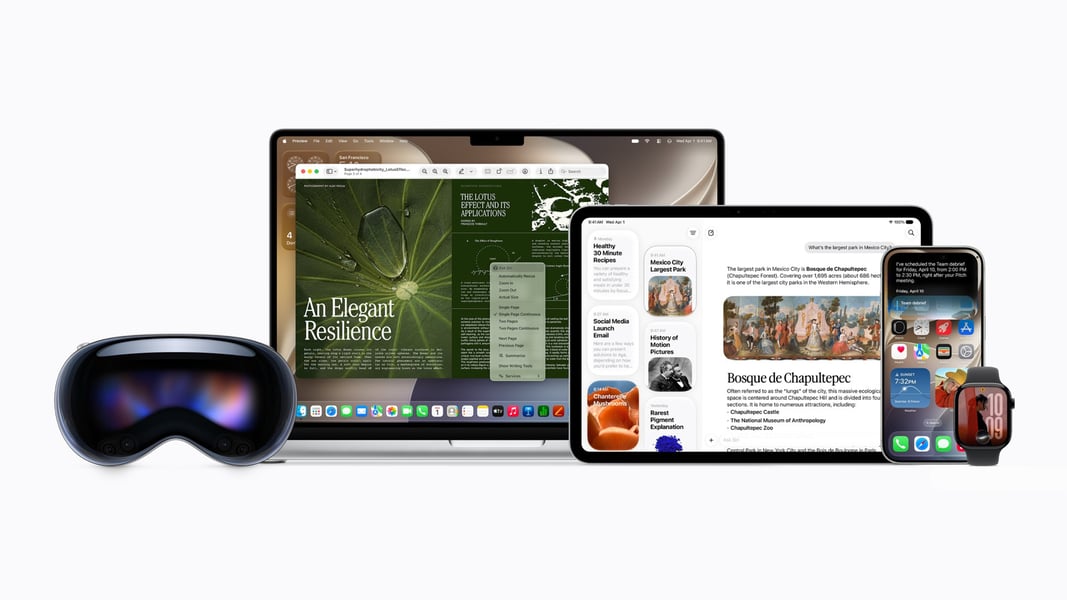
For a product designed to handle complexity on your behalf, iOS 27 has generated a notable amount of complexity for users trying to figure out what they have actually paid for.
The features that work without conditions are more impressive than expected. App launches are up to 30 percent faster across supported devices. Visual Intelligence has moved into the Camera app with a dedicated Siri Mode for real-world queries. AirPods gained custom equalizer settings. Bill splitting arrived in the US through the Wallet app. Parental controls expanded in ways that should have existed two versions ago. macOS Golden Gate shipped the same day, bringing most of the same AI capabilities to Mac hardware.
Eastern Herald covered the iOS 27 announcement in detail last week, when the Google partnership and the Foundation Models architecture were first confirmed publicly. The preview laid out how Apple and Alphabet agreed to divide the processing workload between them. What a preview announcement could not tell you was whether that division would hold under the pressure of a global rollout.
Siri AI launches in English only. Apple has said other languages are coming but has not committed to a timeline. For Apple’s largest markets outside the United States, including India, China, and most of Europe, the rebuilt assistant is not yet available.
The core tension in iOS 27 is not about processing speed or benchmark scores. Apple spent years arguing that privacy and genuine intelligence were incompatible, that the price of a smart assistant was surrendering your data to a cloud built around it. Apple’s answer was supposed to be its own Foundation Models, developed in-house, running on Apple Silicon, staying on your device. Those models are real and functional. But they share the work with Google Gemini, a product built by a company whose business is built on understanding what people search for and why.
How much of what Siri processes leaves Apple’s systems, under what conditions, and with what data retention policies are questions without clear public answers as of launch day. The waitlist is the most transparent signal Apple has sent about iOS 27: it is the company acknowledging, quietly, that this system is not ready for everyone at once.