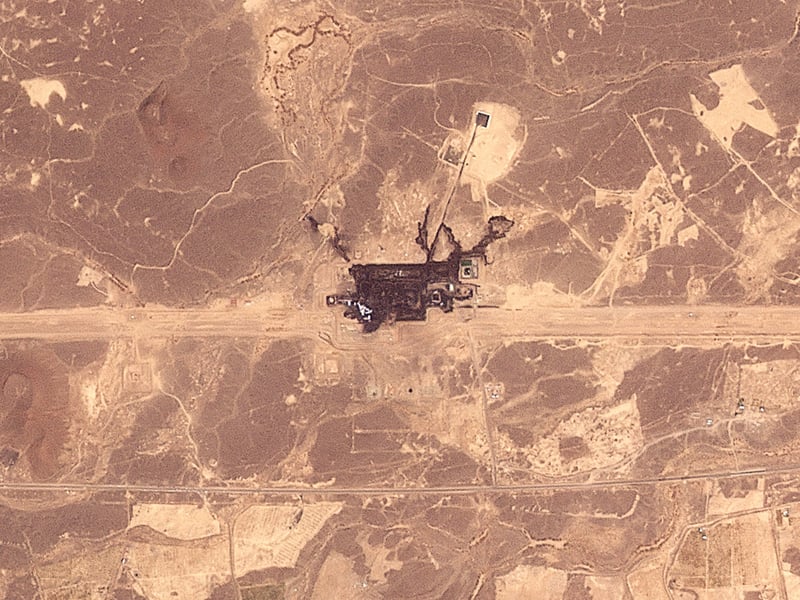

RIYADH — Saudi Arabia’s only functioning crude-export route outside the Strait of Hormuz went offline this week, leaving the kingdom without a viable bypass and global oil markets facing a supply squeeze that neither an emergency reserve release nor diplomacy could quickly resolve.
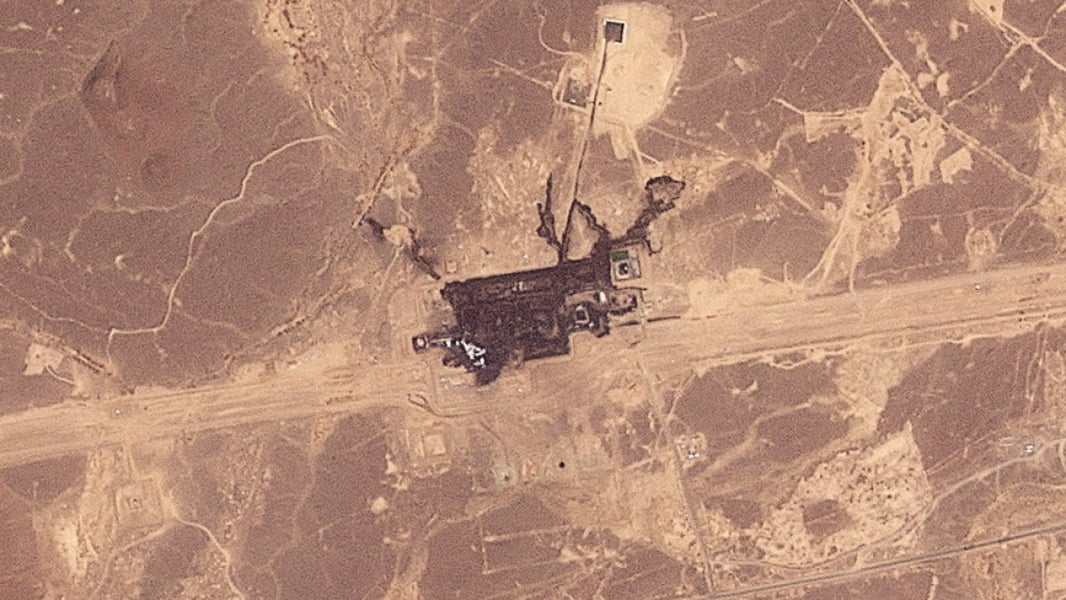
Drone strikes on September 10 and 11 damaged pumping stations along the East–West Crude Oil Pipeline in the Riyadh and Medina regions. Saudi authorities shut the pipeline as a precaution, and engineers are still assessing the damage. Initial estimates suggest that restoring flows could take at least a month.
No group has claimed responsibility. Regional security analysts and officials briefed on the assessment have broadly attributed the strikes to Iraqi militia forces aligned with Iran’s regional network, although the attribution remains officially unconfirmed.
The stakes are structural, not just numerical. The 1,200-kilometre pipeline runs from Saudi Arabia’s Eastern Province to the Red Sea port of Yanbu, bypassing the Strait of Hormuz entirely. Since Iran shut Hormuz in February under what Tehran called Operation Epic Fury, the pipeline had been carrying roughly five million barrels per day, the bulk of Saudi Arabia’s crude that would otherwise have no route to market. With both pathways now severed simultaneously, an estimated 30 to 40 percent of Gulf crude production has no functioning export corridor.
Brent crude surged toward $110 per barrel in the immediate aftermath of the strikes before settling near $105 by the end of last week. When Brent first crossed $100 in early September, analysts had treated the threshold as a ceiling priced in by Hormuz disruption alone. The pipeline attack removed that reasoning.
The International Energy Agency called the combined Hormuz-pipeline disruption “the largest oil supply disruption in the history of the global oil market.” The agency had already released 400 million barrels of strategic reserves in March, the largest coordinated release in its history, in an attempt to cushion what was then still a Hormuz-only problem. That intervention bought months. It did not restore the underlying supply balance: global oil inventories are now down roughly one billion barrels from pre-war levels, leaving the market’s buffer near zero.
Saudi Aramco said engineers require at least one month to assess the structural damage at the affected pump stations, with full restoration timelines uncertain pending that review. The company said no oil spilled in the attack and that work to contain and assess the damage was proceeding around the clock. Crown Prince Mohammed bin Salman convened emergency sessions with his energy council over the weekend; the discussions remain private, but officials familiar with them say Saudi Arabia is evaluating temporary fixes at Yanbu’s receiving terminals and exploring whether alternate routing through Abqaiq, the kingdom’s largest crude processing complex, can partially offset the lost flow.
The disruption extends well beyond energy markets. Goldman Sachs fell 2.15 percent to $562.15 last week as deal flow froze against 4.95 percent Treasury yields, an effect analysts attributed directly to oil price volatility feeding through to borrowing costs. Shipping rates have surged, aviation fuel premiums have widened, and manufacturing-dependent economies in Europe and Asia are recalibrating import bills month by month.
What makes the current moment strategically ambiguous is not the damage itself but the question of intent and coordination. Striking Hormuz and then striking the bypass route are two different acts: one Iran has openly claimed as a state action, the other blamed on non-state actors whose relationship to Tehran is documented but whose orders in this instance are not. Iran simultaneously signalled engagement with the BRICS New Development Bank in New Delhi this week, presenting an image of a country seeking economic integration even as the conflict in the Gulf continues. Whether the pipeline attack was coordinated from Tehran or is the autonomous escalation of allied militia networks remains the question energy traders and regional governments are attempting to answer.
Yanbu, the pipeline’s Red Sea terminus, is itself a considerable asset: the port hosts one of Saudi Arabia’s two largest export terminals, and its continued functionality will shape whatever partial recovery Saudi Aramco manages to arrange. But without crude flowing through the pipeline, the terminal has no product to ship. Alternative routes through the Red Sea face their own complications given Houthi activity that never fully ceased after the spring ceasefire.
The war the Trump administration chose to prosecute on the anniversary of September 11 has now reached an inflection point not in Washington’s planning documents: the country meant to be economically isolated is instead imposing energy isolation on the entire region, including on the United States’ Gulf partners whose production was expected to offset Iranian supply losses. Saudi Arabia’s problem today is not a bilateral one with Iran. It is the observable consequence of a conflict whose second-order effects are proving harder to contain than its architects anticipated.
The engineers at the pump stations have a month’s work ahead of them. The oil market does not have a month to wait.