
CHICAGO – The questions started before Kyle Whittingham sat down.
Seven months into the most consequential job of his coaching career, he was in Chicago rather than Salt Lake City, answering for a program that has not developed a 1,000-yard wide receiver in 13 years rather than one that won Rose Bowls and made NFL general managers take Utah’s offensive line seriously. The room was different. The cameras were different. And the conference behind him arrived with something it has not possessed in most living memories: three consecutive College Football Playoff national championships, the most recent claimed not by Ohio State or Michigan or Oregon, but by Indiana.
That last part bears repeating. Indiana.
Whittingham made his Big Ten Media Days debut on Wednesday, an event carrying its own gravitational weight independent of anything Ann Arbor’s newest regime has yet done. The conference’s arc over the last three seasons has bent so improbably that even the coaches who benefited from it seem to be still absorbing the fact. Illinois head coach Bret Bielema did not waste the moment.
“Three straight,” he said, letting the sentence finish itself. “We don’t need to compare ourselves to anyone anymore.”
The comparison was to exactly one conference. The SEC’s own commissioner, Greg Sankey, was back in the news this week reiterating that a potential league breakaway from the broader Power structure remained “real,” a declaration that has been real for two or three years without producing structural change. What has produced structural change is the scoreboard. The Big Ten’s three consecutive CFP titles have shifted the conversation about which conference college football’s television architecture actually reflects. According to Bleacher Report, Bielema’s jab was not subtle, and it did not need to be.
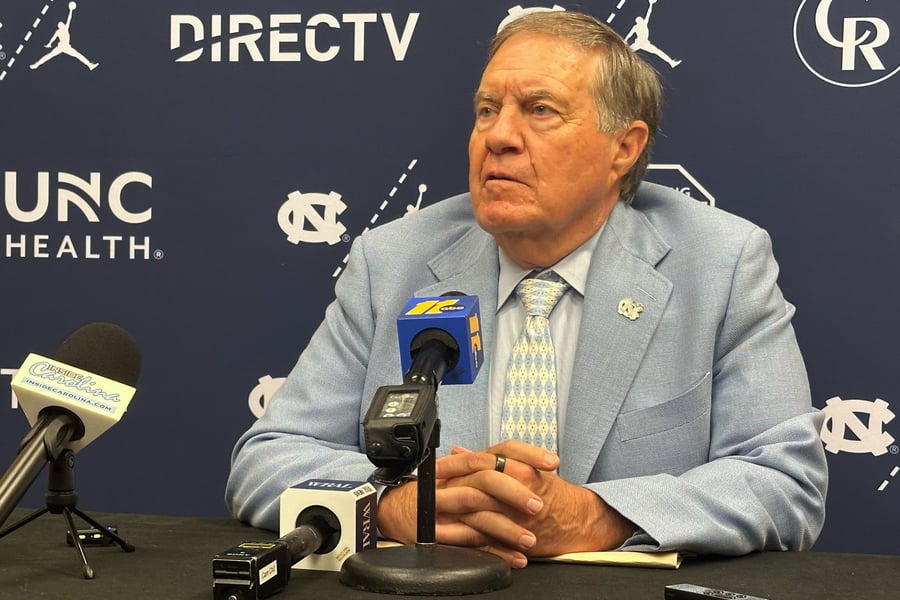
Michigan’s situation is the most complicated in the conference right now, and not just because of the roster Whittingham is trying to rebuild. Athletic Director Warde Manuel announced he will step down at the end of the calendar year following an internal investigation, which means Whittingham will run his first season in Ann Arbor while simultaneously operating without a permanent athletics director. The dual vacancy cuts to the core of what makes the Wolverines’ moment complicated in a way that most Big Ten programs, riding the conference’s wave, are not.
The program Whittingham inherited has a clear identity. Michigan ranked 24th nationally in rushing last season, a number Whittingham knows how to maintain and build around. His Utah offenses ran the ball. His defenses smothered opponents into submission. What Michigan cannot do right now is throw: 186.8 passing yards per game last season placed the Wolverines 217th nationally. Wide receivers coach Micah Simon oversees a position group that has not produced a 1,000-yard receiver since 2013. Thirteen years. Whether Whittingham reroutes the offense around its running strength or tries to develop what has been structurally absent for more than a decade is the central question of his first season. It will not be answered in a Chicago ballroom in July.
Ohio State is not posing any questions about its identity. The Buckeyes arrive at Media Days carrying Jeremiah Smith, the wide receiver widely regarded as the best returning player in college football regardless of position. Smith deflected Heisman talk at the event, telling NBC Sports he always felt it “was a quarterback award unless you have a crazy season like DeVonta Smith did.” Ohio State lost 11 players to the NFL Draft last spring and watched offensive coordinator Brian Hartline depart, but quarterback Julian Sayin returns having thrown 32 touchdowns. The Buckeyes’ schedule includes a trip to Texas and a visit to the defending champions in Bloomington. Ryan Day, entering his seventh season, pressed publicly this week for higher salary caps within college football’s NIL model, the argument of a coach who can see precisely what keeps elite players in Columbus and wants that lever built taller.
The Buckeyes also unveiled a jersey patch partnership with JPMorganChase worth $17 million, extending to all Ohio State athletic programs. The announcement arrived as NFL training camps opened across the league, with Jalen Carter signing the largest defensive tackle contract in league history at the Philadelphia Eagles among the first of many marquee deals, a parallel that underlined how much college football’s financial structure has traveled toward its professional counterpart, and how much further Day intends to push it.
Penn State enters 2026 under Matt Campbell, who built Iowa State into a program capable of competing with anyone on a given Saturday. Two of the Big Ten’s most storied programs are simultaneously in year one of new coaching eras. The conference’s depth means this creates opportunity for the rest of the league rather than vulnerability for the whole.
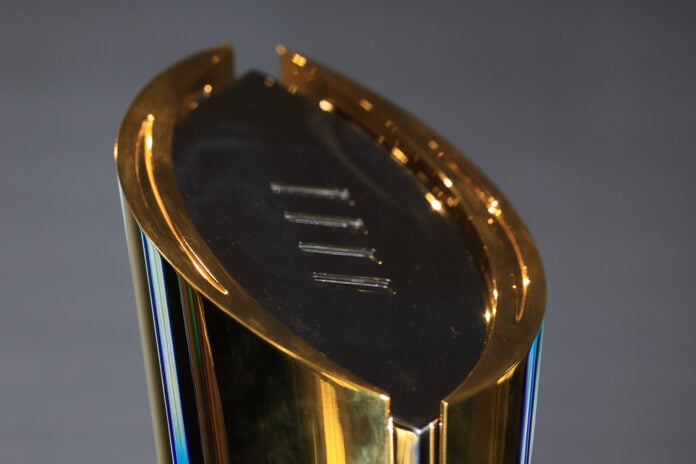
Nebraska’s Matt Rhule addressed reporters in the kind of direct terms that make sense when you have been somewhere four years and patience is thinning. “We didn’t hire me to go 7-6,” he said, the CFP Trophy visible in the room behind him. The Cornhuskers have spent three seasons recovering from a stretch of dysfunction that felt permanent at its worst. The fourth year is when rebuilding stops being an explanation and starts being an excuse.
Big Ten Commissioner Tony Petitti indicated this week the conference would consider eliminating its championship game if college football moved to a 24-team playoff, a signal that the Big Ten is running its own leverage calculations in a sport where structural arguments have never felt more consequential. The conference does not need a championship game to make its case anymore. Three titles made it.
What the Big Ten cannot answer in July (and what no press conference in Chicago resolves) is whether Whittingham’s approach translates. He built something genuinely difficult: made Utah football worth watching on a national stage, year after year, without the recruiting infrastructure of a Michigan or Ohio State. That credibility is why he was hired. It does not come with a guarantee that the same system, applied to a different roster in a different conference with expectations he has never navigated at this scale, produces the same result.
By the time the answer is visible, the CFP bracket will be setting itself. The conference already knows how to fill it.