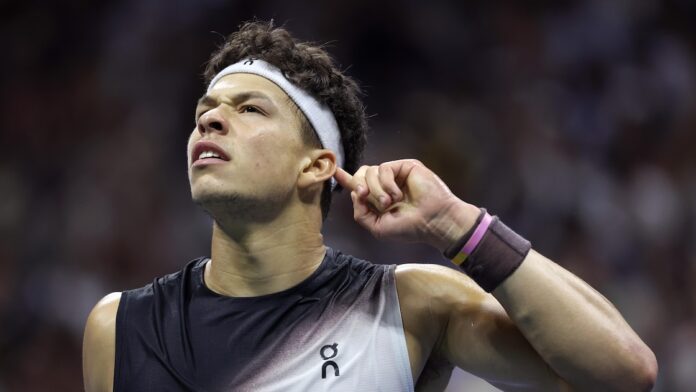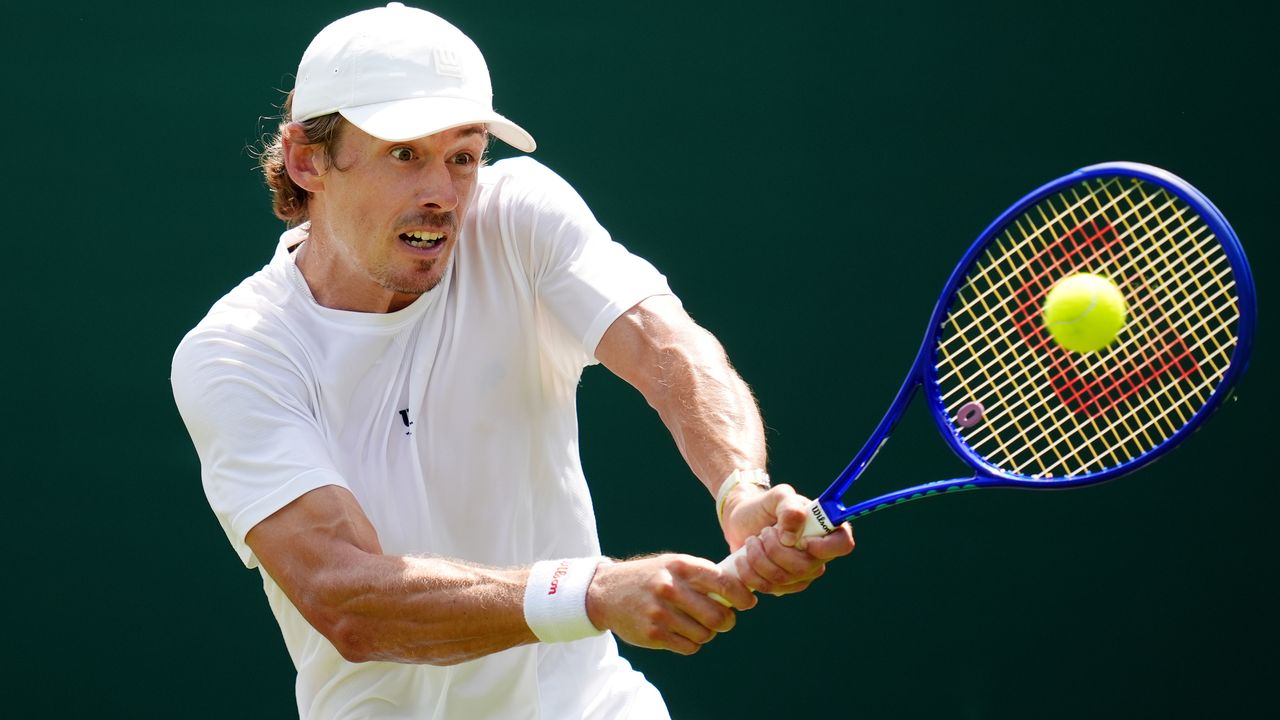

WASHINGTON – The moment Alex de Minaur walked off the court after beating Stefanos Tsitsipas, the conversation moved somewhere he had not chosen to go. Not to serve percentages or break-point conversion or what a victory over a player of Tsitsipas’s calibre does for his ranking. To the next name in the draw. To Cruz Hewitt.
“It’s a weird situation,” de Minaur said. He did not add much. He did not need to.
Cruz is the son of Lleyton Hewitt, two-time Grand Slam champion, former world No. 1, and Australia’s Davis Cup captain since 2016. That role has made Lleyton not just de Minaur’s team captain but something closer to a guide, a sounding board, a presence through the particular pressures of representing Australia at the highest level. De Minaur was a teenager when he first wore green and gold under Hewitt’s captaincy. He is 27 now and the top seed at this tournament. The Hewitt family has watched the whole arc from inside the fence.
Cruz Hewitt, 22, is at a different point on the same arc. He has been building through the ATP ranks in the years since turning professional, his progress tracked closely in Australian tennis circles as the natural extension of a family name that still carries enormous weight on the tour. Professional tennis is one of the few sports where a former world No. 1 can watch his own son face the player he mentored, on the same hardcourt, in the same season, with ranking points at stake for both.
That is the geometry of what waits for de Minaur in Washington.
He won’t ease up. That answer was not in doubt, because competitive intensity is not something de Minaur modulates for personal reasons, and it is partly why he has become one of the most complete hardcourt players on tour. But saying it out loud required something. He acknowledged the unusual nature of the matchup, noted that Cruz would be a tough opponent regardless of the circumstances, and stopped short of elaborating. Some things in professional tennis are understood rather than explained.
The win over Tsitsipas was the immediate news. De Minaur took the first set 6-4, was broken back in the second and lost it 3-6, then reasserted control in the third, closing out 6-3 in a performance that leaned on the retrieval and defensive positioning that makes him so genuinely difficult to put away on hardcourt. Tsitsipas, whose ranking has slid in recent months, still carries enough grass and hardcourt threat in his one-handed backhand to complicate any opponent’s game plan. De Minaur solved it, or solved it enough.
Against Cruz Hewitt, the tactical challenge is different in a way that actually complicates preparation rather than simplifying it. Where Tsitsipas presents known patterns and documented tendencies that coaches can build a game plan around, Cruz arrives at this stage with a smaller body of work against top-level opposition. Less footage. Less pattern recognition to fall back on. De Minaur will have to figure out who Cruz is as a professional player in the time it takes to play a set.
The Citi Open sits at a precise point on the calendar: late July in Washington, hardcourt conditions, summer heat, five weeks before the US Open begins in New York. It is one of the last genuine tune-up opportunities for players building toward Flushing Meadows, which makes every result here carry a dual weight. Points won or lost, and physical and tactical preparation either banked or squandered.
Jannik Sinner, who retained his Wimbledon crown in July, arrives at the US Open as the most complete player in the world over the last twelve months. His shadow falls over every other competitor’s summer preparation. For de Minaur specifically, reaching the later rounds in Washington and going through a match like the Cruz Hewitt fixture without losing a step matters as a signal of readiness more than a statement of intent.
Elsewhere in the bracket, Carlos Alcaraz has signaled a return via Cincinnati, the Western & Southern Open that immediately precedes the US Open in the hardcourt calendar. His wrist situation has hung over his season since the spring; whether he arrives in New York as a genuine threat or an uncertainty is one of the open questions that will define how the men’s draw shapes up.
Jack Draper, the British No. 1, withdrew from the Citi Open before the tournament began with a left-arm injury, adding another name to the list of players managing physical concerns through the summer. The pattern of injury disruption affecting British players across recent seasons has not relented in the weeks after Wimbledon. Draper is understood to be targeting Montreal as his next competitive outing.
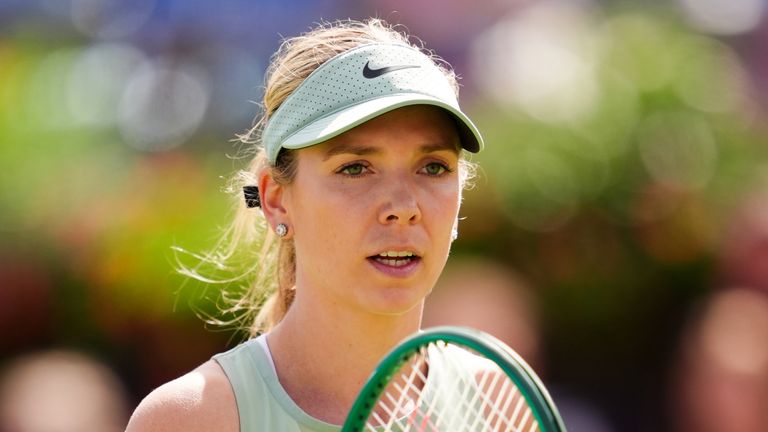
At the same tournament where her fiancé is advancing, Katie Boulter exited the women’s draw in the first round, beaten by American Ashlyn Krueger. The de Minaur camp had its complications at the Citi Open before the draw even posted Cruz Hewitt’s name opposite the top seed.
The match between de Minaur and Cruz Hewitt has not yet been played. That is the essential fact about the “weird situation.” De Minaur is living in the before. He has said publicly that he will compete without reservation, because that is what professional sport requires him to say, and because it is also what he means. Then he will have to walk onto the court and do it, across the net from a young man whose father spent years making sure de Minaur was ready for exactly this kind of pressure.
Lleyton Hewitt will have known that this moment would come eventually. Not necessarily here, not necessarily now. But eventually. The sport finds these situations. It always does.