
LONDON — The trophy left London in 2022 and has not been back. For Yannick Noah’s Team Europe, that fact is not merely context; it is the entire argument for why this weekend at The O2 Arena matters as much as anything outside a Grand Slam on the men’s calendar.
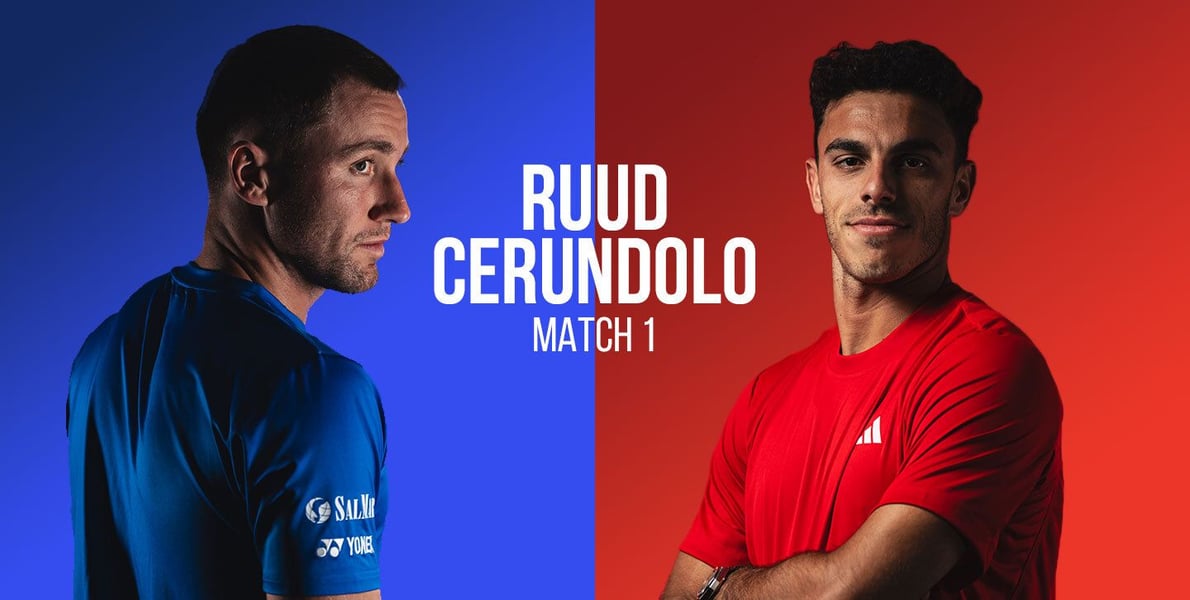
Ruud came back from a first-set tiebreak deficit to win 10-8 in the match tiebreak, completing the reversal of what Cerúndolo had done to him in San Francisco last year. The composure he showed in the second set and across the final three points of the supertiebreak told Noah what he needed to know: the confidence in this European camp is not performance. Team World briefly threatened to steal the opening point, then didn’t. Europe takes a 1-0 lead into the evening session.
The 2026 Laver Cup opened on Friday at The O2, the ninth edition of the three-day team competition that pits six of Europe’s best against six from the rest of the world. Team Europe arrived carrying something no previous edition has had: a player coming off two Grand Slam titles in the same calendar year. Alexander Zverev, who won Roland Garros in June and the US Open in New York earlier this month, steps onto the London court as the undisputed form player in men’s tennis. Whatever Team World brings across three days, it begins from a position of knowing that the German across the net has not lost a match that counted in three months.
That double-Slam record comes with a sharper context heading into October. Zverev arrived in London having gone 55-13 on the season and, just two weeks before, led Germany to a 3-1 victory over Croatia in the Davis Cup qualifier, winning both his singles rubbers in straight sets without dropping a set. He is now 1,810 ranking points behind Jannik Sinner in the PIF ATP Rankings, with the Italian sitting out the US Open entirely after a knee injury sustained at Wimbledon. Whether that gap can be closed by the ATP Finals in Turin in November is the question that has followed Zverev across every press conference since Flushing Meadows — and the Laver Cup does nothing to answer it.
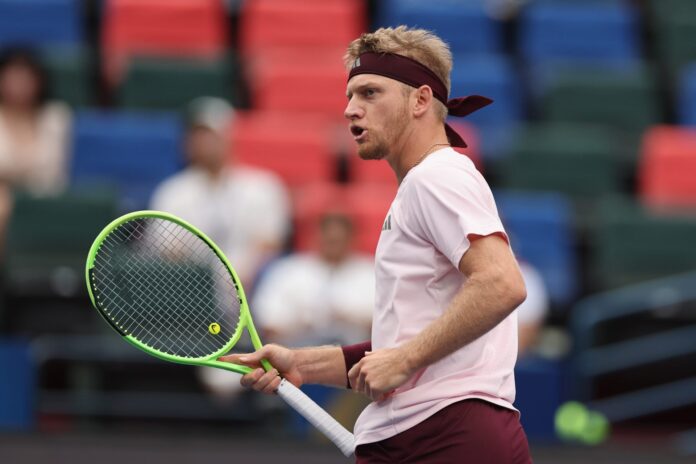
Team Europe’s lineup is Zverev, Carlos Alcaraz, Casper Ruud, Jakub Mensik, Flavio Cobolli, and the 21-year-old Spaniard Rafael Jódar, who makes his Laver Cup debut on Friday evening. Jódar has been the breakout name of the European clay-court summer: aggressive from the baseline, comfortable under pressure, and willing to hit the line in a tiebreak in a way that earns his place in any team. His debut against Alexander Bublik in the night session is the match that tells Noah something he does not yet know: whether Jódar can hold that composure under Laver Cup conditions, in front of a crowd that will be loudly behind him from the first point.
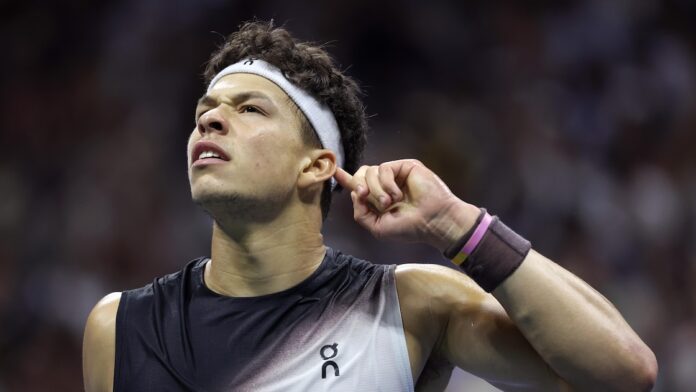
Ruud’s comeback was the afternoon opener that set the tone. The magnitude of Zverev’s US Open title earlier this month, which ended Ben Shelton’s bid to be the first American to win a major since Andy Roddick, effectively reset the expectations Team Europe carries into this weekend. With Zverev in this form, Europe does not simply hope to win; they arrive as the side that has to lose, rather than the side that has to find a way to win.
Andre Agassi’s Team World is built differently. Taylor Fritz is the anchor, a player who has spent a year developing the tactical discipline that makes him dangerous not only when he is hitting through the court but also when he is absorbing pressure and waiting. He and Bublik form the doubles unit that faces Alcaraz and Mensik in Friday’s night session. Bublik is the variable that no team preparation fully accounts for: capable of dropping a serve at 4-4 in the final set of an important match, equally capable of winning it from the same position with a second-serve ace on match point.
Alex de Miñaur anchors Team World’s energy in the singles, Francisco Cerúndolo replaces the injured Tommy Paul, and Brandon Nakashima comes in for Shelton, who withdrew after the US Open. Fritz’s form over the American summer, which included a deep run in Washington before the hard-court season accelerated, suggests he has arrived in London understanding exactly what Team World needs from him: wins in the decisive moments, not just the early rounds.

The format rewards composure as much as talent. Each singles match on Days 1 and 2 is worth one point; each doubles match is worth one. On Day 3, all matches are worth two. A team needs 13 points to clinch. Team World won last year in San Francisco by staying in contention through Days 1 and 2 and letting the two-point Day 3 matches do the work. Agassi will run the same calculation from the moment the evening session begins. Europe’s 1-0 lead tightens that window slightly, but only slightly.
The crowd at The O2 will not be neutral. London turns out for Team Europe, and the noise in the arena during Friday’s night session will be as sustained as anywhere in tennis outside Wimbledon. That energy has historically pushed European players through moments they might otherwise lose. It also creates a specific pressure on Jódar, who has never experienced anything like this at the professional level. How he handles the reception for his name in the starting lineup is the question Friday will begin to answer.
Nakashima, meanwhile, is the unknown. He enters a high-stakes team environment as a late replacement, on a surface that suits his game but in front of a crowd that is not his and with a team chemistry that was assembled without him. Sky Sports noted ahead of the tournament that Nakashima’s integration into Team World’s preparation has been compressed into a few days, which may matter and may not.
By the end of Friday night, the Laver Cup will have a full Day 1 scoreline and a story. Ruud’s 1-0 is the opening sentence. The story will tell you whether Jódar justified his debut, whether Bublik was Bublik in the best or worst sense, and whether Zverev needs to win every match he plays or whether Europe has the depth to win without leaning on him entirely. Noah knows the answer to the last question. The Laver Cup is where he finds out if he was right.