
NEW YORK — The match turned inside seven minutes. At 4-all in the second-set tiebreak, Alexander Zverev struck three consecutive winners: a dipping backhand cross-court, a forehand that clipped the line, and a serve that Ben Shelton guessed wrong on. The crowd inside Arthur Ashe Stadium understood, even if it had not yet accepted, that the US Open final was already over.
Zverev took the tiebreak 7-2 and with it the last real leverage Shelton had held in the match. The world No. 1 from Germany claimed his second Grand Slam title of 2026, defeating the American eighth seed 6-3, 7-6(2) in a commanding final on Sunday at Flushing Meadows, completing the most dominant major season by any player in more than a decade and silencing a sold-out stadium that had arrived hoping for something different.
The statistics said straight sets. They undersold the imbalance. Zverev won 78 percent of his first-serve points and hit 34 winners to Shelton’s 18. Shelton, who had entered the final on one of the most breathtaking runs in US Open memory, had one viable plan: serve and dictate, win the first set, and force the match into chaos across five sets. Zverev gave him no version of that match.
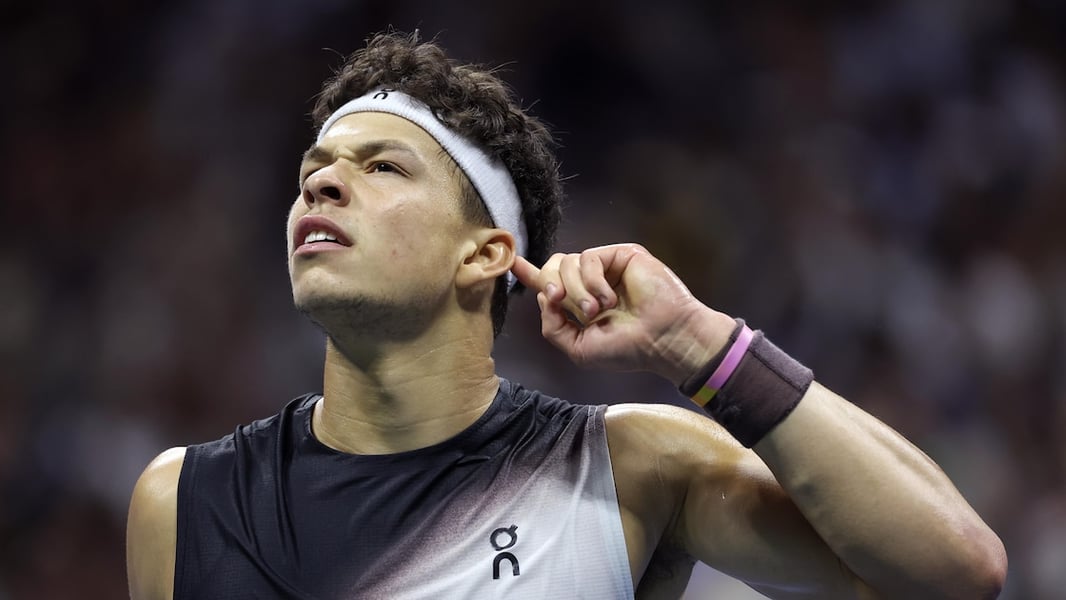
“He raised his level at the exact moment I needed him to drop it,” Shelton said afterward. He was not wrong, and the 23-year-old had pushed hard enough to make the observation sting.
The American had earned his place in the final through sheer will. His quarterfinal win over Carlos Alcaraz, the defending champion, stretched past 3:30 in the morning, the latest finish in the tournament’s Open Era history. He absorbed five sets of Alcaraz’s best tennis and won the last two. Then came Frances Tiafoe in the semifinals, the all-American clash that sent the stadium into a wall of sound. Shelton beat him 4-6, 6-3, 6-3, 7-5 and arrived at Sunday’s final having dropped just two sets in his last three matches. Against any other opponent in any other form, that might have been enough.
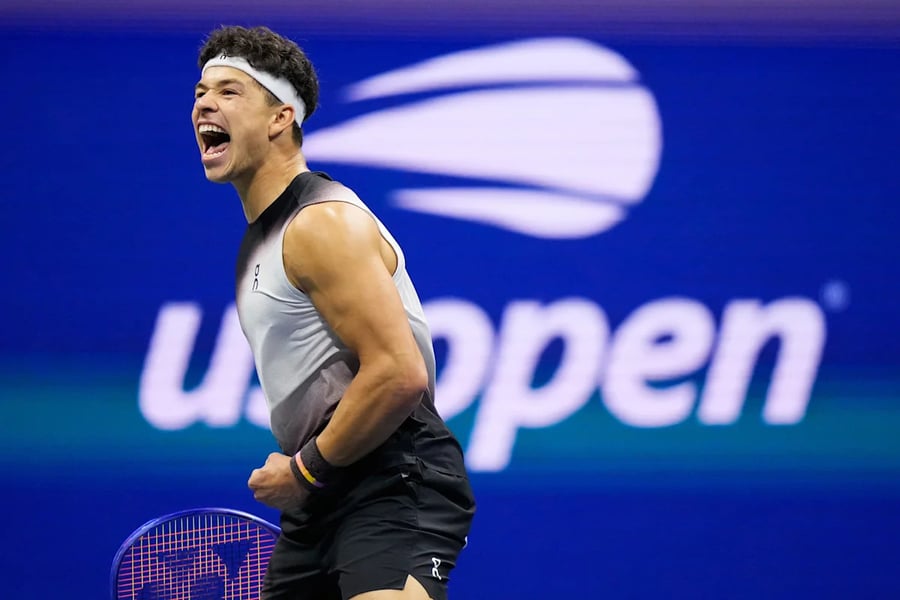
He was also making history simply by standing on that court as a finalist. Had Shelton won, he would have become the first American man to claim a Grand Slam title since Andy Roddick in 2003, and the first Black American man to win a major since Arthur Ashe’s Wimbledon victory in 1975. That weight was visible in the second set, when the crowd reached a roar that the stadium generates only for its own. Shelton held from deuce twice and hit a pair of aces that surprised even Zverev. He broke back in the seventh game and seemed, briefly, to be winning the argument.
For Zverev, 29, this is the season that settles the argument about his legacy. He had arrived in Paris in May carrying the weight of five consecutive Grand Slam finals without a title, a burden his rivals had once used to define him. He left Roland Garros as champion after a five-set victory over Flavio Cobolli. When he lifted the US Open trophy on Sunday, he became only the fourth man since 2003 to win multiple Grand Slams in a single calendar year, a threshold CBS Sports had framed entering the final as requiring historic achievement to reach.
The first set had been an exercise in precision. Zverev broke Shelton’s opening service game with a pair of returns that barely cleared the net, and Shelton spent the remainder of the set fighting a pattern he could not disrupt. On the women’s side of the 2026 US Open, the tournament had already produced upsets and late-night drama that rewrote the seedings. On the men’s side, it delivered a champion who had spent years waiting at the gate of a Grand Slam title. Zverev closed out the first set 6-3 in 38 minutes.
There were moments in the second set when the match felt genuinely alive. Shelton drove Zverev backward with consecutive first serves and had the German stretching at the baseline with no obvious way out. Zverev blocked the ball back into the court anyway. “That ball should not have come back,” Shelton said. “He just makes those balls.”
Zverev turns 30 in April. He won Roland Garros, won the US Open, and reached three consecutive Grand Slam finals in a single year. Whether the Australian Open in January becomes the first leg of something that requires years to fully evaluate is a question the rest of the tennis world will spend the next several months trying to frame. He is not the sort of player who telegraphs his next move. He just keeps showing up at the last match of the fortnight, and keeps winning it.