
ORLANDO – Sharon and Jack Osbourne had a choice to make. Twelve months after Ozzy Osbourne died, with his image still raw in public memory, Universal Studios came to them with a proposal: let them build a haunted house in his name, and fill every room with his music. They said yes.
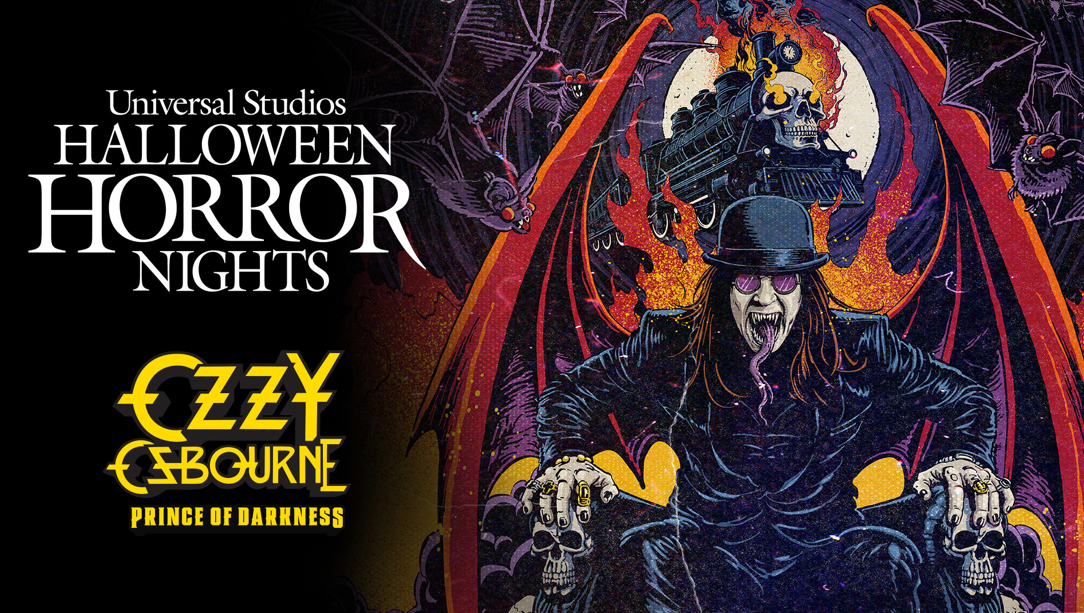
The result is “Ozzy Osbourne: Prince of Darkness,” announced Tuesday as one of the signature experiences at Halloween Horror Nights 2026. The attraction opens at Universal Orlando Resort on August 28 and at Universal Studios Hollywood on September 3, running through November 1 at both parks. The Hollywood Reporter first reported the full scope of the project.
The family’s public statement framed the attraction as an extension of something Ozzy himself would have wanted. “Ozzy never stopped pushing boundaries, and he loved anything that gave fans a new way to experience his music and the worlds he created,” Sharon and Jack Osbourne said in a joint statement. “Walking through these haunted houses, you’ll recognize so many moments inspired by his music and imagination.” Sharon was specific about the sonic core: “music throughout every room is at the heart of it all.”
That core spans all 13 of Osbourne’s solo albums, with the creative teams at both parks drawing particularly from six records that trace the full arc of his career: “The Blizzard of Ozz” (1980), “Diary of a Madman” (1981), “Bark at the Moon” (1983), “No More Tears” (1991), “Scream” (2010), and “Ordinary Man” (2020). The last of those was the final studio record Ozzy released before his death. Many in his fanbase have since read it as a closing chapter, its subject matter and collaborations shaped by the Parkinson’s disease he had been managing publicly for years.
Universal Studios Hollywood and Universal Orlando take opposite approaches to the same story. The Hollywood house begins in Birmingham, England, where John Michael Osbourne was born in 1948. Starting with “Crazy Train,” guests move through the experience chronologically, encountering “Madman Ozzy” and “Werewolf Ozzy” before arriving at the Osbourne Asylum, staged as an immersive extension of the “Diary of a Madman” album. Where Hollywood traces a biography, it follows Osbourne from a working-class British childhood to the theatrical persona that outlasted almost everything his contemporaries built.
Orlando inverts the journey entirely. Guests enter through ancient ruins and foreboding dungeons before boarding the Crazy Train for what the park describes as a twisted ride into a realm ruled by the Prince of Darkness. The visual architecture draws from album cover imagery spanning “Diary of a Madman,” “Bark at the Moon,” “The Ultimate Sin,” and “Black Rain.” Orlando starts from the mythology rather than the man, and works backward. Both houses promise what Universal’s teams describe as “meaningful details” and Easter eggs embedded for fans who know the catalog intimately.
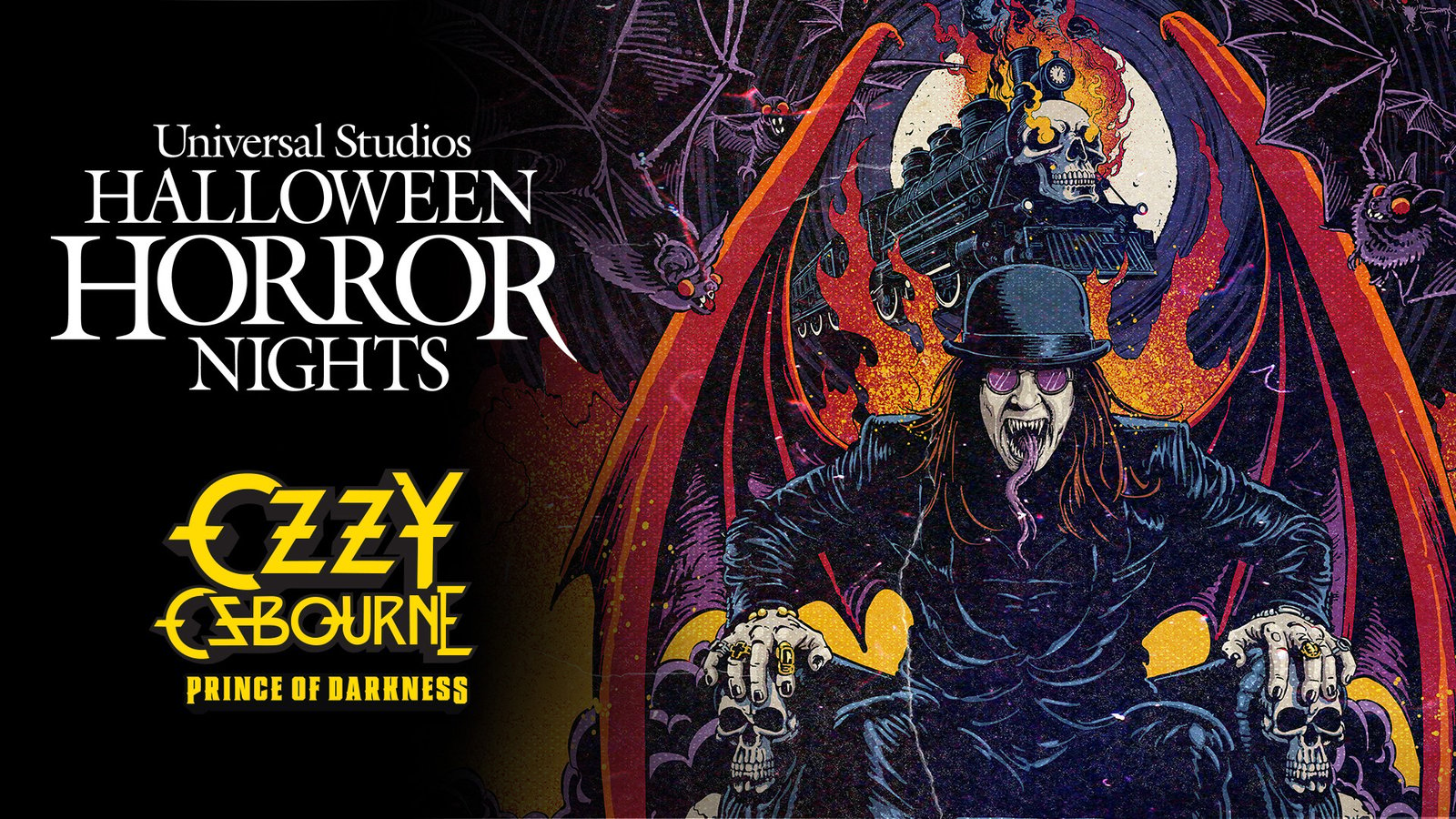
John Murdy, executive producer at Universal Studios Hollywood, framed the project in the language of cultural legacy. “Ozzy Osbourne didn’t just help define heavy metal,” Murdy said. “He created a cultural phenomenon that has influenced generations of music, art and horror.” Mike Aiello, senior director of entertainment creative development at Universal Orlando, said the goal was authenticity rather than spectacle for its own sake. The production aimed to create “an authentic experience that brings Ozzy’s creativity and personality to life in an eerily immersive new way,” Aiello said.
What Universal’s press materials cannot fully resolve is which version of Ozzy the houses are honoring. The theatrical figure who understood his persona required constant escalation, album cover by album cover, or the man who spent his final years navigating Parkinson’s in public and performing when he could manage it. The 2020 album “Ordinary Man” carried that difficulty inside its sound and its collaborations in ways “Bark at the Moon” never had to. Whether that later Ozzy appears in either house at all is something fans will find out in late August. That the family did not say, in any of their statements, is the one gap the announcement leaves open.
The industry logic behind the announcement is legible enough. Universal’s Halloween Horror Nights has built its reputation on properties with strong iconographic hooks, characters and worlds that can be translated cleanly into room-by-room theatrical architecture. Ozzy Osbourne spent 45 years constructing exactly that kind of visual vocabulary, one album cover and one theatrical arena tour at a time. The haunted house as a format, with its emphasis on sensory overload and carefully staged surprise, suits him better than a statue or a museum retrospective might. Gizmodo noted that Universal has previously built similarly high-profile music-themed houses around artists like The Weeknd, a sign the park has developed a template for translating album-world visuals into walkable horror.
Music-driven entertainment properties have been having an unusually strong moment. As Hadestown recently set new records on Broadway, Universal’s bet on Ozzy fits within a broader shift: the industry’s growing appetite for immersive experiences built around musical legacies, where a catalog becomes the architecture of something audiences can physically walk through rather than only listen to.
Limited-release merchandise launched in both parks on Tuesday, including a T-shirt and an acrylic figure inspired by the haunted house. An online release was scheduled for Wednesday morning at shopUniversal.com. The commercial layer arrived before the experience itself, which is how these announcements work now.
Sharon Osbourne’s willingness to license her husband’s image and music for a Halloween haunted house twelve months after his death will land differently across his fanbase. The heavy metal community has never fully settled its relationship with the version of Osbourne who became a television personality, a reality show subject, and eventually a cultural punchline as readily as an icon. A haunted house is, by that measure, not so far from the other theatrical frames he had already been placed inside, willing and otherwise, during his lifetime. His famously staged onstage behaviour always had more in common with horror theater than the press releases around it ever quite admitted.
What the Osbourne family seems to have calculated, in saying yes to Universal Studios, is that this particular frame is at least honest. “Prince of Darkness” was Ozzy’s title long before any theme park claimed it. His catalog, running from Birmingham council flats to 45 years of arena stages, built the case for that title one album at a time. The haunted house just makes the argument you can walk through.