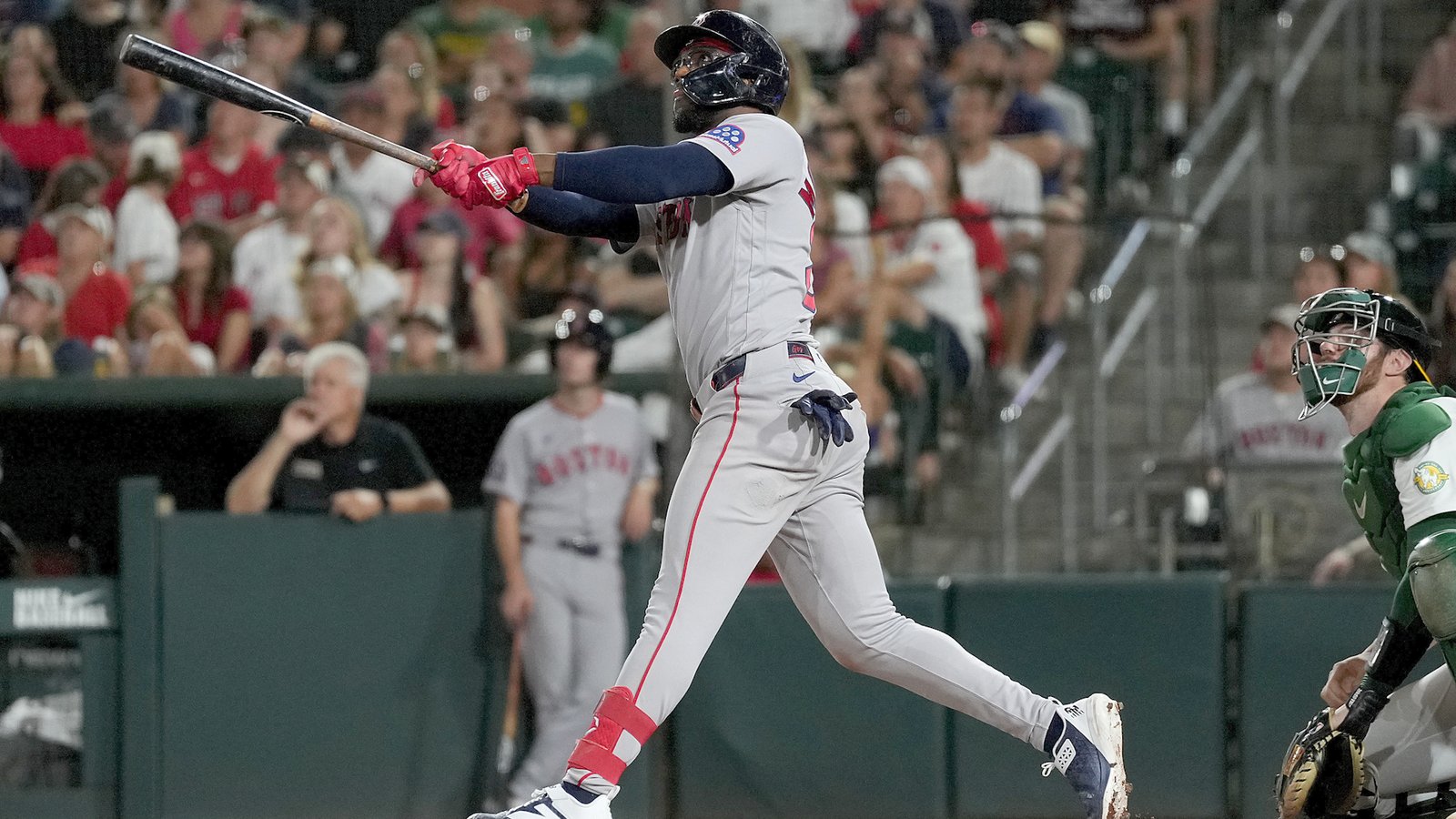

BOSTON – The first pitch Curtis Mead saw as a Boston Red Sox was a fastball off his left wrist. He did not finish the at-bat. He did not play another game.
He walked off the field in Oakland on Monday night after a single plate appearance, not the kind of debut Craig Breslow had envisioned when he gave up Connelly Early four days earlier to bring Mead from Washington. By Wednesday, Mead was on the 10-day injured list with a fractured left wrist, expected to miss six to eight weeks, before he had managed a second official at-bat with his new club.
The Red Sox are 56-51, third in the AL East. Three of their infielders were already on the injured list before Mead arrived. Trevor Story hasn’t played since late June, sidelined by a sports hernia. Marcelo Mayer went down with a forearm stress reaction. Isiah Kiner-Falefa followed with the same diagnosis. Boston needed an infielder. They got one. He is on the injured list. There are four days until August 3.
Breslow described the Mead deal as “incredibly uncomfortable” at the time, and that discomfort had a specific source: Connelly Early was not a throwaway piece. The left-handed pitching prospect had enough organizational standing that surrendering him registered as a real cost. But the 15 consecutive wins Boston had strung together between late June and July 23 had transformed the Red Sox from fringe playoff hopefuls into genuine buyers, and genuine buyers absorb uncomfortable costs. Mead, who had hit 17 home runs for the Nationals before the deal, addressed multiple infield gaps in one transaction. The logic was clean until it wasn’t.
On Wednesday night, Boston beat the Athletics 4-2 in 10 innings on Andruw Monasterio’s two-run homer, the kind of win that keeps a team in the conversation without resolving anything about the roster beneath it. The standings do not reflect what the front office already knows: four infielders are unavailable, the deadline is four days away, and the asset Boston paid to fix the problem spent Monday night being helped off the field in Oakland.

Breslow’s next identified target is Otto Lopez, the Miami Marlins utility infielder who profiles as a contact hitter with the positional versatility Boston needs at this moment. Miami wants pitching in return. Boston has already given its most attractive pitching prospect to Washington. NBC Sports reported that discussions have centered on right-handed prospect Anthony Eyanson as the potential return piece, a name carrying less organizational standing than Early did in the Washington deal. Whether Eyanson moves Miami before August 3 is the question that now defines Boston’s deadline.
The broader market has not slowed to accommodate Boston’s situation. The Texas Rangers added catching and rotation depth from the Angels earlier this week. The Tigers and Dodgers are working through the final logic of a potential Tarik Skubal deal that has dominated more deadline bandwidth than any other available arm. Somewhere in the background of all of it, Breslow is making calls with fewer chips than he had a week ago.
CBS Sports identified Breslow as one of seven general managers under the most pressure at this deadline, alongside counterparts in Philadelphia, Baltimore, Pittsburgh, Houston, and New York. The Yankees are working through their own version of an injury-complicated August, with Cody Bellinger sidelined ahead of New York’s most consequential deadline in years and Aaron Judge managing his health heading into the stretch run. Boston’s version of this pressure is sharper in one respect: Breslow has already moved, already paid, and still has to move again.
The 15-game winning streak that set this deadline in motion was one of the most consequential stretches any Red Sox team has produced in years. Before it, Boston was a team that reasonable analysts thought might sell, cut payroll, and rebuild around the young players already on the roster. After it, the conversation shifted to what they could buy. The answer was Curtis Mead, acquired July 26 for Connelly Early, a deal Breslow called uncomfortable in the same breath he called necessary. The Mead answer is now on the injured list.
Whether Lopez arrives before August 3 depends partly on what Miami’s front office thinks Eyanson is worth and partly on whether any of the other buyers circling infield depth drive the price beyond what Boston can absorb. The Red Sox have company in their deadline urgency: Houston, also in contention and also short on infield depth, is working the same market from a different position. Every buyer working the same corner narrows the window for each of them.
What Breslow does not know, and what cannot be answered before Lopez either arrives or doesn’t, is whether the organization has enough left after Early to make another move that changes things in a meaningful way before Tuesday morning. He has four days. The market has been fast and it has not been generous to buyers.
There is no equivalent to the 15-game streak waiting in these final four days. There is only the phone, and whatever Miami decides Eyanson is worth before the deadline closes.