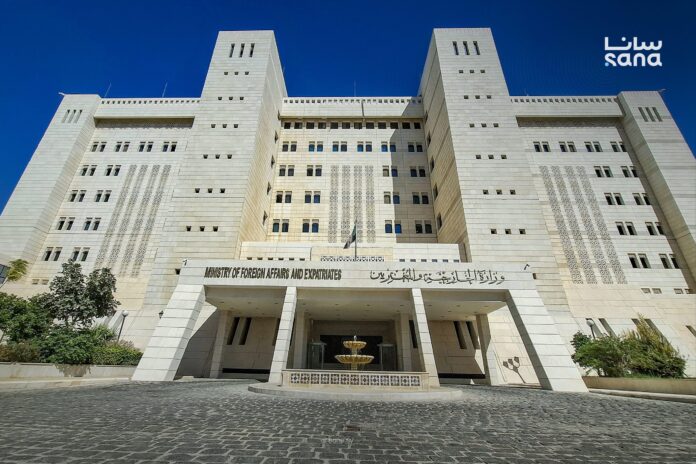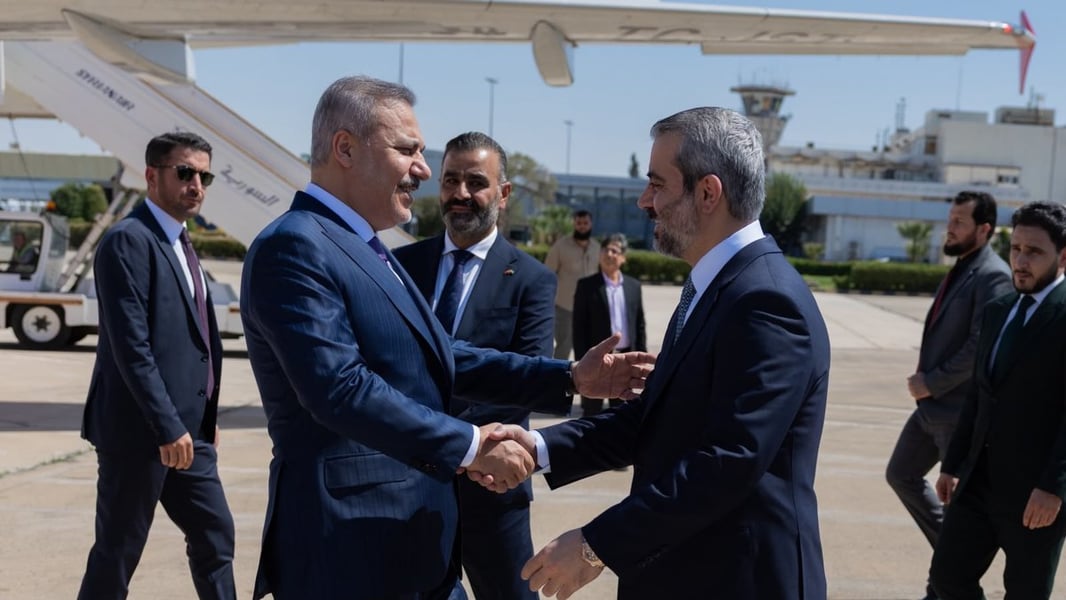

DAMASCUS — The joint press conference Syria’s transitional government hosted on Sunday was, in form, routine. In substance, it was an accusation.
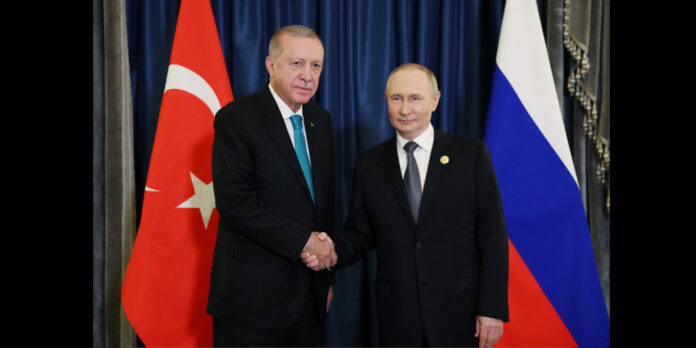
Standing beside Syrian Foreign Minister Asaad al-Shaibani in Damascus, Turkish Foreign Minister Hakan Fidan identified the country he held responsible for undermining Syria’s recovery from more than a decade of civil war.
“Just as Syria offers so much hope to the region and the world,” Fidan said, “there is suddenly an actor striving to destabilize the country. You know the name of that actor: Israel.”
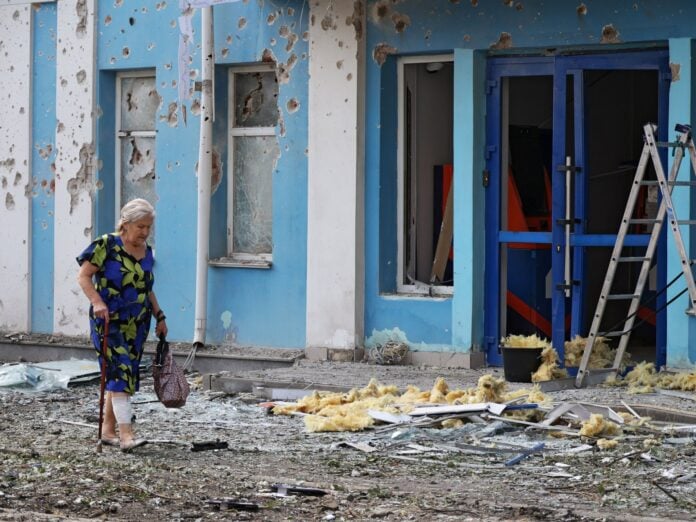
The statement was the most direct Turkish diplomatic challenge to Israel’s Syria campaign since Bashar al-Assad’s government fell in December 2024. Israel has conducted dozens of airstrikes on Syrian military infrastructure since Assad’s removal, targeting air defense systems, missile stockpiles and bases it says cannot be allowed to operate under any new government in Damascus.
Fidan went further on Sunday, accusing Israel of “systematically targeting Syria’s military capacity” while “indirectly supporting terrorist groups like Daesh.” It was a charge Israel had not answered by Sunday evening.
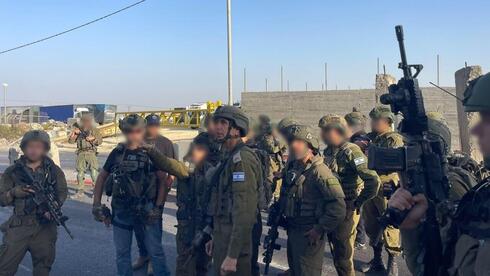
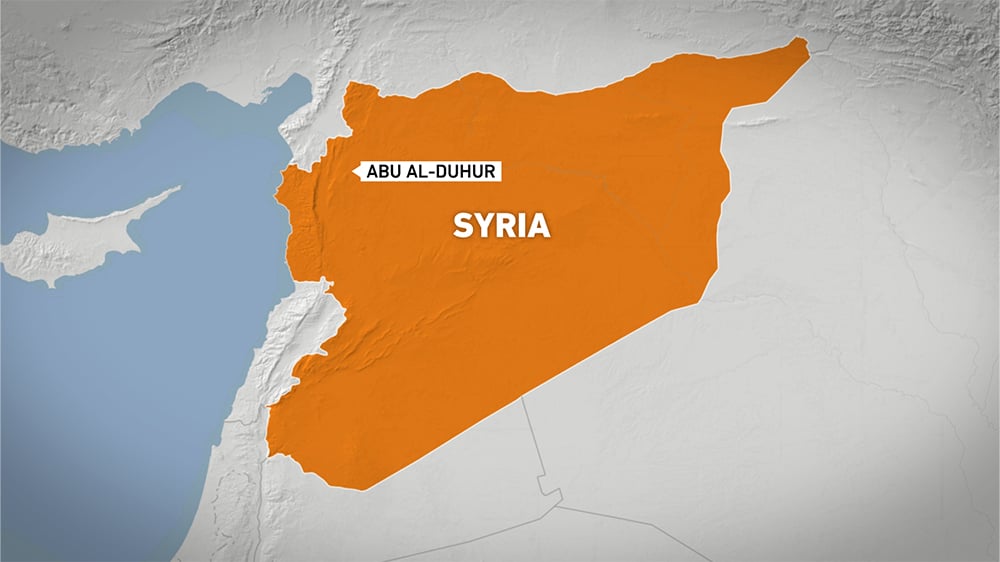
The visit’s immediate context was an August 18 Israeli strike on the Abu Duhur airfield in eastern Idlib. Israeli aircraft hit the facility eight times in what the IDF described as a preemptive operation to prevent Turkey from deploying radar equipment and an air defense unit manned by Turkish troops at the base.
Netanyahu’s office said Syria had been “on the verge of breaching” an agreed security understanding. Turkey’s presidency called the strikes an unlawful violation of Syrian sovereignty. Qatar, Egypt, and Saudi Arabia issued condemnations.
NPR reported that Washington also offered an unusual rebuke: Tom Barrack, the U.S. ambassador to Turkey and Washington’s special envoy to Syria, called the strikes “an unnecessary escalation that does not advance regional stability.”
That a Trump administration official issued the criticism was notable. That it produced no visible American pressure on Israel was equally so.
Al-Shaibani’s response at Sunday’s press conference was measured. He described Damascus’s position on Israeli military operations as “firm and unwavering” and reiterated Syria’s demand that Israel withdraw from occupied areas held since Assad’s fall. Syria remained committed to diplomacy, he said, because Damascus “knows the consequences of war.” The phrasing did not concede weakness. It reflected the asymmetry of a government still consolidating power facing a military adversary that has already demonstrated it will act unilaterally.
Sunday’s exchange in Damascus is the latest escalation in a Turkey-Israel confrontation that has intensified sharply since the Gaza war began. In July, Fidan described Israel as a burden on humanity, comments Israeli Foreign Minister Gideon Sa’ar called incitement to genocide. Before that, Turkey formally warned Israel after its jets struck Syrian territory in the months following Assad’s fall. The Syria question has turned an already strained bilateral relationship into something that looks increasingly adversarial, with Israeli strikes now targeting facilities where Ankara planned to station its own personnel.
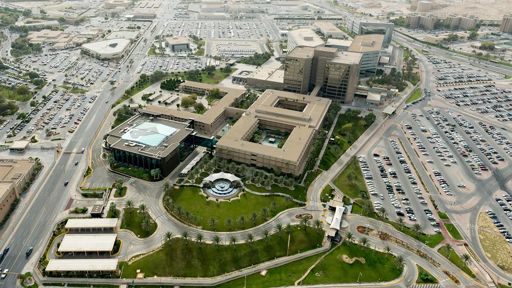
The two governments are also pursuing a significant bilateral trade agenda. Daily Sabah reported that Turkey and Syria aim to raise their bilateral trade from roughly four billion dollars last year to ten billion, through production partnerships, joint industrial zones along the Turkish-Syrian border, and employment policies anchored in Syrian labor. Saudi Arabia’s simultaneous exploration of rerouting the India-Middle East-Europe trade corridor through Syria, bypassing Israel entirely, adds a further dimension to how regional actors are responding to Israeli behavior.
What Sunday’s press conference did not provide was an answer to the question that follows every Israeli airstrike in Syria: what happens if the strikes continue? Fidan named Israel and catalogued a pattern. Al-Shaibani registered Syria’s firmness and commitment to diplomacy. Neither said what they would do differently if the strikes go on. Israel has given no indication it considers Turkish verbal pressure or Syrian condemnations a constraint on future operations.
The gap between Turkey’s public pressure and Israel’s ongoing military activity is what the Damascus meeting surfaced, and could not close.