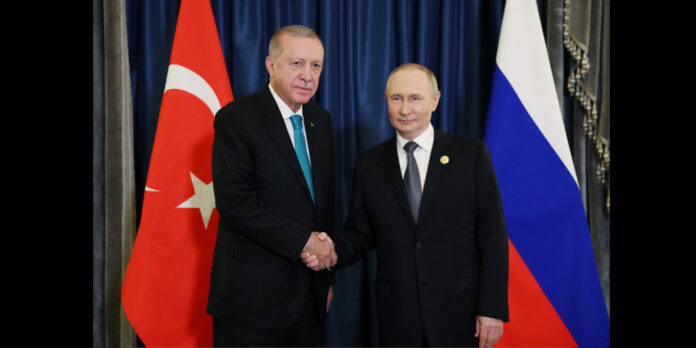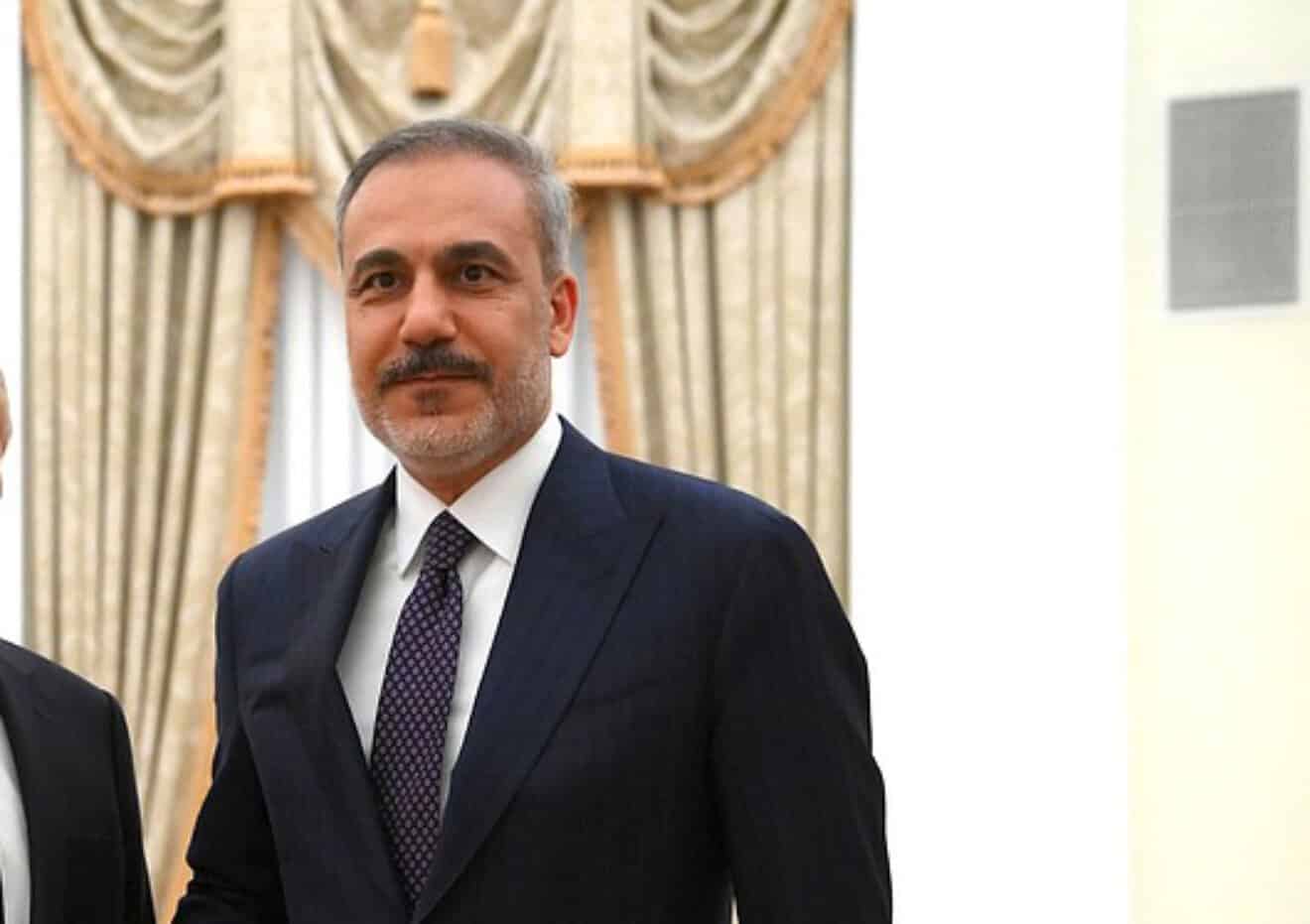

JERUSALEM — On Thursday, Hakan Fidan sat before cameras at CNN Turk and said that Israel and its people, “with their policies and mindset, have become a burden that humanity can no longer bear.” By the time his words reached Jerusalem, Gideon Sa’ar had a different name for them.
“Textbook incitement to genocide,” Israel’s foreign minister wrote on X.
The exchange between the two foreign ministers opened a new front in a diplomatic rupture that has been widening for nearly three years. What Fidan cast as an indictment of Israeli policy, Sa’ar read as an invocation of the same dehumanizing logic that has historically preceded mass atrocity. “Dehumanizing the Jewish people as an ‘unbearable burden’ is the classic, horrific language of history’s worst eliminationist regimes,” Sa’ar wrote. He called on “the civilized world and Turkey’s NATO allies” to condemn what he described as “an explicit call for the erasure of Israel.”
As of Thursday evening, none had.
Fidan’s remarks went well beyond the condemnations Ankara has issued since October 2023. He did not restrict his criticism to Israeli military conduct in Gaza. He described Israel as “a fundamentalist government” and characterized it as “a problem for the whole world,” asserting that “political systems cannot sustain it, and economic systems cannot sustain it.” He called explicitly for international sanctions, noting that Turkey had already halted roughly ten billion dollars in bilateral trade with Israel. The cumulative framing, applied not just to Israeli policies but to Israel and its people, was the dimension Sa’ar seized on.
Whether Fidan intended his words to carry the weight Sa’ar assigned them is a question that matters and remains open. Turkey has consistently positioned the Israeli military operation in Gaza as a war crime; Ankara froze trade and has been among the loudest voices in the Muslim world calling for accountability. But Israeli officials have grown increasingly attentive to the specific language Turkish ministers choose. The shift from “Israel’s government is wrong” to “Israel is a burden humanity cannot bear,” a characterization Fidan applied to the country and its people rather than any single policy, is precisely the formulation that Israeli diplomats flag as crossing from political criticism into delegitimization of the state’s right to exist.
The timing compounded the tension. Israel formally recognized the 1915 Armenian genocide in recent days, a move that Ankara, which denies the characterization of those events, rejected with fury. President Recep Tayyip Erdogan responded by describing Israel as a “murder network.” Fidan’s CNN Turk appearance appears to be part of a coordinated Turkish political response to that recognition. Neither the Turkish foreign ministry nor the presidency had commented on Sa’ar’s genocide-incitement accusation by the time of publication.
Israeli-Turkish relations collapsed in stages after Israel launched a military operation in Gaza in late 2023, following the Hamas attack of October 7 that killed more than 1,200 Israelis. Ambassadors were recalled by both sides. Trade was suspended. Against a backdrop of widening regional volatility, including a deadly bombing in Damascus earlier Thursday that killed ten people near Syria’s Palace of Justice, the two states’ estrangement has deepened into something harder to classify. Turkey has positioned itself as a leading voice against the Israeli campaign in Gaza; Israel has increasingly viewed Ankara as a strategic adversary enabling regional destabilization. Neither side has shown any inclination toward de-escalation.
What distinguishes Thursday’s language from earlier Turkish statements is where the accusation is directed. Erdogan and Fidan have regularly charged Israel with committing genocide in Gaza, a claim Turkey lodged formally with the International Court of Justice and continues to press at the international level. “A burden that humanity can no longer bear” is a different formulation. It situates Israel not as a perpetrator of a specific crime but as a fundamentally incompatible presence. Fidan told CNN Turk, per i24News, that “no matter which way you look at it, there is no parameter to continue to bear these people.” It is that phrasing, the assertion that these people cannot be tolerated under any framework, that Sa’ar identified as the hallmark of eliminationist rhetoric.
Turkey’s increasingly prominent role as a champion of the Palestinian cause has reshaped its standing in parts of the Muslim world, even as it strains ties with Western partners. Erdogan has hosted Hamas political leadership in Ankara, deepening Israeli and American unease. Fidan has been the operational architect of that repositioning. Thursday’s remarks represent the public, rhetorical face of that posture, and they now constitute a formal diplomatic challenge requiring a formal diplomatic response.
What Thursday’s exchange leaves unanswered is the question with the most practical consequence: whether Turkey’s NATO membership imposes any obligation on the alliance’s other members to respond to Fidan’s language. Sa’ar’s appeal to “Turkey’s NATO allies” was explicit, and it arrives as Turkey prepares to host the alliance’s upcoming summit in Ankara. Whether any of those allies are listening is not yet clear. The phrase “burden on humanity” has now entered the diplomatic record of this dispute. What either side, or the alliance that contains one of them, makes of it is still an open question.