
LOS ANGELES — For the better part of four years, Marvel Studios has been trying to solve the wrong problem. The Infinity Saga closed, the multiverse opened, and what followed was a run of projects threading narrative complexity that audiences eventually stopped following as closely. On Wednesday evening, Sony Pictures and Marvel Studios began finding out whether a different approach can bring them back.
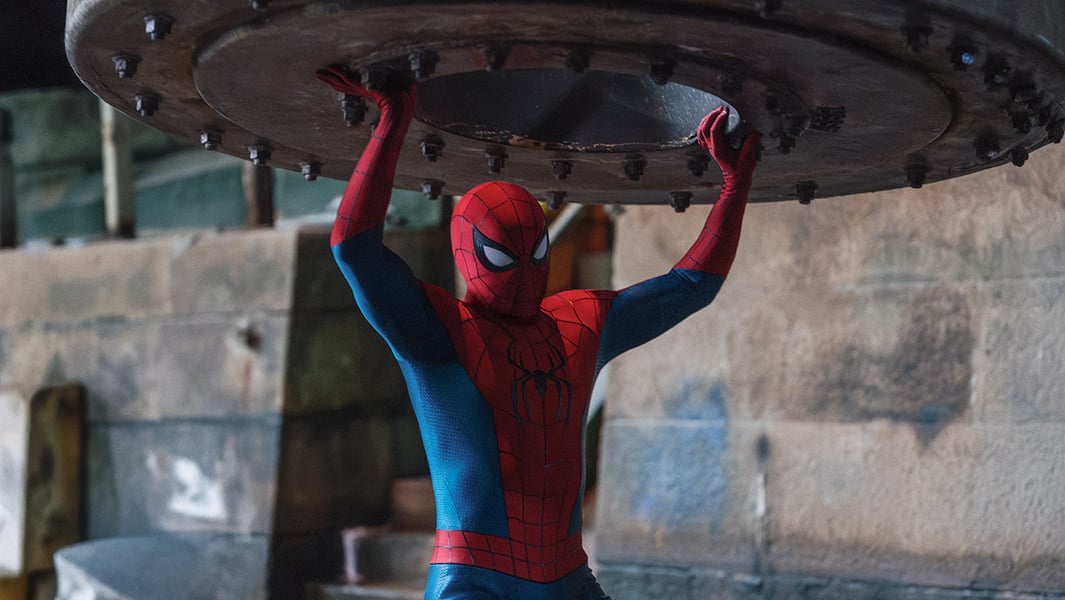
“Spider-Man: Brand New Day,” which opened in Amazon Prime early-access screenings Wednesday before a wide theatrical release Friday, arrived with something the MCU has been conspicuously short on lately: near-unanimous critical endorsement. Destin Daniel Cretton’s film debuted at 90 percent Certified Fresh on Rotten Tomatoes from 135 reviews, with a cross-section of critics reaching independently for the same point of comparison, Sam Raimi’s “Spider-Man 2,” the 2004 film that remains the genre’s disputed gold standard.
Tom Holland’s Peter Parker, following the events of “No Way Home,” has spent four years protecting New York as Spider-Man in a world that no longer knows his name. His old friends have moved on. MJ does not recognize him. Ned has built a life. The emotional logic of that premise, invisibility not as superpower but as sentence, turns out to be precisely the material a grounded filmmaker needs to work with. The Hollywood Reporter’s early-reaction coverage noted the film “genuinely explores loneliness and suppressing what we truly are,” and does so without the ceremonial gravity that recent Marvel entries have mistaken for depth.
Holland’s performance is drawing the most consistent praise. Critics are calling this his most emotionally varied work as Peter Parker and, by more than one account, the best Spider-Man performance since Tobey Maguire’s in Raimi’s sequel. The 29-year-old actor has played the character across seven films now, and what Cretton, whose previous credits include “King Richard” and HBO’s “We Own This City,” appears to have understood is that the franchise had been protecting Holland from the very material that tests him most.
The second thread running through “Brand New Day” is Jon Bernthal’s. The actor, whose Punisher first appeared in Netflix’s Daredevil series before crossing into the MCU proper, is aligned with Holland for most of the film’s action architecture: the Punisher and Spider-Man reluctantly working together to take down the Scorpion. Early reactions describe the pairing as producing some of the MCU’s most effective screen chemistry in years. Bernthal’s Frank Castle is the kind of blunt moral instrument that clarifies who Peter Parker is by contrast, and Cretton uses the tension between them with notable economy.
Sadie Sink is the third variable. The Stranger Things alumna was attached to the project for over a year while Marvel maintained what amounted to a news blackout about her role. Cretton told reporters last week that “the movie is a better movie if you don’t know certain things.” Early audiences appear to be proving him right: Sink’s role is being described as “the most weighty and shocking” element of the film’s third act, one that connects the Spider-Man universe to a corner of the MCU that has been building quietly for the past two years. Most early viewers are honoring the studio’s spoiler request, which is itself a signal about how the material lands.
Mark Ruffalo’s Bruce Banner appears in a supporting capacity that early reactions describe as substantive rather than decorative, adding institutional connective tissue to a film already carrying considerable franchise weight.
Not every piece of early criticism is unqualified. Several assessments flagged pacing concerns across what is understood to be a lengthy runtime, with the screenplay attempting to balance multiple standalone character arcs alongside broader MCU scaffolding. The final act, in particular, is generating divergent early opinion of the kind that tends to accompany films making genuine narrative choices. Whether that reads as a flaw or a strength will likely split along the same lines that divided audiences over “No Way Home’s” closing sequence.
The film’s distribution architecture is itself a story. Amazon Prime’s early-access theatrical partnership with Sony places “Brand New Day” inside a streaming-theatrical hybrid model that is rapidly reshaping how major studios take tentpole releases to market, part of a broader restructuring visible in deals like DAZN’s acquisition of MSG and YES Network regional sports rights. The commercial performance of this Amazon-Sony arrangement will shape how both studios approach subsequent Marvel collaborations.
What no one is willing to say publicly yet is whether “Brand New Day” is the MCU’s genuine inflection point, or whether the audience it needs, the one that made “No Way Home” a $1.9 billion global event, has contracted in ways that no amount of critical enthusiasm can fully reverse. The July 31 opening-weekend numbers will start to answer that. Until then, Cretton and Holland have delivered something the franchise has been circling for three years without quite landing: a Spider-Man film that feels as though it was made by someone who understood what makes Peter Parker matter, rather than what makes Peter Parker marketable.