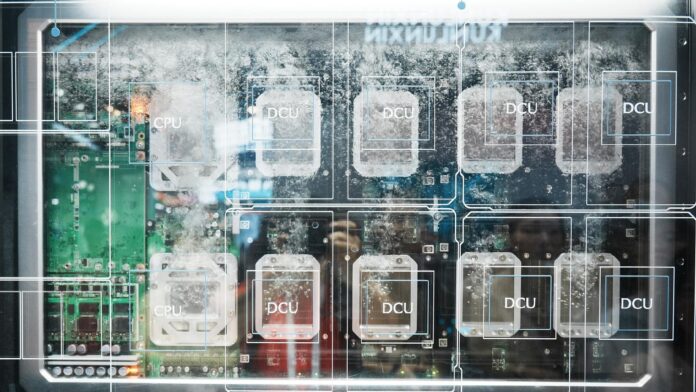

SANTA CLARA – Nvidia shipped its first Vera-based server racks to hyperscalers this spring without much noise from the market, but the numbers that have since emerged from its customer base are the kind that tend to get AMD and Intel’s attention fast.
The Grace successor has already run through Nvidia’s own chip design workflows. An internal CPU verification process that previously consumed 30 days in simulation completed in roughly 17 hours on a Vera cluster, Nvidia said. The company is now using Vera to design Vera’s successors, an accelerative loop that compounds its development advantage at a rate x86-based workstations cannot match.
Nvidia has set a $20 billion revenue target for Vera in the current fiscal year. Its long-range internal projection sits at $200 billion as server infrastructure transitions toward Arm architecture. Both figures come from Nvidia and carry the optimism inherent in company forecasts, but independent analysts have not called them implausible. Counterpoint Research projects Arm CPUs will reach 90 percent of server market share by 2029, compared to 13.2 percent at the end of 2025. That trajectory, if accurate, means the architecture AMD and Intel bet their data center futures on is becoming the exception rather than the rule.
Vera runs 1.5 times faster than Grace, its predecessor, and Nvidia claims roughly 50 percent faster than comparable x86 processors on its tested workloads. That figure is an aggregate across Nvidia’s benchmarks, not a universal performance claim, and it covers specific AI and high-performance computing tasks where Arm’s efficiency advantages are most pronounced. The gap narrows on general enterprise workloads and legacy application stacks.
For AMD and Intel, the awkward reality is that their data center revenues are rising. AMD’s data center segment generated $5.8 billion last quarter, a 57 percent year-over-year increase. Intel’s data center business reported $6.3 billion, up 59 percent. Both companies are capturing real demand from the AI infrastructure buildout. The structural problem is that Nvidia is assembling a platform, CPU, GPU, and high-bandwidth interconnect in a single coherent system, that is positioning itself to replace discrete component purchasing entirely.
AMD’s best answer to Vera is not a CPU. The company signed a $5 billion partnership with Anthropic for MI450 AI accelerators, a significant win at the GPU level. But AMD’s EPYC processor line is x86. The company has no Vera-class Arm server CPU in production. A hyperscaler building a Vera-native rack is making a full-stack architectural commitment in which AMD’s accelerators may still find a role but AMD’s CPU franchise increasingly does not.
Intel’s position is more exposed. The company has not prioritized Arm server CPUs as a product category, a calculation that made sense when x86 dominated server infrastructure and Arm was a mobile architecture. OpenAI, Anthropic, and SpaceX are deploying Vera at scale. Meta reported a 2x improvement in performance-per-watt when migrating workloads from x86 infrastructure to Grace, and Vera is supposed to extend that advantage further. Intel has no comparable Arm server product in its near-term pipeline.

Performance-per-watt is not an engineering abstraction for data center operators. Power consumption is the binding constraint on hyperscale expansion in most markets right now. Facilities that can deliver the same compute at half the energy expenditure can either lower operating costs substantially or expand capacity without new power infrastructure. That economics argument drives adoption faster than raw performance benchmarks, particularly for customers building at the scale of a new data center every few weeks.
Nvidia’s infrastructure partners are building for it. Supermicro, sitting on a $60 billion server backlog, is configuring Vera-native rack designs. The availability of complete, tested systems accelerates purchasing cycles for enterprise buyers who prefer not to custom-build. Integration depth with supply chain partners is harder to replicate than any individual performance benchmark.
According to Nvidia’s official announcement, the company began using Vera internally for CPU design verification before shipping it broadly to customers, a provenance that matters to enterprise buyers who want evidence of production-grade workloads rather than configured benchmarks.
The constraint on adoption is enterprise migration. Hyperscalers commissioning greenfield data centers can design for Vera from the outset. The hundreds of millions of x86 processors already running inside enterprise data centers globally present a different challenge. Applications compiled for x86 do not run natively on Arm. Migration requires developer resources, testing cycles, and vendor support for legacy software stacks. Arm’s push into Windows AI PCs encountered the same friction even in a consumer market with simpler application dependencies.
Counterpoint’s 90 percent projection describes new server purchases through 2029, not replacement of existing infrastructure. AMD and Intel still dominate the servers already deployed, and that installed base generates maintenance, licensing, and refresh revenue that does not disappear regardless of what the greenfield market does.
The more honest framing may be that Vera has captured the highest-growth segment of server spending, which happens to be AI infrastructure, while the traditional enterprise server market is not disappearing but is no longer the part that shapes long-term architecture decisions. For AMD and Intel, holding the installed base while ceding that growth to Nvidia is defensible for several more years. Whether it remains defensible through the rest of the decade is a question neither company has answered directly.