
NEW YORK — The Dow Jones Industrial Average is meant to be a portrait of American industry. In the latest session on Wall Street it was mostly a portrait of one trading floor.
The index closed at 53,577.40 on Tuesday, the most recent completed trading day, up 160.24 points or 0.30 per cent. By Eastern Herald’s calculation Goldman Sachs supplied about 139 of those points by itself, roughly 87 per cent of the day’s gain. Three sessions earlier the same bank delivered about 44 per cent of a 518-point rally.
Two sessions do not make a pattern. What makes this one is the reason, and the reason sits in Goldman’s own quarterly filing: market-making revenue rose 61 per cent year on year. Goldman is paid more when markets become harder to trade, and this is a week built to make markets harder to trade. Washington’s sanctions on Iran took effect, Canada answered with duties on more than 700 American products, and Nvidia reports after Wednesday’s close.
So the blue-chip index rose on a day its energy component was falling, its restaurant component was falling, and its software component was falling, because an index designed in 1896 gives the most weight to whichever share happens to carry the highest price tag. Right now that share belongs to a firm whose business improves when everything else gets difficult.
Dow Jones Today: Where the 160 Points Came From
| Company | Close | Session | Est. Dow points | Share of the +160.24 |
|---|---|---|---|---|
| Goldman Sachs (GS) | $1,058.88 | +2.18% | +138.9 | 86.7% |
| Merck (MRK) | $156.45 | +3.84% | +35.6 | 22.2% |
| Nvidia (NVDA) | $213.05 | +2.19% | +28.1 | 17.5% |
| Microsoft (MSFT) | $491.71 | +0.90% | +27.0 | 16.9% |
| Sherwin-Williams (SHW) | $350.45 | +1.07% | +22.9 | 14.3% |
| IBM | $234.19 | +1.36% | +19.4 | 12.1% |
| McDonald’s (MCD) | $268.10 | -1.63% | -27.3 | drag |
| Salesforce (CRM) | $205.69 | -1.61% | -20.7 | drag |
| Chevron (CVX) | $199.89 | -1.58% | -19.7 | drag |
| Point contributions are Eastern Herald estimates derived from the 30 component closes and an implied divisor of 0.16271, not exchange-published attributions. On that divisor each dollar of share price is worth about 6.15 index points. The full component set models a move of +173.07 against the official +160.24; the residual of about 13 points reflects rounding in the implied divisor rather than a missing name. Shares sum to more than 100 per cent because the decliners offset the gainers. | ||||
The mechanism is the divisor. The Dow is price-weighted, so a dollar of share price counts the same whether it belongs to a company worth $700 billion or one worth $70 billion. Goldman’s shares cost $1,058.88, more than any other member, which means a routine 2.18 per cent day at the bank moves the index roughly five times as hard as the same percentage at Nvidia.
What Goldman’s Filing Says About Why
The bank’s most recent quarterly report, filed with the Securities and Exchange Commission on August 3, covers the three months to June 30. It is not a quiet document.
| Line | Q2 2026 ($m) | Q2 2025 ($m) | Change |
|---|---|---|---|
| Market making | 7,637 | 4,733 | +61% |
| Investment banking | 3,400 | 2,194 | +55% |
| Investment management | 3,378 | 2,837 | +19% |
| Commissions and fees | 1,525 | 1,201 | +27% |
| Net interest income | 3,954 | 3,104 | +27% |
| Total net revenues | 20,338 | 14,583 | +39% |
| Total operating expenses | 11,673 | 9,241 | +26% |
| Pre-tax earnings | 8,563 | 4,958 | +73% |
| Diluted earnings per share | $20.98 | $10.91 | +92% |
| Figures in millions of US dollars except per-share amounts, as filed. Percentage changes are Eastern Herald’s calculation from the filed figures and are rounded. Market making is the single largest revenue line and the fastest growing of the large ones. Revenues grew 39 per cent while operating expenses grew 26, which is the entire explanation for pre-tax earnings rising 73. | |||
Goldman reported net earnings of $6.63 billion for the quarter against $3.72 billion a year earlier, an annualised return on equity of 23.5 per cent against 12.8, and book value of $367.67 a share. At the latest close the shares changed hands at about 2.88 times that book value.
Market making is the business of standing between buyers and sellers and keeping the difference. It earns most when volumes are heavy and prices are moving, which is to say when everyone else is uncomfortable. A 61 per cent increase in that line is the clearest statement anybody has published about what this year has actually felt like inside the market, and it is why the Dow’s most powerful component is currently a hedge against the conditions the other twenty-nine are exposed to.
The Oil Trade Went the Wrong Way
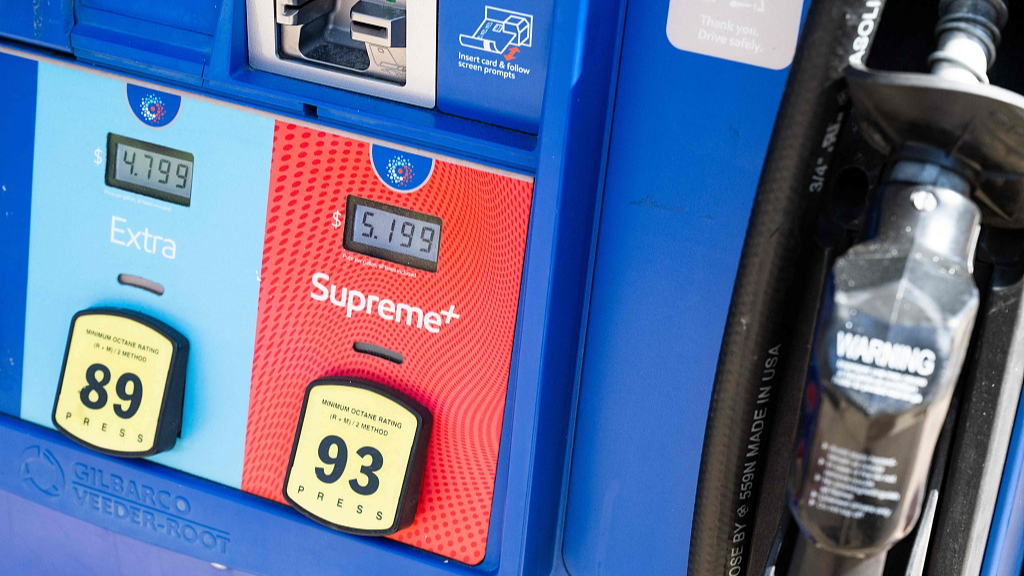
Chevron was the third-largest drag on the index, down 1.58 per cent and worth about 20 points of the wrong direction, and the reason was a collapse in the price of the thing it sells. Brent settled at $85.86 a barrel, down 6.85 per cent from the previous session’s $92.17, and West Texas Intermediate at $81.11, down 4.59 per cent from $85.01.
That happened on the day American sanctions aimed squarely at Iranian oil took effect. Sanctions on a major exporter are supposed to make crude scarcer and therefore dearer. The market moved hard in the opposite direction, which is the single most interesting thing in this session and the one nobody has adequately explained.
One reading is that traders do not believe the barrels will actually stop. China, Iran’s largest customer, said it would safeguard its own interests and repeated that sanctions will not resolve the war. A sanctions regime that the largest buyer declines to observe removes paperwork rather than supply. Eastern Herald’s crude board tracks the benchmarks through the session, and gold rose 1.6 per cent to $4,715.20 while it happened, which is not what a market believing in a supply shock usually does.
Canada Answers With More Than 700 Products
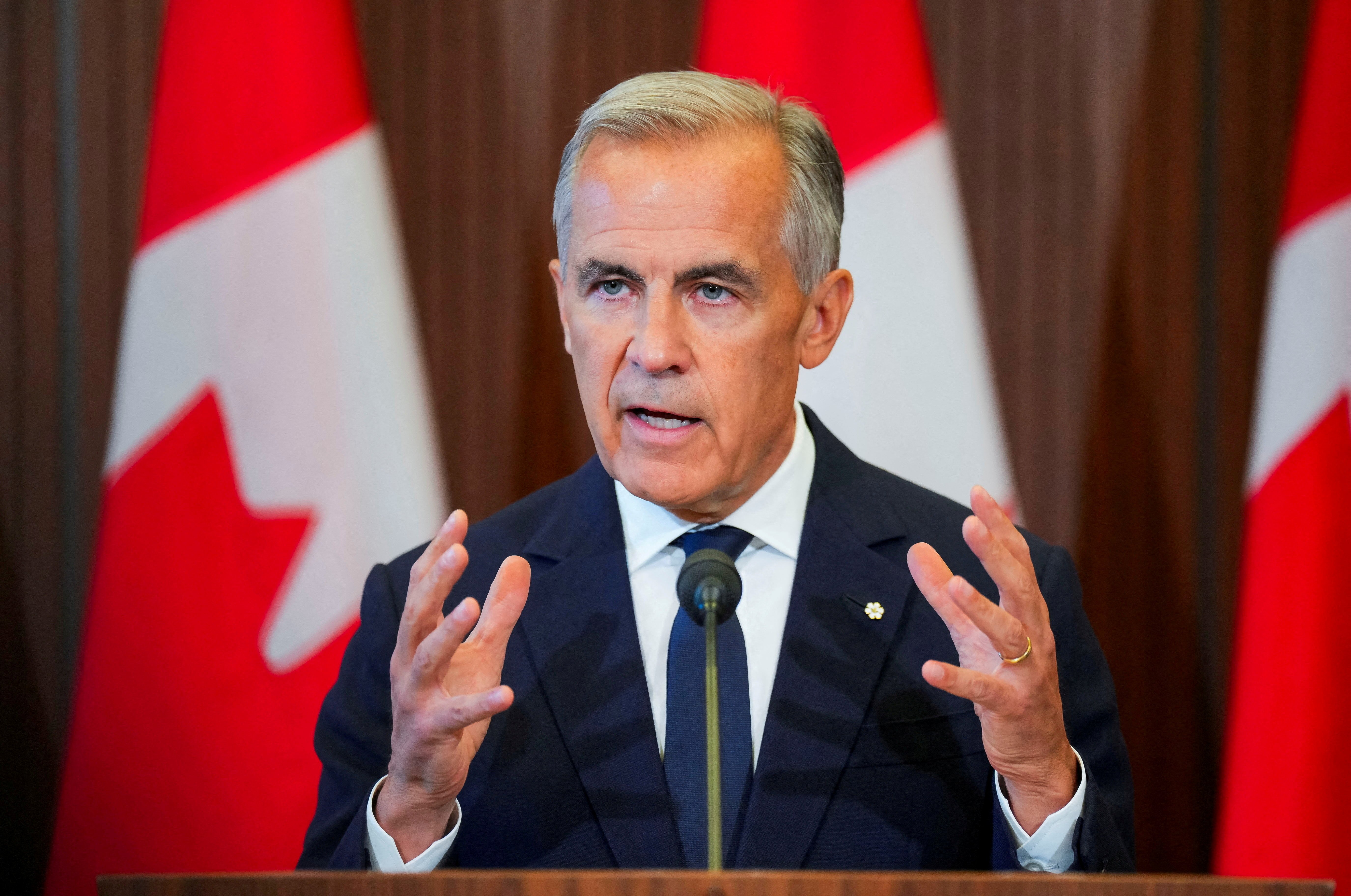
Ottawa has published its answer to last week’s American duties. Al Jazeera reported that the measures cover more than 700 American products worth about $19.9 billion and take effect on September 8, which gives both governments a fortnight to find an exit they have so far shown no interest in finding.
For the Dow this lands on the industrial names rather than the financial ones, which is part of why the index needed Goldman so badly. Caterpillar, 3M, Boeing and Honeywell all sell into supply chains that cross that border. None of them was among the session’s contributors.
Rates Fell, and That Helped Too
The ten-year Treasury yield eased to 4.64 per cent and the thirty-year to 5.17, both down more than one per cent on the day, and the volatility index slipped to 15.45. Falling long yields lift the present value of every future dollar of corporate earnings, which is the mechanical reason a broad equity market can rise on a day with this much bad news in it.
The S&P 500 rose 0.32 per cent and the Nasdaq composite 0.66, so this was not a Dow-only event. What was Dow-only is the concentration. A 0.30 per cent gain that is 87 per cent one stock is a different animal from a 0.32 per cent gain spread across five hundred, and only one of those two indices tells you what the American market did.
Where Things Stand Now
Three hours after the closing bell the equity futures were holding the session rather than giving it back. Dow futures were quoted at 53,638, S&P 500 futures at 7,692.75 and Nasdaq 100 futures at 29,288, each a little above where its cash index settled. Brent held at $85.97 a barrel, having stopped falling but not begun to recover.
Gold is the line that kept moving. It settled the session at $4,715.20 and traded at $4,730.40 overnight, a further $15 an ounce added while everything else stood still. That is the crude signal priced a second time and in a different instrument: money positioning for disorder it does not expect these sanctions to resolve. If the metal is right, Tuesday’s drop in oil was never a verdict on supply at all.
What This Column Cannot Tell You Yet
We cannot say why Goldman rose 2.18 per cent in this session specifically. The bank made no announcement, filed nothing, and reported nothing. A move of that size in a $300 billion company usually has a cause, and on the public record there is not one, which means the honest description is that the shares went up and the index followed.
Nor can we tell you why crude fell on the day the sanctions began. The two explanations available, that the market does not believe enforcement will hold and that demand is weakening faster than supply, point in opposite directions for everything else in this article. If it is disbelief, oil is mispriced and Chevron is cheap. If it is demand, the Nvidia results landing after Wednesday’s close will be read against an economy softer than the equity market currently assumes. The tape gave us the price and withheld the reason.
Related Posts