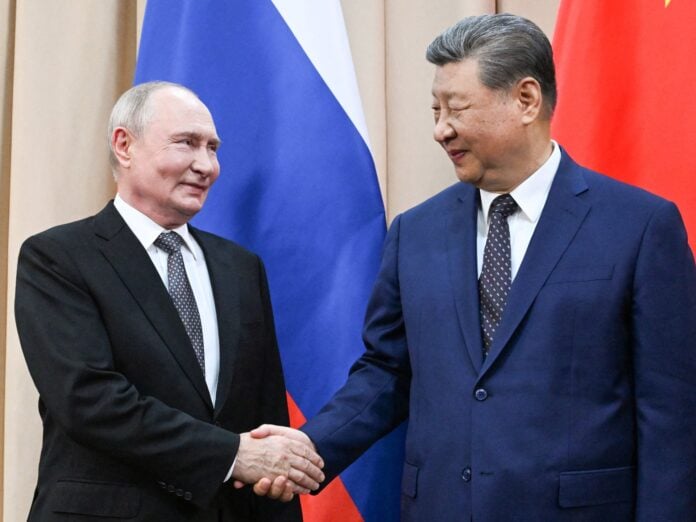

LONDON — The pump did not get the memo. Crude oil price today, Tuesday, August 25, 2026, ended with Brent near $87.12 a barrel and West Texas Intermediate at $82.36, a second straight fall from Monday’s close of $92.17 and $85.01, and yet the American national average for diesel this morning is $5.620 a gallon, fifteen cents dearer than it was a week ago.
Brent is now $7.27 below where it closed on Friday, a drop of 7.7 per cent. All of it arrived in the two sessions after Washington declared what it called an economic D-Day on Iran. That sequence is backwards, and untangling it is the whole of the session.
Two things pushed crude down, and they pull in the same direction. The sanctions Treasury unveiled on Monday set no deadline and spared the institutions that actually clear Iran’s oil money. And while traders were still reading them, a Pakistani field marshal spent the day in Tehran carrying what was reported to be a proposal on sanctions relief. Neither of those removes a barrel. Both of them remove fear.
Crude Oil Price Today: Benchmarks, August 25, 2026
| Benchmark | Tuesday (USD/bbl) | Monday close | Change | One year |
|---|---|---|---|---|
| Brent crude | 87.12 | 92.17 | -5.05 (-5.48%) | +30.35% |
| WTI crude | 82.36 | 85.01 | -2.65 (-3.12%) | +28.24% |
| Brent minus WTI | 4.76 | 7.16 | -2.40 | Derived spread |
| A word of caution on these figures. The data houses diverged sharply after the close: Trading Economics was showing Brent at $86.94 and WTI at $81.11, while its own news copy described WTI as ending near $82.5, which is where the OilPrice.com board has it. The WTI number is the unstable one, spanning roughly $1.25. Both providers agree Brent fell further than WTI; they disagree on by how much, putting the spread compression somewhere between $1.33 and $2.40. Treat the levels as a close range rather than a settlement of record. | ||||
Crude Oil Price Today: The Spread Is the Tell
Here is the number that explains the session, and almost nobody quotes it. Brent minus WTI closed Monday at $7.16. It ended Tuesday somewhere between $4.76 and $5.83, depending on whose tape you read.
The disagreement is real and it is worth naming. What is not in dispute is the direction: on both boards Brent fell harder than WTI, for a second session running.
That matters because the two grades answer to different masters. WTI is landlocked American crude that reaches the sea through Gulf Coast terminals. Brent is the seaborne international marker, and it is the one that carries the world’s fear about whether tankers can get out of the Persian Gulf. When Brent falls a dollar or more further than WTI two days running, the market is not repricing oil. It is repricing risk.
The Gulf grades make the same point more bluntly.
| Grade | Price (USD/bbl) | Change | Quote age |
|---|---|---|---|
| Murban (Abu Dhabi) | 92.71 | -8.73 (-8.61%) | Several hours |
| Dubai | 90.10 | -0.17 (-0.19%) | 1 day |
| OPEC basket | 94.91 | 0.00 (0.00%) | 1 day |
| None of these is live. Murban’s quote stopped refreshing during the afternoon and has not moved since, while Brent kept falling, so the gap between them has drifted back out to $5.59 as an artifact of the stale print rather than a genuine re-widening. Dubai and the OPEC basket carry a full day’s lag. The Iran Heavy and Bonny Light lines on the same board reverted to June monthly pricing during the session and have been left out for that reason. | |||
Murban is the light Abu Dhabi grade, much of which leaves through the Habshan to Fujairah pipeline and reaches the Gulf of Oman without entering the Strait of Hormuz. It has spent this war at a fat premium to Brent for exactly that reason: a barrel that does not need the strait is worth more than one that does. On Monday that premium was north of eleven dollars. By the middle of Tuesday it had roughly halved.
That is the war premium coming out of the price, and it is coming out fastest where it was thickest. It is also, we should say plainly, an eight per cent single day move in a grade quoted by one provider on a quote that then froze. It may be revised.
The Sanctions That Did Not Bite
Treasury Secretary Scott Bessent went to a podium on Monday and borrowed his imagery from Normandy. Operation Economic Outcast, he said, would sever every economic lifeline sustaining the Iranian regime until Tehran stands alone. Close to sixty entities, individuals and vessels were designated, with sectoral determinations covering digital assets, technology, gold, aviation and shipping, the Treasury Department said in its announcement. Five shadow fleet tankers were named outright, among them the SIFRA and the QUANTUM HOPE.
Traders were not doubting the rhetoric. They were counting barrels, and the package removed almost none. China takes well over eighty per cent of Iran’s seaborne crude, and no major Chinese bank was designated. Smaller teapot refiners have been hit before. The institutions that clear the money were not. Asked whether the large Chinese lenders were in scope, Bessent would only say that no one is above the reach of American sanctions, which is the answer a man gives when the answer is not yet.
Then came the detail that did the damage. The secondary sanctions do not take effect now. Bessent called Monday’s announcement a warning shot and declined to give any country a deadline, NBC News reported. Pressed on why he would not name a date, he asked in return why he would want to blow up the global financial system.

And the Field Marshal in Tehran
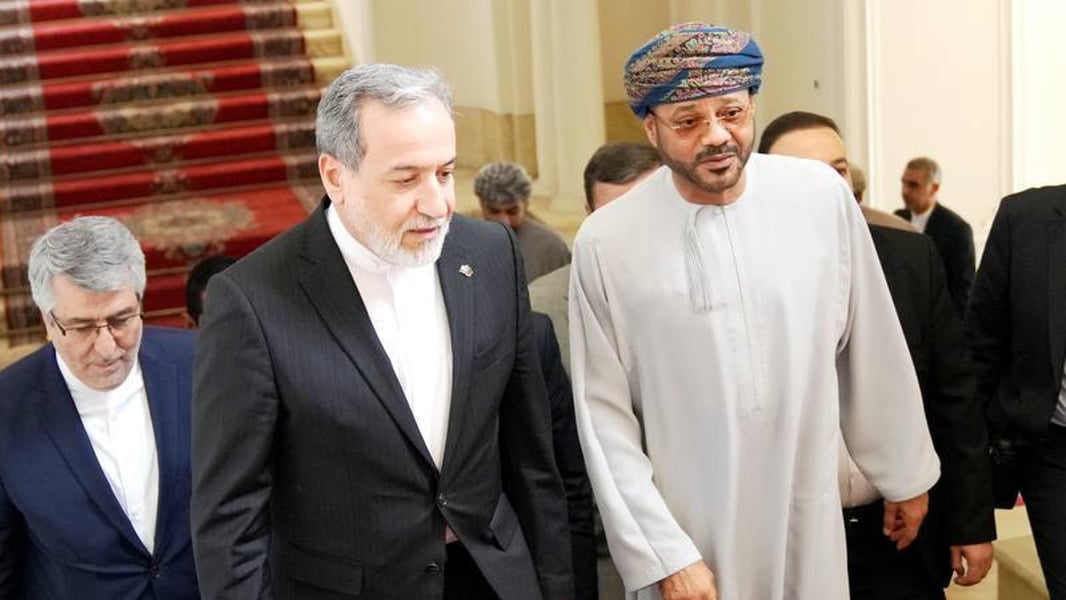
The second driver landed the same day and got a fraction of the attention. Pakistan’s army chief, Field Marshal Asim Munir, flew into Tehran on Monday for a one day mission to talk Iran back to the table, and he did not confine himself to the diplomats. He saw President Masoud Pezeshkian, parliament speaker Mohammad Bagher Ghalibaf, who is Iran’s chief negotiator, and General Mohsen Rezaei, the Supreme Leader’s man on the security council. He was reported to be carrying a proposal involving sanctions relief under the existing memorandum. Qatar said its own mediation was continuing, Oman’s foreign minister was due separately to work on navigation rules for the strait itself, Al Jazeera reported, and word circulated that Washington might return evacuated diplomats to the region.
That last item is the one traders seized on. Diplomats do not go back to a capital you are about to bomb.
What Munir actually got is another matter. Rezaei told him Iran distrusts America and that America must change its behaviour. Ghalibaf said Tehran is still pursuing the terms of the Islamabad memorandum and that it is Washington which must honour its commitments. Pezeshkian, who said days earlier that it is better to end the war now while Iran is in a position of power, warned that relying on force and bullying will only complicate things. Those are not the noises of a government that has decided to fold.
The memorandum they keep invoking was signed on June 17 by Pakistan, Iran and the United States. Its sixty day window lapsed in the middle of this month with neither side agreeing to extend it. Clause five of it covers the Strait of Hormuz. So the market spent Tuesday taking more than seven per cent off crude partly on the strength of a mediation effort whose formal framework has already expired.
Crude Oil Price Versus the Price at the Pump
None of this has reached American drivers, and the reason sits in the part of the energy market that crude prices do not describe.
| Fuel | Today | Yesterday | Week ago | Month ago | Year ago |
|---|---|---|---|---|---|
| Regular gasoline | $4.097 | $4.099 | $4.065 | $4.111 | $3.161 |
| Diesel | $5.620 | $5.613 | $5.468 | $5.278 | $3.682 |
| Retail prices lag crude by roughly two weeks in normal conditions. Diesel is currently not tracking crude at all. AAA’s own front page still carries the line that high crude oil prices are pushing the national average up. | |||||
Gasoline has barely moved in a month and is a dollar dearer than a year ago. Diesel is the outlier: up fifteen cents in a week, thirty four cents in a month, and more than half on the year, in the same fortnight that crude went nowhere and then fell off a shelf. The American diesel crack, the margin between crude and the fuel refined from it, touched a record $102.20 a barrel on August 17 and is still hovering near a hundred. Distillate stocks were around 107.1 million barrels in early August, the thinnest for the time of year since 1996.
The constraint has moved downstream. Cheaper crude does not help when the shortage is refining capacity and the diesel already made, which is why seven per cent off Brent this week will not show up in the cost of moving food to a supermarket. Mark Zandi, chief economist at Moody’s Analytics, put the cumulative cost of the war to the average American household above $1,200 as of late July, and reckoned it would approach $2,000 by the one year mark if prices held. Two down days do not disturb that arithmetic.
What Still Holds Crude Up
The floor under this market is physical and it has not moved. Flows through the Strait of Hormuz collapsed from 21.6 million barrels a day in the final quarter of 2025 to 4.9 million a day in the second quarter of this year, with shut in production averaging 5.5 million barrels a day in July. Global inventories fell by 4.2 million barrels a day in the second quarter and the Energy Information Administration projects a further 3.8 million a day drawdown this quarter. Its August outlook has Brent averaging $85 in the third quarter, $78 in the fourth and $69 across 2027, a forecast that assumes the strait reopens and the shut in barrels come back, which is precisely the assumption in dispute. After two sessions like these, the third quarter figure no longer looks like a forecast. It looks like a level the market is walking down towards.
Tehran is also still tightening its grip on the waterway rather than loosening it, having blacklisted dozens of tankers over the sanctions campaign. Our reporting on Iran’s threat to halt all Gulf oil exports covers the retaliation it has actually put on the table, and the rerouting is visible in the trade data: Chinese purchases of Iranian crude ran near 534,000 barrels a day in August against 823,000 in July, while Iranian offshore stocks drew down to roughly 83 million barrels from more than a hundred million. That squeeze was achieved before Monday’s announcement and largely by naval means. It is also why India’s Russian crude imports hit a record this month.
What we cannot tell you is which of the two stories the market was actually buying. If it was the sanctions, then NPR’s interview with Alan Eyre, the former American diplomat who worked the Iran nuclear file until 2015, is the relevant verdict: he says Washington has already taken the low hanging fruit, the mid hanging fruit, the high hanging fruit and the tree. Monday was the ceiling, and crude has repriced correctly. If it was Munir, then a seven per cent move rests on a one day visit that produced no announced agreement, inside a framework that expired ten days ago. Traders bought one of those. They have not said which, and the price will not tell us until it moves again.
Monday’s crude board, and the same morning’s gold rate today and silver rate today counters, run alongside this one.