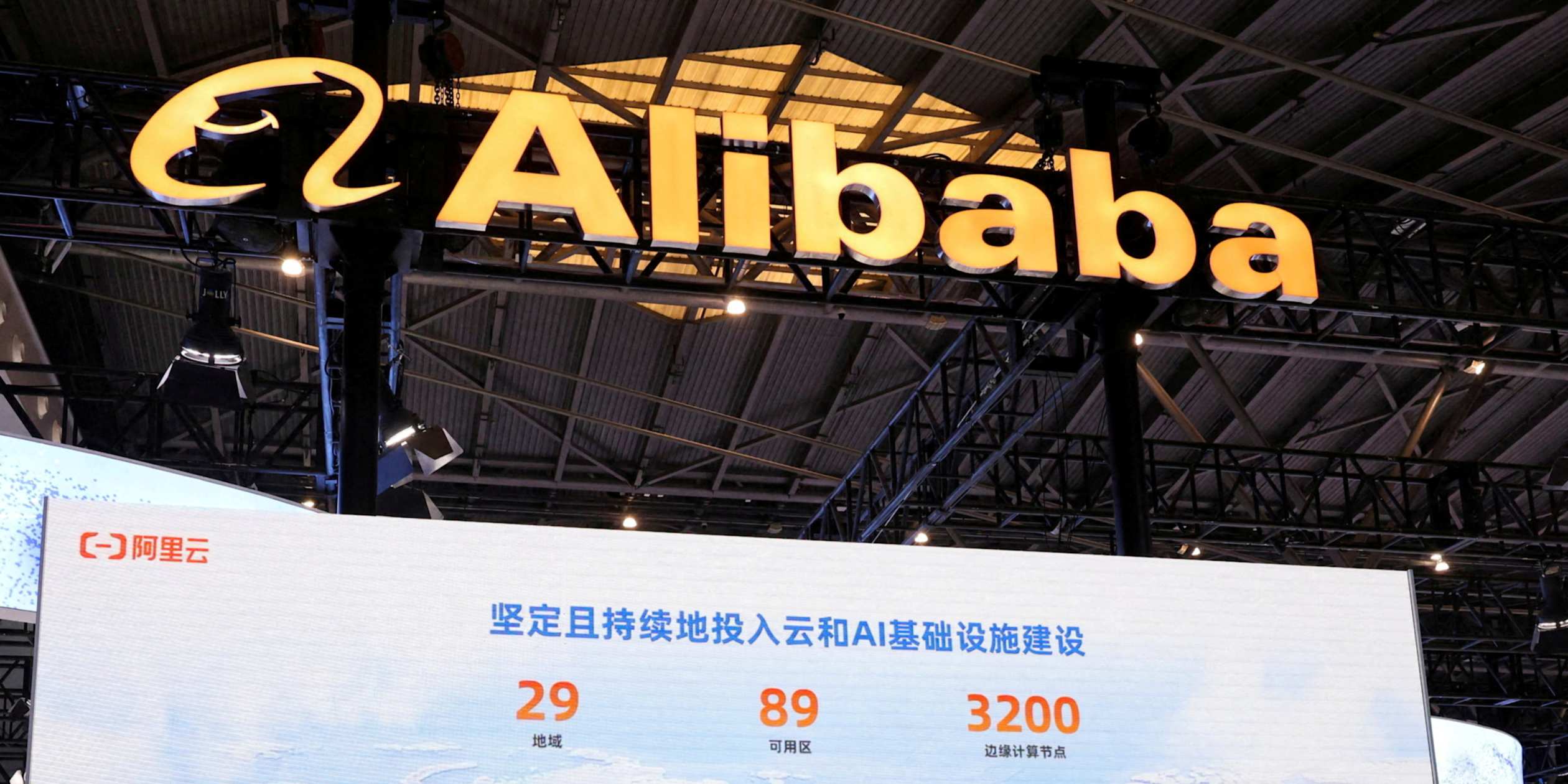

HONG KONG — Whoever owned Alibaba on Friday afternoon is paying for its artificial intelligence build, and on Monday morning Hong Kong told them what it cost.
The company priced 710 million new ordinary shares at HK$112.70 apiece over the weekend, raising HK$80 billion, roughly $10.2 billion. Every one of those shares dilutes somebody who was already there. The stock opened Monday and fell more than 10 per cent.
It is the largest primary follow-on offering a Hong Kong-listed company has ever done, and the third largest anywhere this year, behind Alphabet and Intel. But the size is not the interesting part. The interesting part is in the filing, where Alibaba commits 100 per cent of the net proceeds to what it calls full stack AI capabilities, including to expand and enhance its AI infrastructure. Eighteen months ago the company said it would put RMB 380 billion into cloud and AI over three years, and the working assumption in every model built since was that the business would generate the money. On Sunday that assumption was withdrawn.
| Term | Detail |
|---|---|
| New ordinary shares | 710,000,000 |
| Price per share | HK$112.70 |
| Gross proceeds | HK$80 billion, about $10.2 billion |
| Discount to Hong Kong close, 21 August | 8.4 per cent |
| Discount to New York ADS close, 21 August | 3.6 per cent |
| Use of proceeds | 100 per cent to full stack AI capabilities and AI infrastructure |
| Offering basis | Regulation S, offshore, non-US persons only; not registered under the US Securities Act |
| Expected settlement | 26 August 2026 |
| Ranking | Largest primary follow-on ever by a Hong Kong-listed company; third largest globally in 2026 |
| Two discount figures are quoted because the Hong Kong ordinary shares and the New York depositary shares closed at different implied prices on 21 August. The filing states the placement remains conditional and may not complete. | |
There is something in the pricing that has gone almost entirely unremarked, and it is worth a paragraph.
HK$112.70 was an 8.4 per cent discount to where the shares closed in Hong Kong on Friday. Against the New York close of Alibaba’s American depositary shares, the same price was a discount of 3.6 per cent. One placement, two discounts, because the two listings had drifted apart during the week. The shallower figure is the one that travelled, and it is the one measured against New York. Yet the deal was struck under Regulation S, which in the filing’s own words limits it to certain non-U.S. persons in offshore transactions. The discount that made the offer look cheap was quoted against a market that was legally forbidden from taking it.
Why the money is needed at all is the harder question, and Alibaba has already answered it in a way that cannot be walked back. Profit for the June quarter fell 75 per cent. Not because the AI business is failing, which is the reading that gets attached to a number like that, but because it is working: Cloud Intelligence revenue grew 38 per cent year on year and external customer revenue grew 40 per cent. The revenue is arriving. The earnings are being eaten on the way in, by chips and power and buildings, and the gap between those two facts is what the placement is for.
That gap is not unique to Alibaba. It is the defining problem of every company trying to build frontier AI. What differs is how each one finances it, and the difference is not technological.
Microsoft, Amazon and Alphabet fund their data centres out of operating cash flow that runs to tens of billions a quarter. Nvidia went further and assembled six of the world’s largest asset managers to mobilise $500 billion for AI infrastructure, turning compute into something closer to an asset class than a cost line. Alibaba, which by most independent rankings has models that compete directly with the American frontier, cannot reach any of that. It sold stock, at a discount, to a pool of buyers defined by exclusion.
| Measure | Latest figure |
|---|---|
| Net profit, June 2026 quarter | Down 75 per cent year on year |
| Cloud Intelligence revenue growth | Up 38 per cent year on year |
| External customer cloud revenue growth | Up 40 per cent year on year |
| Cloud and AI capex commitment, announced 2025 | RMB 380 billion over three years |
| Stated ambition | More than $100 billion in annual cloud and AI revenue within five years |
| This placement as a share of the RMB 380bn commitment | Roughly one fifth |
| Alibaba has not published a return target, a utilisation rate for capacity already built, or a split of the capex between chips, buildings and power. The final row is Eastern Herald’s calculation at prevailing exchange rates and is approximate. | |
The competitive position is genuinely strong, which is what makes the financing constraint sting. Chinese labs have spent this year undercutting American model makers badly enough that Bloomberg called it a death zone, with Alibaba’s own Qwen line among the handful at the top of global usage tables. None of that changed on Monday. What changed is the price at which Alibaba can convert that position into concrete and silicon.
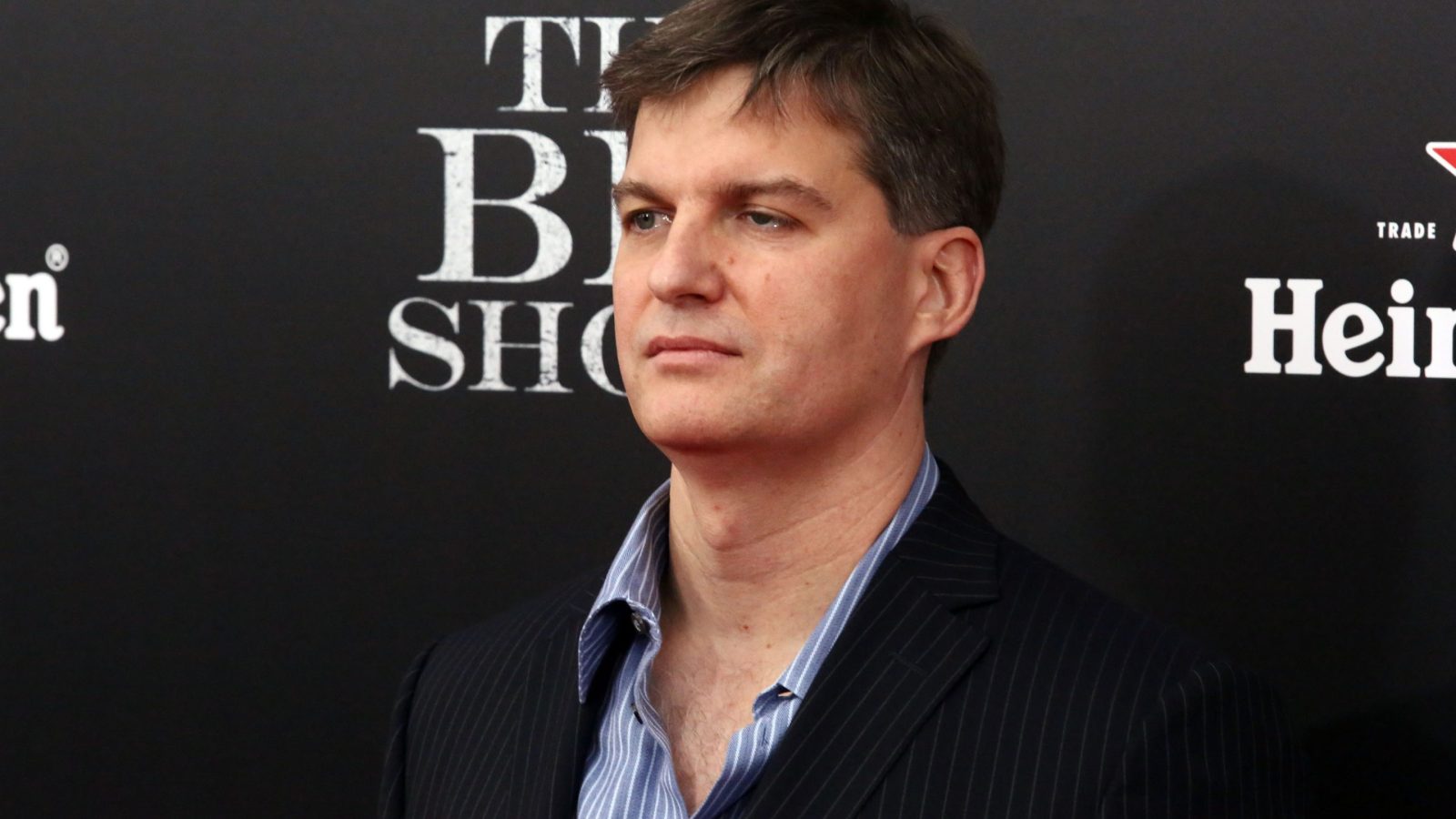
Not everyone thinks the conversion is worth doing. Michael Burry, who has run a position in the stock on and off for years, said last week that he had sold out of Alibaba entirely and moved into JD.com, arguing the shares would need to fall by something like half before he would look again. He named share issuance as the reason. He was writing before the placement priced, which makes the timing look better than it probably was, and his record on Chinese equities is mixed enough that it should be read as one opinion rather than a verdict.
The cost side is also moving against everyone at once. Memory prices have risen far enough that Tim Cook, on his final earnings call as chief executive of Apple, described them as a hundred-year flood and said openly that he wished there were more suppliers. Alibaba is buying into the same market, without Apple’s purchasing history and with export controls narrowing which parts of it are available.
Nikkei Asia reported that the company has been trimming its gaming and retail operations to move resources toward AI, which is the kind of internal reallocation that tends to precede an external raise rather than replace it.
What this piece cannot tell you is whether any of it pays. The RMB 380 billion commitment has no published return target attached to it, no disclosed utilisation rate for the capacity already built, and no breakdown between chips, buildings and power. Alibaba has said it wants more than $100 billion in annual cloud and AI revenue within five years, which is a destination rather than a plan, and the company has not shown the arithmetic that gets there from a quarter in which profit fell three quarters.
Nor is the placement finished. The filing carries the standard warning that there can be no assurance that the Equity Placement will be completed, and settlement is scheduled for 26 August. Until it settles, the $10.2 billion is a number in an announcement, and the 8.4 per cent that Hong Kong shareholders gave up is the only figure in this story that has already been paid.
Related Posts