
ARLINGTON – When Danny Jansen went on the injured list in June with a right forearm strain, the Texas Rangers told themselves they could manage. When Kyle Higashioka followed him to the IL on July 21 with a flexor tendon strain, the math behind that confidence stopped working.
Two starting catchers down. Three days to the August 3 trade deadline. The Rangers sitting 2.5 games clear in the AL West with no certainty about when either would return.
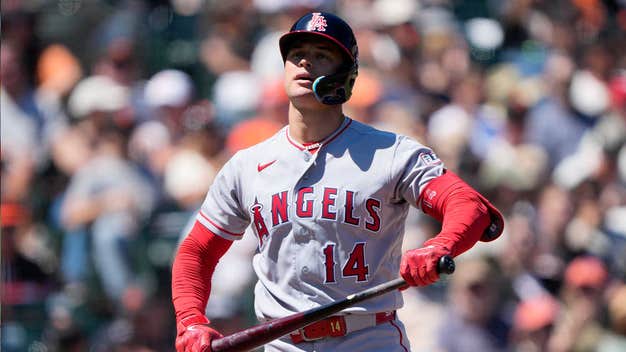
The answer came Wednesday in a move that turned heads around the league: the Rangers called the worst team in their own division. The Los Angeles Angels agreed to send catcher Logan O’Hoppe and reliever Chase Silseth to Texas in exchange for minor league infielder Angel Arredondo, a low-cost repair for a position that had become the most urgent problem on the roster.
O’Hoppe arrives in Texas with a .209 batting average, four home runs, and 23 RBI this season. Those numbers do not suggest an impact bat at the deadline. That is not what the Rangers needed him for. They needed a catcher who could function, who could throw, who could handle a pitching staff while Elias Diaz absorbs the primary workload. Higashioka’s flexor tendon strain is recent enough that his timeline is measured in weeks at minimum. Jansen’s situation is murkier, with the right forearm strain that cost him weeks in June never fully resolved and the possibility of elbow surgery lingering as recently as last week. Texas addressed a depth crisis before it could reach them in September.
The O’Hoppe piece was transactional. The Silseth piece is something different. The 26-year-old right-hander posted a 2.72 ERA across 43 bullpen appearances this season, with 48 strikeouts against 22 walks over 39.2 innings. He spent parts of his Angels career as a starting pitcher before converting fully to relief, and in Texas he is expected to work in high-leverage situations behind closer Jacob Latz. What the Rangers added Wednesday was not organizational depth. They added a late-inning arm with genuine strikeout stuff, acquired at the cost of a single minor league prospect.
The Angels are sellers this summer in the way only a team this far out of contention can be. They hold the worst record in the American League, a roster deep in rebuild territory, and a front office willing to move functional pieces to contenders for development capital. Trading O’Hoppe and Silseth made organizational sense. The destination was the part that raised eyebrows around the league.
Anaheim shipped two contributors to a direct division rival. The Rangers and Angels play in the same AL West, which means every win Texas accumulates with O’Hoppe behind the plate and Silseth working the seventh inning compounds a lead over teams the Angels share a division with. Teams do not typically trade within their own division when competitive alternatives exist elsewhere. That this deal happened at all speaks to where the deadline market settled, and perhaps to the Angels’ judgment that Arredondo was the right return regardless of where O’Hoppe and Silseth ended up.
The implications travel north to Seattle. The Mariners have spent the summer close enough to the Rangers to feel the gap closing on good weeks and far enough behind to feel it widening on bad ones. With O’Hoppe and Silseth now in Arlington, Texas has added two roster pieces the Mariners’ front office would have preferred remain in Anaheim. Yahoo Sports reported Seattle has been pursuing bullpen help of its own ahead of the deadline, running the same arithmetic that made Silseth worth acquiring. Whatever the Mariners add before Monday, they know Texas already moved first.
What is not settled is how much O’Hoppe can contribute once the games matter. A wrist fracture in April complicated his return in May with recurring irritation. A foul tip to his mask on July 4th sent him to the IL with a concussion. He was working back through Triple-A before the trade was completed. The Rangers are acquiring a catcher who has spent as much time recovering this season as playing, a reality that is not a secret inside the organization. The bet is that a functional O’Hoppe gives Diaz a real partner through a September stretch run rather than a solo act.
The broader August 3 trade deadline has produced a market where sellers have largely held the leverage. The biggest names available, including Tarik Skubal and Mason Miller, have carried the kind of price that only the deepest farm systems can meet. Other buyers, like the Pittsburgh Pirates, have confirmed resources but have not yet closed the acquisitions their rosters need. Texas did not pay the cost of a blue-chip prospect Wednesday. They paid a minor league infielder for a 2.72 ERA reliever and an injured catcher who, if functional, solves the most critical position problem on their 40-man roster.
The Rangers are the best team in the AL West right now. They have been for most of the summer. What they lacked Tuesday morning was a catcher who could take the field with any certainty. What they have Thursday morning is an answer to that problem, however fragile it remains, and a reliever who can work the innings where division races get decided.
Whether O’Hoppe stays healthy enough to be that answer is the question nobody can resolve before the calendar turns to October.
Related Posts