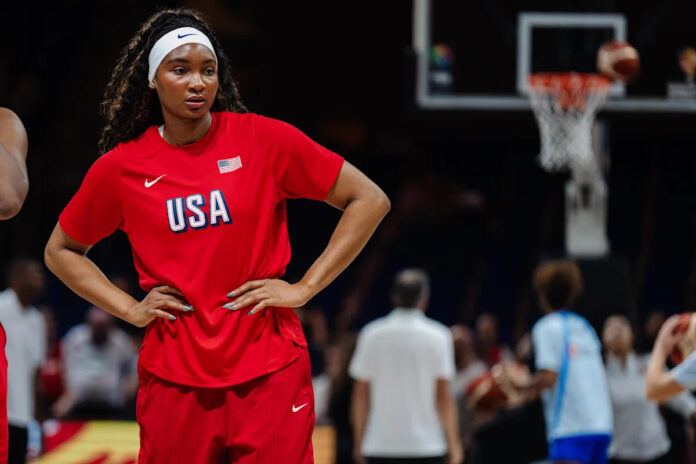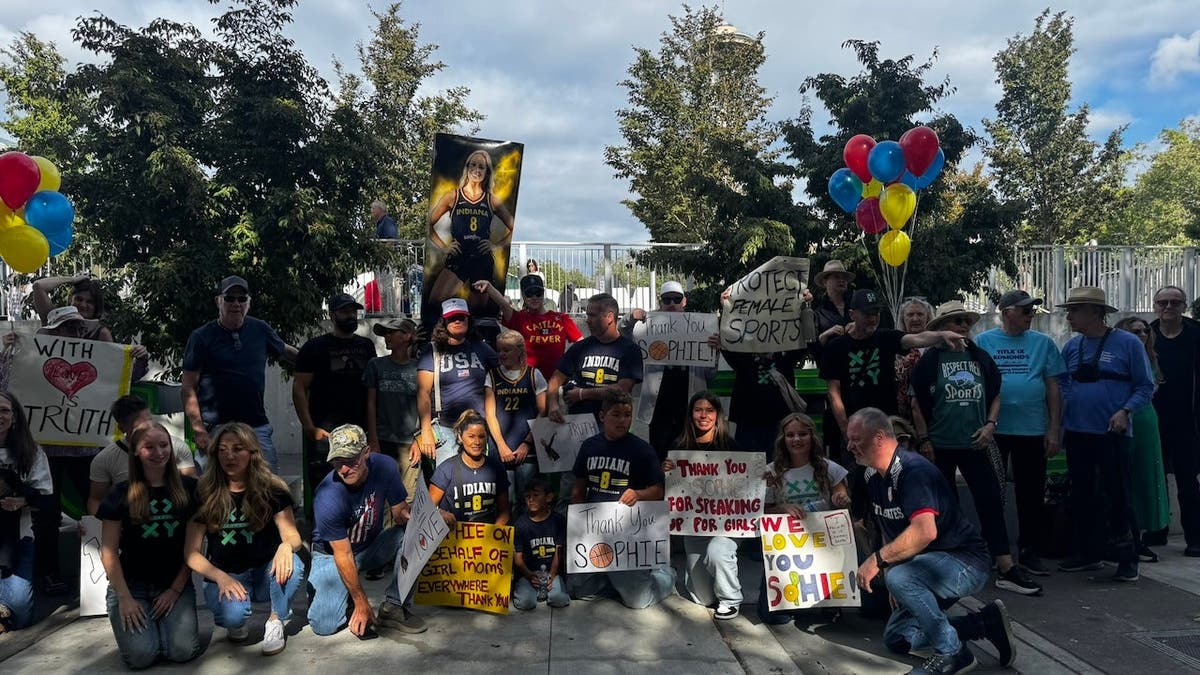

MINNEAPOLIS – The Indiana Fever guard who sparked the most concentrated protest movement in WNBA history took the floor at Target Center on Saturday evening for a game against the Minnesota Lynx. Outside the arena, the largest Sophie Night rally yet had assembled, organized by a national women’s sports advocacy group and drawing more supporters than the Seattle and Portland demonstrations that preceded it by a week. Inside, the Lynx head coach had just finished a pregame press conference defending transgender athletes and telling the people gathered outside that they had it wrong.
The result was a collision the WNBA has spent an entire season trying to avoid: a crowd marching under Sophie Cunningham’s name outside while Cunningham’s team played inside, and the opposing coach stepping publicly into the most divisive debate in women’s sports on the eve of tip-off.
Cheryl Reeve, the Lynx’s head coach, used the pregame media availability to address the demonstrations directly. She pushed back on what she called a misrepresentation of the situation, saying it was not the case that biological males were present in women’s locker rooms at the professional level. The more urgent obstacles facing women’s basketball, she argued, were unequal investment, facilities, and institutional attention. What the WNBA should do, Reeve said, was establish a proactive policy rather than react to situations as they arose. She did not specify what that policy should contain.
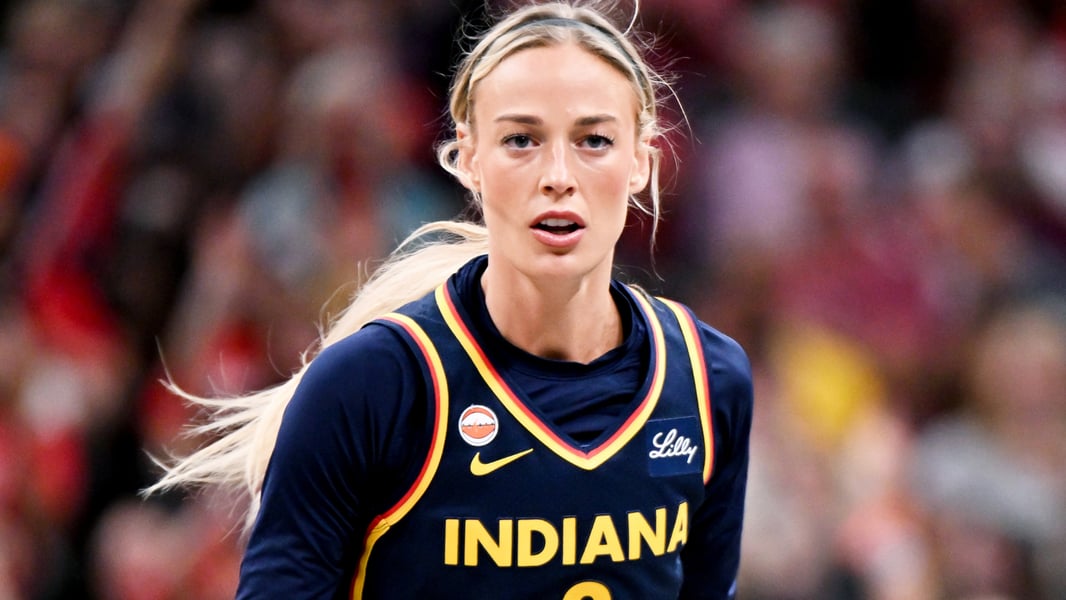
Cunningham, 28, declined to reframe her position when asked again this week. “I said what I said,” she told reporters. “I think it’s kind of common sense.” Her argument, first outlined in a magazine profile earlier this summer, centers on protecting female athletes in competition and in shared spaces. “There’s room to love everyone,” she said, “but I want to protect young girls in sport.” The Indiana Fever said it had no knowledge of the Target Center demonstration and no contact with its organizers.
The movement outside the arena traces to Jennifer Sey, founder of XX-XY Athletics, who has coordinated Sophie Night events at Fever road games since July. The Seattle and Portland demonstrations each drew modest crowds. Minneapolis drew more. The specific moment that escalated the protests came from Seattle on July 29, when the Storm lost to the Fever 105-95 and Celeste Keaton, a minority co-owner of the Storm, directed profanity at two teenage fans who had gathered to support Cunningham’s stance. CBS Sports reported the WNBA suspended Keaton from five home games and fined the team. Storm majority owner Ginny Gilder said the franchise remained committed to creating an inclusive environment. Cunningham responded on social media that Keaton’s behavior was “truly embarrassing.”
The suspension produced an outcome few anticipated: it turned a modest protest into a national story. The teenagers Keaton confronted were there to support a player who had not invited them, whose team had no involvement with the organizers, and whose organization had publicly disclaimed any connection. The Minnesota Lynx game on Saturday became the largest stage yet, in part because the preceding week’s incidents had expanded the audience paying attention.
The WNBA’s formal position is a statement affirming its commitment to safety and inclusion. The league has not issued a policy on transgender athlete eligibility at the professional level. That absence sits alongside a set of converging external signals. The NCAA now restricts women’s competition to biological females. The International Olympic Committee has announced biological eligibility requirements for the 2028 Los Angeles Games. In June 2026, the Supreme Court upheld state laws protecting female participation in school-based athletics, ruling 6-3 on constitutional grounds and 9-0 on Title IX interpretation, according to Fox News.
None of those standards obligate the WNBA to act. Professional sports leagues set their own eligibility rules, and no court has required the league to adopt biological eligibility criteria. The league’s silence may be deliberate: the existing player base holds varied views, the fan base has mobilized visibly on one side, and corporate sponsors have not yet said publicly which direction the pressure runs.
Reeve’s call for proactive league action is the first time a head coach has stepped into that vacuum with a direct public request, rather than deflecting the question. Whether the WNBA treats that as pressure to respond or noise to manage is not yet clear.
What is clearer is that the rhythm of the protests has shifted. The first rally was a footnote. The Storm co-owner’s suspension made it a headline. The Target Center demonstration arrived at a moment when the league’s silence is becoming harder to read as anything other than a position.
What Cunningham does with the attention she did not solicit, and whether the league responds before the 2026 season ends, are questions Saturday’s game did not answer.