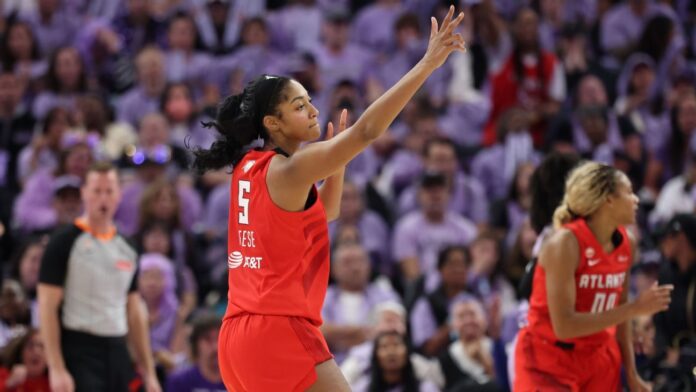

INDIANAPOLIS — The most telling number in Indiana’s 35-point destruction of Connecticut on July 22 was not Caitlin Clark’s 27-point haul. It was that the Fever shot the floor apart at 56 percent efficiency and the Sun never found an answer for it. By the third quarter, the scoreboard had become a formality, and Clark’s decision to acknowledge that fact with a glance toward it earned her a seventh technical foul and the most-discussed secondary story of the week. The Fever set a franchise record with 123 points. The Sun lost by 35.
Indiana has won both meetings with Connecticut this season — 85-75 in Uncasville on June 13, then 123-88 at Gainbridge Fieldhouse in July — and the season series does not have the texture of contested results. The Fever sit at 19-12, second in the Eastern Conference. The Sun, at 8-23 and seventh in the East, are a franchise in mid-rebuild, playing out a season defined less by wins than by what comes next. The third meeting, scheduled for Aug. 28 in Indianapolis, will tell you whether Connecticut has found any part of an answer to what Indiana built over those two games.
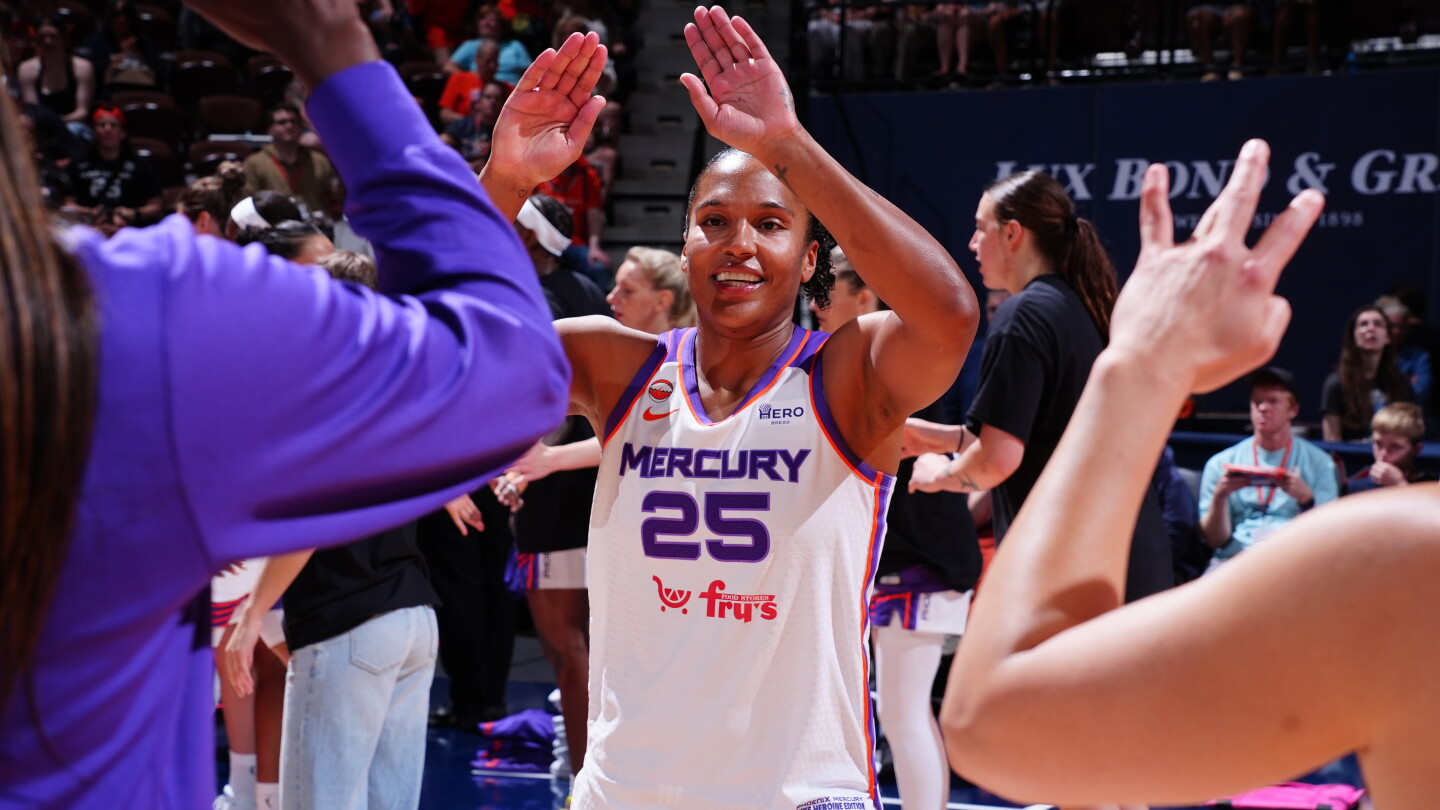
That context arrived in full on Friday night in Uncasville, when the Sun retired Alyssa Thomas’s No. 25 jersey in a ceremony before their home win over Phoenix. Thomas, now in her first season with the Mercury after 11 years as Connecticut’s franchise centerpiece, told the crowd what she needed to say. “What a heck of a ride we had here,” she said, according to NBC Sports. “This place truly meant something to me.” The franchise leaves Connecticut for Houston next season. The basketball season continues. Against Indiana, it has not been going well.
Kelsey Mitchell has been the most damaging individual component in both meetings. The Fever’s leading scorer is averaging 24.1 points per game through 31 games on 50.4 percent shooting from the floor, and the Sun’s defensive rotations have not found a position from which they can address her reliably. Mitchell works the mid-range and the rim with equal conviction, rarely needing a second attempt at a problem she has already identified. Against bottom-half defenses, her efficiency climbs because the gap between what she can do and what the defense can absorb widens. Connecticut, at 8-23, is exactly the kind of team that gap opens against.
Clark adds a different kind of difficulty. The second-year point guard is averaging 21.5 points and 8.0 assists per game on 44.1 percent from the floor, and the way she applies pressure changes based on what the defense offers her. When Connecticut has packed the paint to limit driving lanes, she has accepted the invitation to shoot from distance. When the Sun have shifted defenders to close out on the perimeter, she has driven into the paint the coverage left open. The 217 assists Clark has distributed across 27 games this season represent a playmaking rate that soft perimeter defenses tend to inflate further, because the off-ball reads that generate the simplest looks come more reliably when the defense is playing protect-the-rim.
Aliyah Boston’s role in that structure is less visible in the box score than it should be. Her 8.4 rebounds per game lead Indiana, and her 52.9 percent shooting from the floor is the highest among the team’s three main contributors. Boston’s movement in the half-court sets the pick-and-roll geometry that makes Mitchell difficult to contain and creates the driving angles Clark converts into assists. The July 22 blowout reflected her work in both directions — the Sun’s interior had no answer for her positioning, and Connecticut’s attempts to solve Mitchell and Clark one-on-one played directly into the spacing Boston’s movement had created. A right knee issue she sustained in Seattle in late July raised urgent questions about her availability through the stretch run, but she has returned to the Fever lineup and her 17.0 points per game reflect a player who has not visibly slowed.
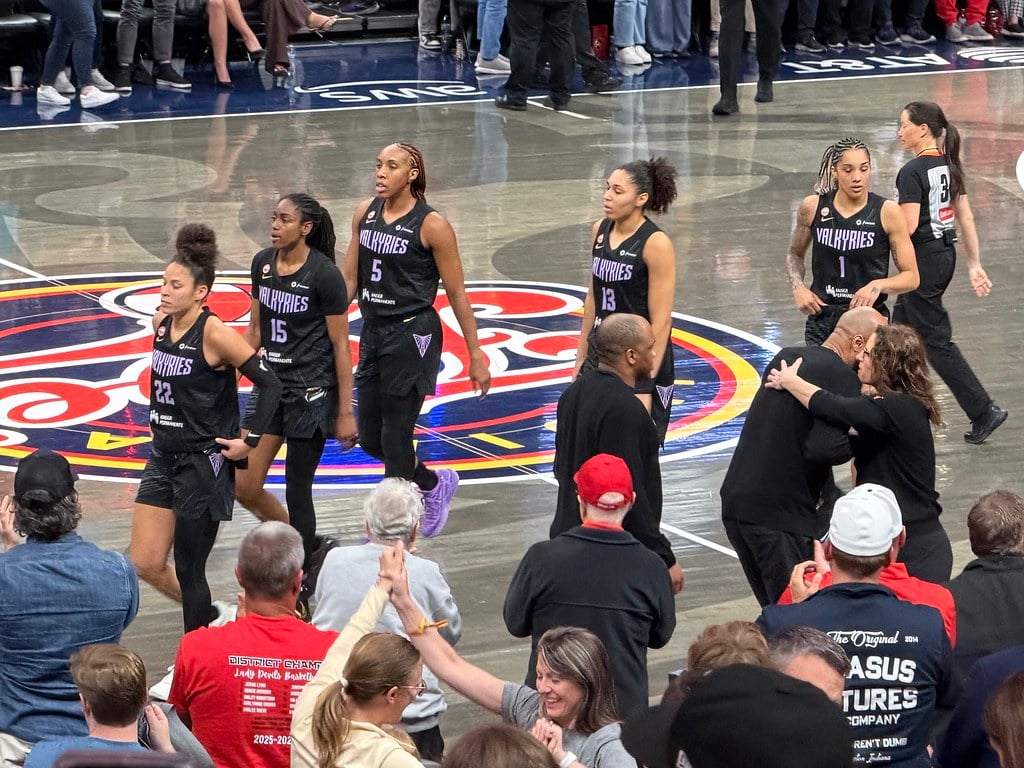
The June 13 game in Uncasville offers a partial counter-argument. Connecticut held Indiana to 85 points that night, compressed the paint in ways that limited Boston’s early effectiveness, and trailed by only 10 at its widest before the Fever closed. Clark scored 25, but the Sun made the game difficult enough that Indiana’s performance felt earned rather than inevitable. Whatever the Sun did defensively in June was not replicated in July, when the same three Indiana players produced 35 more points against the same basic personnel. That gap between the June game and the July game is the figure Connecticut’s coaching staff has the most reason to examine before Aug. 28.
The Sun’s season has its own texture beneath the record. DeWanna Bonner remains a contributor carrying a larger burden than she did when Thomas was distributing it, and the franchise has leaned into a rebuilding posture that the standing of 8-23 makes unavoidable. Noemie Brochant has emerged as a young name in Connecticut’s offence, but the Sun’s scoring totals have ranked among the league’s lowest, and the identity they carried for years — relentless Thomas-driven workload, a defensive structure that competed in every contest — has not been replicated through this transition.
The scoreboard taunt that produced Clark’s seventh technical in the 123-point game was, in its own way, a commentary on how the evening had gone. Clark has since posted her fourth career triple-double and extended Indiana’s winning run, and the technical foul count has remained at seven without reaching the suspension threshold. What the July 22 performance confirmed was something the season statistics had already suggested: against this Sun roster, in this form, Indiana’s three-piece attack does not require a close game to produce its best work. It produces it anyway.
The Aug. 28 rematch comes to Gainbridge Fieldhouse, a home contest for Indiana, with Connecticut facing a back-to-back and a three-week stretch that includes more competitive Eastern Conference opponents before it arrives. Whether the Sun enter that game with any part of the June defensive framework intact, or whether the Houston-bound transition has continued to erode the competitive specifics that made the first meeting closer than the second, is the question the third game will answer. The numbers from two meetings make the probability picture clear. The gap between what Indiana has and what Connecticut can produce against it is not a margin that closes easily. The Aug. 28 game exists to find out if it can close at all.
The Thomas farewell put a frame around what Connecticut is walking away from. The stats from this season say something about what Indiana has already built.