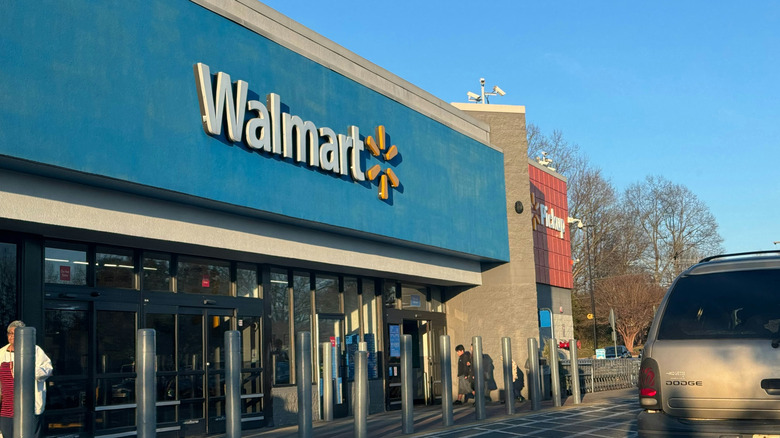

BENTONVILLE — For more than a decade, the checkout line at Walmart was one of the few places in the United States where your phone’s built-in wallet was useless. That changes next week.
Starting August 24, select Walmart and Sam’s Club stores will begin accepting tap-to-pay contactless payments, according to Engadget. The rollout will expand to all US Walmart and Sam’s Club locations by the end of 2026, with fuel stations completing the transition by mid-2027, putting the world’s largest retailer on the same contactless footing as competitors that adopted the technology years earlier.
Apple Pay launched in 2014. Google Pay has accepted contactless transactions in retail stores since 2015. Even Home Depot, long resistant to the technology, had fully embraced tap-to-pay by 2024. Walmart and Sam’s Club are among the last major US retail chains to complete this transition, a delay that spans more than a decade of customer friction at the register.
Customers will be able to pay using a phone or smartwatch, with eligible Walmart, Sam’s Club, and OnePay cards addable to digital wallets. The announcement does not specify which third-party wallet systems are included, but Apple Pay and Google Pay are the most widely adopted platforms, and the reference to phone and smartwatch payments implies standard NFC-based contactless is in scope.
The delay is worth dwelling on. Beginning in 2012, Walmart was among the retailers that joined the Merchant Customer Exchange, a coalition of major US chains that disabled near-field communication terminals at their registers to block Apple Pay and Google Wallet transactions. The goal was to develop CurrentC, a competing QR code-based payment system designed to give retailers direct bank account access and cut out interchange fees charged by card networks. CurrentC was hit by a data breach in 2014, panned by consumers and security researchers, and the project effectively collapsed by 2017. The coalition disbanded. The NFC terminals at Walmart stayed off anyway.
So the announcement in August 2026 is not simply a late upgrade. It is the conclusion of a decade-long detour in which Walmart prioritized its own payment ambitions over the technology its customers were carrying in their pockets.
The competitive stakes are real. Walmart competes with Target, Costco, Kroger, and Amazon for grocery and general merchandise spending, all retailers that have accepted contactless payments for years. Shoppers who preferred to pay by phone have either brought a physical card to Walmart or gone elsewhere, a friction point that competitors have quietly exploited. With Trump tariffs adding pressure to household budgets, consumers are comparing retail prices more actively across chains; removing the payment friction at Walmart removes one more reason not to consolidate spending there.
The fuel station timeline is the one open question. Pump hardware requires different certification from in-store payment terminals, and the mid-2027 target suggests that part of the infrastructure is still in an earlier phase. Customers who use their phones everywhere else will still need a physical card at Walmart and Sam’s Club fuel stations for another year.

Whether accepting contactless payments accelerates OnePay adoption or fragments Walmart’s payment positioning remains unclear. The company has not said whether OnePay will receive any promotional advantage at the point of sale as the rollout completes. What the timeline makes certain is that Walmart has concluded the cost of continued exclusion, in customer experience and competitive position, now outweighs whatever advantage the closed system delivered.
The broader implication is one Apple has been building toward since 2014: a payment ecosystem where the iPhone is the wallet. Every retailer that resists tap-to-pay is a friction point in that ecosystem, and Walmart’s holdout was the most visible one remaining. With this rollout, the physical retail gap in Apple Pay acceptance in the United States essentially closes. The phone in the average American shopper’s pocket can now pay anywhere the average American actually shops.