
HONG KONG — The number that matters most to Alibaba’s engineers, cloud clients, and competitors is not HK$80 billion. It is the gap in compute capacity, model performance, and inference speed that separates China’s most valuable technology company from the pace-setters in the global AI race.
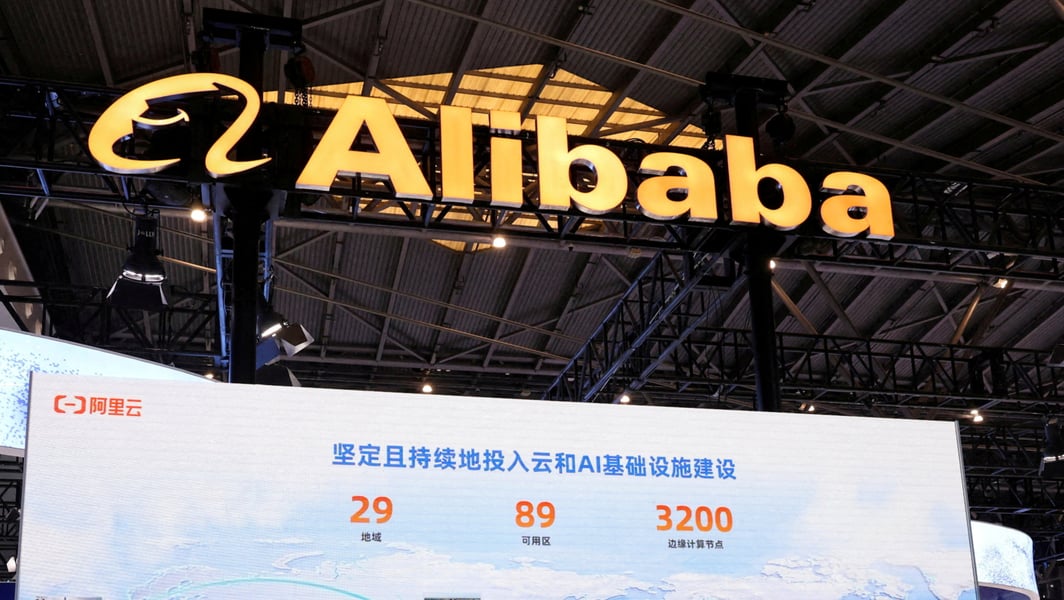
On Saturday, Alibaba Group Holding Ltd. announced it would raise roughly HK$80 billion, or approximately $10.2 billion, through a placement of new shares to investors outside the United States. All of the proceeds will flow into what the company described as “full-stack AI capabilities” — frontier model development, the servers required to run them at scale, and the cloud infrastructure to offer them to enterprise customers across Asia and beyond.
The raise is the largest equity offering Alibaba has completed in Hong Kong, and it arrives at a moment when the race to build industrial-scale AI is becoming as much a competition for capital as for engineering talent.
The competitive arithmetic is straightforward. Companies in the United States have collectively committed hundreds of billions of dollars to AI infrastructure over the past three years. Chinese technology companies, including Alibaba, ByteDance, Baidu, and a cluster of well-funded start-ups, are building rival stacks with comparable ambition, but with less access to the most advanced chips due to U.S. export controls. That hardware constraint has pushed Chinese AI developers toward engineering efficiency by necessity, but raw compute remains the binding resource, and acquiring more of it remains expensive.
The competition has already produced visible strains on supply. In July, Chinese AI competition reached a pressure point when Moonshot AI paused subscriptions to its Kimi K3 model after user demand overwhelmed GPU capacity, illustrating precisely why infrastructure investment at this scale is not optional for any company seeking a durable position in the market. Alibaba, whose Qwen model family has established significant presence among Chinese enterprise developers, cannot afford to trail on compute.
The share placement structure is itself a strategic signal. By limiting participation to non-U.S. investors, Alibaba sidesteps the regulatory scrutiny that has complicated Chinese technology companies’ relationships with American capital markets since the de-listing wave of 2021 and 2022. Instead, the company is drawing on institutional appetite in Hong Kong, Singapore, and Middle East sovereign wealth funds, where demand for Chinese technology equity has recovered substantially. According to Nikkei Asia, all proceeds will be directed to strengthening the company’s comprehensive AI infrastructure.

Alibaba is not alone in tapping capital markets to fund AI ambitions. In June, Tencent Holdings completed what was then its largest Tencent AI bond sale in years, raising $4.66 billion in a heavily oversubscribed order book, a clear signal that institutional investors are seeking exposure to China’s AI build-out across multiple instrument types.
What neither company has fully resolved is the margin question. Alibaba’s e-commerce business, once the engine funding everything else, faces intensifying domestic pressure from Pinduoduo and cross-border headwinds from TikTok Shop’s continued international expansion. The surplus that once funded cloud investment without external capital is thinner. This equity raise is, among other things, an acknowledgment that organic cash flow alone will not sustain the pace of AI investment the company has determined it needs to make.
Investor sentiment around Alibaba has nonetheless strengthened. Michael Burry, known for his prescient 2008 financial crisis bet, disclosed an increased position in the company earlier this year and described Alibaba as China’s most advanced AI operator, a characterisation that reflects the breadth of its cloud business as much as any specific model achievement.
Whether that characterisation holds as the company absorbs more capital without yet showing a clear path to higher margins is the question this raise leaves open. The HK$80 billion is secured. The argument Alibaba must now make is not that it can raise capital. It is that capital deployed into AI infrastructure in 2026 translates into defensible competitive position in 2028 and beyond. That case cannot yet be made with data. It can only be made with commitment. And at $10.2 billion, Alibaba has made it.