
BERLIN — He took the bus. On the first of October last year a 24-year-old man travelled from Poland to Berlin, walked to a roadside in the east of the city, collected two parcels, carried them out to woodland near a lake in the southeast, buried them, photographed the spot, sent the coordinates to whoever had asked for them, and got a bus back to Poland. German investigators believe he knew very little more about the job than that.
Der Spiegel identified him on Tuesday as Vadym S., a Ukrainian national who had been living in Poland and who is now in pre-trial detention in Romania. He is the first person publicly connected to a weapons cache that German counter-intelligence believes was stocked on the orders of Russian intelligence services.
The word doing the most work in the headlines about this case is Ukrainian, and it is the least informative fact in it. What the investigation alleges is that a Russian-run network recruited a young man from the country Russia is fighting, paid him to move objects he did not open, and dropped him at the first arrest. If that is right, his nationality describes how the network hires. It does not describe what the network wants.
The contents of the cache have been reported inconsistently, and the differences are not cosmetic. Russian state media said it held a replica of a Makarov pistol along with ammunition. No other account says that. Reuters, relaying Der Spiegel’s findings, describes two parcels containing handguns. Der Spiegel’s own summary says pistols. Euronews reported that two live firearms were stored in the depot. A replica and a working pistol are not the same object, they do not carry the same criminal weight, and nobody outside the Russian wire has described the find as an imitation.
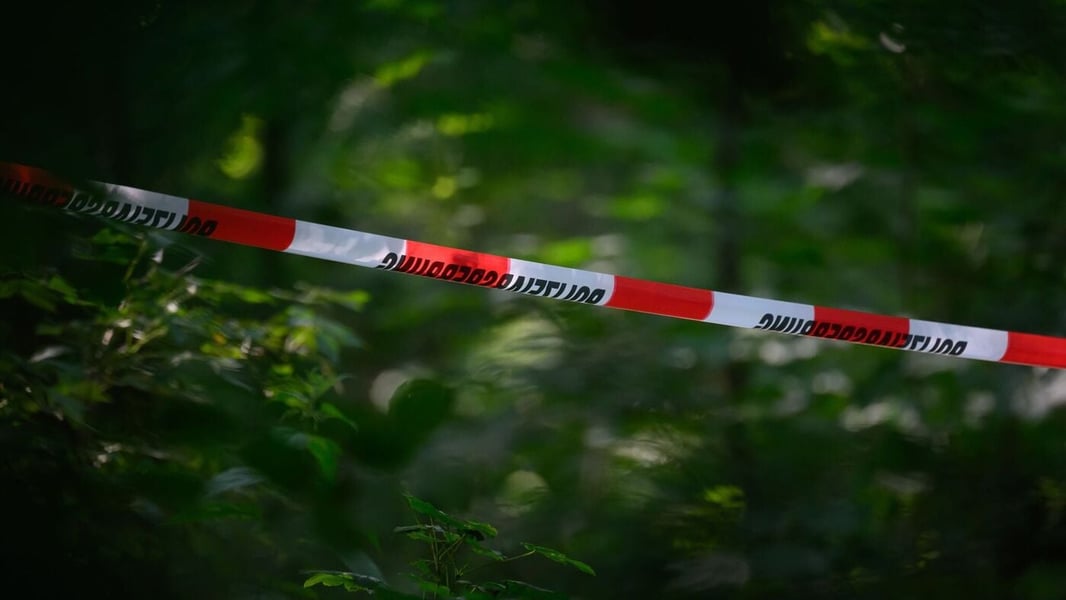
Nor was the site simply a forest on the outskirts. It was woodland near the Muggelsee, the lake at Berlin’s southeastern edge, and German reporting describes a professionally prepared underground depot rather than a bag pushed under leaves. The Federal Office for the Protection of the Constitution, Germany’s domestic intelligence service, assessed it as a dead letterbox: a drop maintained so that whoever came to collect would never have to meet whoever had stocked it.
The Romanian thread is where the case widens. Vadym S. was detained in Bucharest alongside a second Ukrainian on suspicion of dispatching parcels containing incendiary devices through Nova Post, the Ukrainian courier company, Reuters reported on Tuesday. Romanian intelligence has said the pair belong to a network of saboteurs run by Russian state services against European countries.
That recruitment pattern is well documented by now, and it is the context this story is usually told without. Poland has charged a Ukrainian citizen over a parcel bomb plot. Germany arrested three Ukrainians on suspicion of spying in a separate exploding-parcel case. Prosecutors in several European states have described the same model: an approach over a messaging app, small cash payments, discrete tasks, no explanation of the purpose. It is a model built to generate exactly the headline that ran on Tuesday, and the people it burns through are cheap to replace.
The Russian-language account also carries a date it cannot reconcile with itself. It reports that Vadym S. was arrested in Romania in the middle of October 2025 and, a paragraph earlier, that he has been in custody there since the end of last year. Those are either two different arrests or one wrong date, and the German reporting does not settle which. What is established is that he travelled on October 1 and that he is in Romanian custody now.
Germany has spent two years absorbing incidents of this shape. Dobrindt described an earlier episode at Leipzig, the air cargo hub that handles NATO logistics, as a professional hybrid-warfare attack. This newspaper has followed the wider pattern through drone swarms and Europe’s hybrid warfare alarm and through the drone sightings that snarled flights over Munich. What separates the Berlin cache from most of it is that this time something was buried rather than flown, and buried things imply a person coming back for them.
Moscow has not answered. A request for comment sent to the Russian embassy by the German broadcasters and newspaper that first reported the cache has gone unanswered, and Russian officials have previously dismissed accusations of this kind as conspiracy theories.
What is missing from the file is most of what would matter at a trial. Vadym S. has not been convicted of anything. Neither he nor any lawyer acting for him has been quoted anywhere in the reporting. Nobody has said whether the pistols were ever test-fired, whether the depot was visited by anyone else before the security services reached it, or whether the person who told him where to walk has been identified. Germany has a hole in the ground near a lake, two parcels, the movement history of a phone, and a man in a cell in Bucharest. The chain runs upward from there, and publicly it stops.