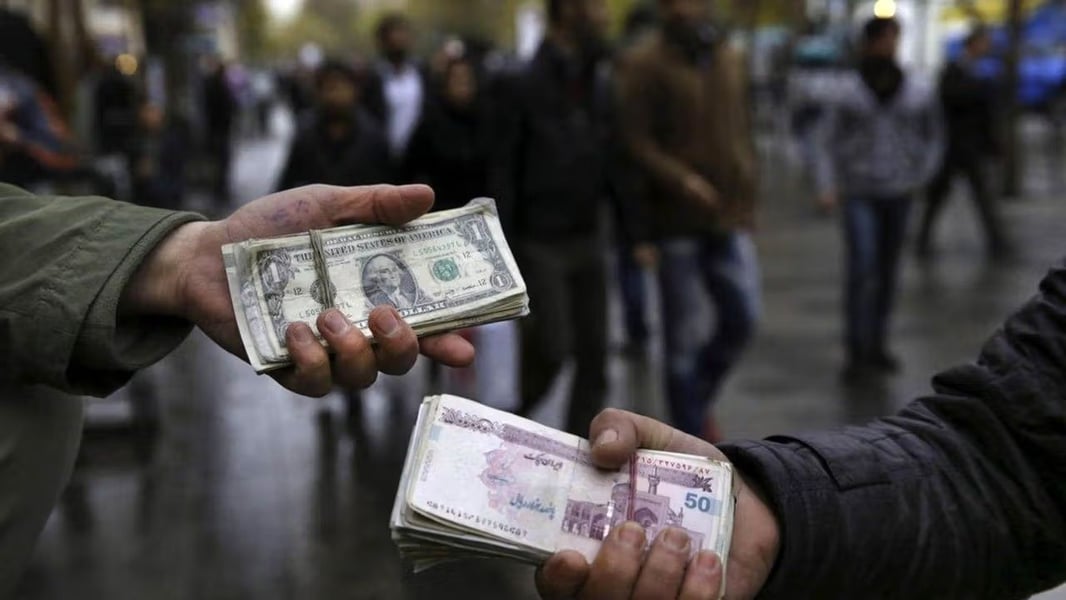

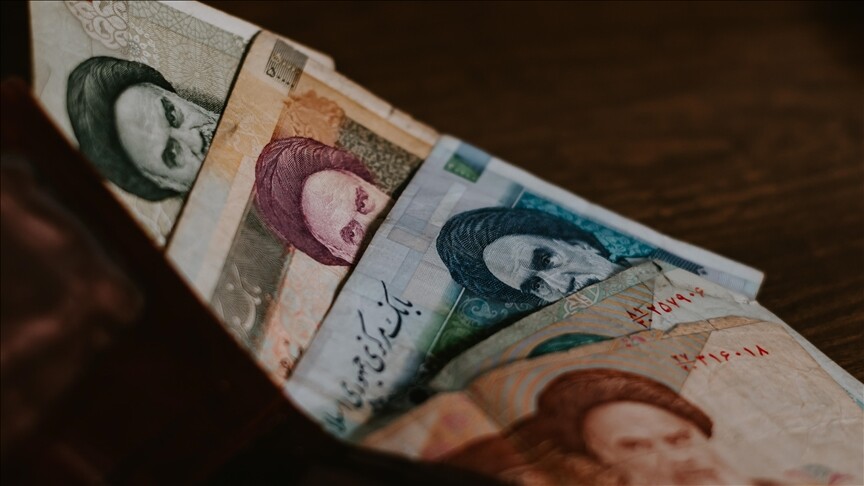
TEHRAN – The milestone came without ceremony. On Sunday, currency exchange dealers in Tehran’s Ferdowsi Square began quoting the US dollar at 2 million Iranian rials, a rate that had never been reached in the country’s financial history and that arrived, by coincidence or design, one day before US Treasury Secretary Scott Bessent was due to announce what Washington described as “economic D-Day” against Iran.
Bessent was to outline new economic measures on Monday targeting Iran’s remaining trade partners, Persian Gulf port access, and crude oil revenue, the three financial lifelines that have sustained the rial’s already-weakened position through successive rounds of sanctions. The announcement, framed in Bessent’s own language as an “economic D-Day,” follows a statement by US President Donald Trump threatening what he called “the most crushing economic operation ever taken against any country,” with explicit warnings to any state still helping Tehran move money or oil through informal channels.
The rial’s fall to 2 million per dollar was immediately traceable to that statement. According to currency tracking site TGJU, the rial lost 4.5% against the dollar in the week following Trump’s announcement. The cumulative picture is more stark: the dollar stood at approximately 958,000 rials at the start of the previous year. In twelve months, it more than doubled. The move on Sunday did not happen in a vacuum. It was the latest translation of a deliberately constructed external pressure into the daily arithmetic of Iranian households.
That arithmetic has grown merciless. Iran’s government-mandated minimum wage stands at approximately 166 million rials per month, just $83 at Sunday’s exchange rate. Most formal-sector workers earn between 200 and 300 million rials, translating to $100 to $150 per month. A proposed state food subsidy coupon floated in parliament this month would provide 12.3 million rials monthly, approximately $6.15, as an emergency stopgap for the most vulnerable households. Food and drink inflation reached 128.1% year-over-year in the Persian month of Tir. Broader inflation for the same period was 87.9%.
Farshad Momeni, an economics professor at Allameh Tabatabai University in Tehran, said what official sources will not. “Hyperinflation has already happened,” he told Iran International. The Central Bank Governor, Abdolnasser Hemmati, offered a narrower reading, acknowledging that goods are expensive while maintaining that the formal definition of hyperinflation, requiring monthly price increases above 50%, has not technically been met. The distance between those two positions is not an academic disagreement. It is the gap between what a Central Bank governor says in public and what a worker earning $100 a month experiences at a market stall.
Mostafa Pourdehghan, a member of the Iranian parliament’s industries and mines committee, said this week that Iran was heading toward hyperinflation rather than having arrived, a formulation that treats the worst outcome as avoidable but also acknowledges that the trajectory is running in one direction. Akbar Shokat, the executive secretary of Workers’ House in Qom, offered the most concrete assessment: the workforce could not endure current conditions for more than two additional months.
Washington’s framing of these measures as “economic D-Day” carries the logic of a military campaign: the target has been progressively isolated, supply lines cut, financial channels blocked, and Monday would deliver the final push. The pressure compounds what the Iran-Israel war has already imposed on Tehran’s strategic calculations. US sanctions have restricted Iran’s access to dollar-denominated trade since 2018, with successive extensions broadening to cover secondary sanctions on any entity facilitating Iranian oil transactions. The 2026 extension added pressure on Persian Gulf ports still processing Iranian cargo and threatened penalties for intermediary states, as Anadolu Agency reported.
The effect on Iran oil exports has been compounding. Each wave of secondary sanctions narrows the pool of buyers willing to risk US Treasury penalties for Iranian crude, forcing Iran to discount its oil further, which reduces the dollar revenue that buffers against rial depreciation. Less dollar revenue means less dollar supply in Iran, which drives the rial lower, which drives import costs higher, which drives inflation. The mechanism is self-reinforcing, and the Monday announcement was set to tighten it further.
For ordinary Iranians, the specific financial architecture of that mechanism matters less than its daily effect. One respondent told Iran International that the answer is exhaustion: “Pressure from outside, pressure from inside. How much can one endure?”
That question is not rhetorical. Shokat’s two-month figure is not a prediction of political upheaval but an assessment of the limits of economic endurance, the point at which minimum-wage workers can no longer cover basic food costs even by eliminating all other expenses. The assessment was made before Bessent’s Monday announcement.
Whether Washington’s latest measures will produce the diplomatic leverage their architects intend or simply deepen the conditions that Momeni calls hyperinflation and Hemmati refuses to name is a question that Iranian households cannot wait for analysts to answer. The exchange rate board in Ferdowsi Square showed 2 million rials to the dollar on Sunday. The direction of Monday’s announcement, if not its specific contents, was already readable in that number.
What remains open is what comes after Shokat’s two months, whether economic conditions reverse, stabilize, or continue in the direction they have been running since 2018. That is the question the “economic D-Day” framing does not answer, and the one that matters most to the people living inside the arithmetic.