
MOSCOW — A pause in the fighting means one thing when Moscow declares it and another when Europe suggests it, and the difference is the whole of Russia’s position.
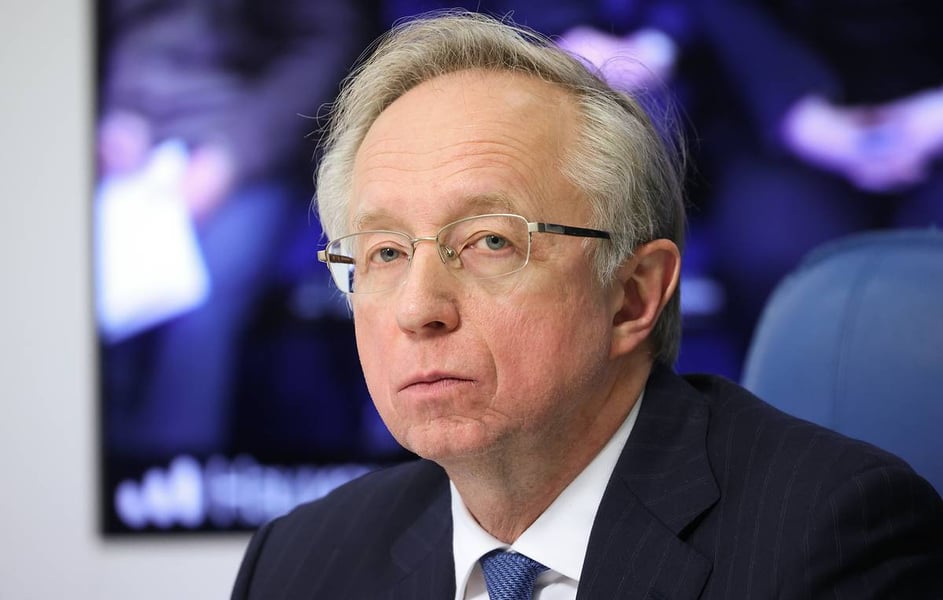
Mikhail Galuzin, a deputy foreign minister, told RIA Novosti that European governments approaching Moscow about talks are not interested in hearing Russian concerns. “In these conditions all their attempts of talks are pursuing the only goal, providing Kiev with a break in hostilities,” he said. The ultimate aim, he added, remains unchanged: to keep Ukraine as a foothold for further confrontation with Russia. He called the approach unacceptable.
He made a second charge alongside it. European Union officials, he said, are cynically proclaiming a Russian threat and the inevitability of a clash within the next few years, while declining to discuss Russia’s concerns frankly.
The difficulty is that Galuzin has spent the same month saying something else to a different audience. He told TASS that Russia is always ready for negotiations and open to a negotiated solution if the West brings a mature approach, and separately that Moscow considers legally binding security guarantees from the West possible. Those are not the words of a government that regards every Western overture as a trick. They are the words of one setting a price.
Read together, the two sets of remarks describe a single position: Moscow is available, on terms it has not published, and everything short of those terms is bad faith by definition. That is not a contradiction so much as a structure, and it is one that cannot be falsified. Any European approach that does not meet the unstated condition can be classified afterwards as an attempt to buy Kyiv time.
The first charge has a further problem, which is that Russia has used the instrument itself, twice, this year. It declared a 32-hour truce over Orthodox Easter in April, and a three-day suspension around the Victory Day commemorations from 9 to 11 May, the second with a prisoner exchange attached. Neither was described in Moscow as a favour to Ukraine’s army. They were gestures, on Russian terms, at moments of Russian choosing.
A break in the fighting, in other words, is a legitimate diplomatic object when Moscow initiates it and evidence of deception when Europe raises it. Who calls a pause and why does affect what it accomplishes, so that may still be defensible. But it is a position, not a description, and Galuzin offered it as the latter.
He also named nothing. No European proposal was identified, no capital, no leader, no document. Russia’s own account is that it has yet to receive substantive proposals from Western countries, which sits awkwardly beside the claim that European attempts at talks all share a single hidden purpose. It is difficult to know the motive behind proposals that have not arrived.
Where he was specific, he was specific about a refusal. Galuzin said there have been no official contacts with Germany on a Ukrainian settlement, citing what he called the extremely aggressive anti-Russian rhetoric and practical steps of the German political leadership. That is the clearest thing in the record: one European government has been ruled out by name.
And Berlin is the one whose position is least like the caricature. Germany’s foreign minister said this month that Europe does not have the funds to keep arming Ukraine at the current rate, and the sums he was carrying were three orders of magnitude below the gap he was describing. A bloc preparing for an inevitable clash within a few years would not be short of the money to arm the state currently absorbing the fighting. If Europe were as committed to confrontation as Galuzin says, its budgets would look different.
Meanwhile the contacts that do function are narrow and technical. Galuzin confirmed this week that the channel between Russian and Ukrainian special services remains open, and what it demonstrably carries is prisoner exchanges and consular correspondence routed through Minsk. Nothing political moves through it. The three rounds of direct talks in Istanbul in 2025 remain the last formal negotiations either government attended.
Russia’s public argument with Europe has been running in a sharper register on a separate track. Its foreign ministry has spent recent weeks characterising French naval enforcement against sanctioned tankers as piracy, a charge the Law of the Sea does not support, and issuing warnings about European military targets. Statements pitched at that volume are not obviously compatible with a complaint that the other side will not talk frankly.
What would change the picture is something concrete on either side: a European proposal Moscow could point to and refuse, or a Russian definition of root causes precise enough for someone to accept or reject. Neither exists. Until one does, both governments can go on describing themselves as available and the other as the obstacle, which costs nothing and settles nothing.
The war is in its fifth year. The only thing either side has agreed to in that time, repeatedly and without much difficulty, is swapping prisoners. It is worth noticing that those exchanges keep happening during exactly the pauses Galuzin says Europe wants for the wrong reasons.