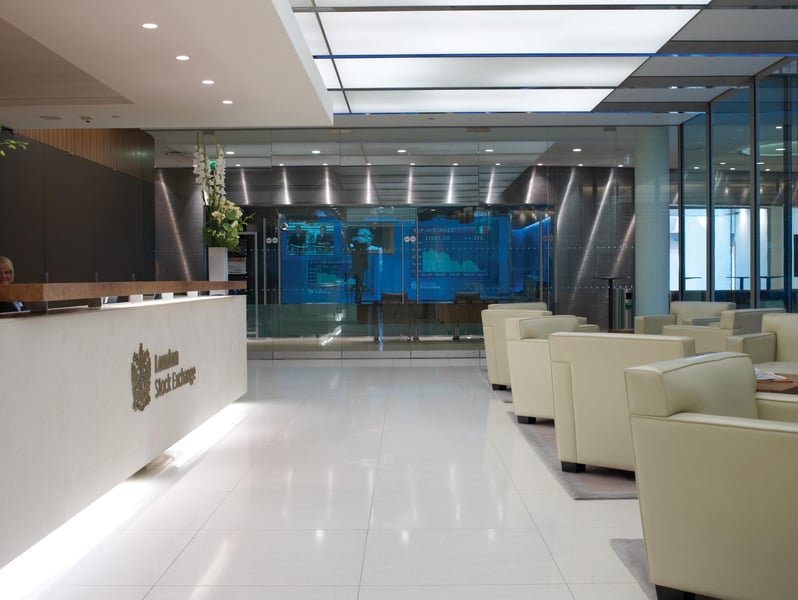

LONDON — The FTSE 100 Index exists because someone had to solve a problem that the financial markets of the 1980s were producing daily: there was no single number that told investors what the largest companies in London were doing.
FTSE Russell, the index provider jointly owned by the London Stock Exchange Group and others, publishes the calculation every 15 seconds during trading hours. On August 28, 2026, that number closed at 10,817.72, a gain of 0.23% from Thursday’s close, after ranging between 10,792.44 and 10,844.99 through the session. That range and that close are the day’s answer. The rest of this article is about why the question matters.
The FTSE 100 tracks the 100 largest companies listed on the London Stock Exchange by market capitalisation, weighted so that a company twice as large has twice the influence on the index’s level. It is reconstituted quarterly by FTSE Russell, which uses a three-month average of daily closing market caps to determine eligibility. A company falls out of the index when it drops below the 110th-largest position and enters when it rises above the 90th, a buffer designed to prevent excessive churn at the boundary. The next reconstitution after August 28 is scheduled for September.
The index’s composition is where London’s benchmark diverges most sharply from its American equivalents. The FTSE 100 is not a technology index. Energy companies account for a significant portion of its weight, with Shell and BP among the top constituents. Mining and materials companies — Rio Tinto, Glencore, Anglo American — contribute cyclical commodity exposure. HSBC Holdings, Standard Chartered, Barclays, and Lloyds Banking Group give the index a substantial financial services weight. AstraZeneca and GlaxoSmithKline supply pharmaceutical revenues that track pipeline approval timelines more than economic cycles. Unilever, Reckitt, and Diageo round out the consumer staples cohort.
This composition explains Friday’s performance. Kevin Warsh gave a mildly hawkish address at the Jackson Hole Economic Symposium, declining to signal Federal Reserve rate cuts before year’s end, NBC News reported. The Nasdaq 100 fell 0.5%. The FTSE 100 rose 0.23%. The reason is not that London was indifferent to the Fed. It is that Shell, AstraZeneca, HSBC, and Unilever are not companies whose valuations hinge on the rate at which future American technology earnings are discounted. Their revenues are driven by oil prices, drug approvals, Asian banking margins, and consumer product volumes. When the Federal Reserve sends a hawkish signal, the FTSE 100 absorbs it through currency and commodity channels rather than through the direct multiple compression that hits growth stocks.

Oil near $82 a barrel on Friday was the relevant commodity price for the energy sector’s contribution to the index’s gain. Shell’s upstream production and refining operations are profitable at that level, and the stable floor it represents has underpinned both companies’ share prices through August. AstraZeneca, which has grown into one of the index’s heaviest weights following successive oncology pipeline approvals, was broadly flat on the day but contributed to index stability through sheer mass. HSBC provided support from the financial sector, with Asian growth market exposure differentiating it from the purely domestic UK lenders.
The Bank of England’s rate posture is the domestic equivalent of the Federal Reserve’s Jackson Hole moment, and it tells a different story. The Monetary Policy Committee held rates at its most recent meeting but has been on an easing trajectory that is further advanced than the Fed’s current posture. For FTSE 100 companies with domestic UK revenues, that trajectory supports consumer and business spending without requiring an aggressive central bank. Sterling held broadly stable against the dollar on Friday, which meant the translation headwind that a sharply stronger dollar would have created for the multinational constituents did not materialise.
UK corporate earnings through the summer have been a supporting factor. The FTSE 100’s listed companies have, in aggregate, reported results this season that have not required analysts to dramatically revise their forecasts downward. That is a low bar, but clearing it has been enough to maintain the index at levels that have surprised observers who expected more volatility. Positive earnings revisions for energy and pharmaceutical names have been modest but consistent.
The FTSE 100 Index at 10,817.72 is not near a record. It closed the year above 8,500 in late 2024 and has climbed steadily since, reflecting a combination of global commodity demand, pharmaceutical sector outperformance, and the bank sector’s recovery as interest rate cycles matured. The intraday high of 10,844.99 is a data point; the pattern of activity through the session, with the index holding close to its highs throughout rather than fading into the close, suggests no strong selling pressure materialised after the Jackson Hole headlines cleared.
The day’s performance in detail and the FTSE 250’s separate story — which covers the domestically-oriented mid-cap companies whose performance depends more on UK consumer spending than on commodity prices — together describe what August 28 meant for UK equity markets. The two indices moved in the same direction by almost the same amount, which is not always the case. When it is, it usually means that neither the macro argument at the FTSE 100 level nor the domestic spending argument at the FTSE 250 level faced a strong opposing current. On Friday, neither did. That is what 10,817.72 represents.