
NEW YORK — The advertising machine is still running. Meta Platforms Inc. META held at $575.99 on Friday, almost unmoved from where it opened, while the Nasdaq Composite dropped half a percent and Federal Reserve Chair Kevin Warsh told investors in Wyoming that rate cuts are not on his near-term agenda. The divergence was not accidental.
Meta traded in a tight band between $571.08 and $589.19 through the session. Market cap held at $1.47 trillion. Volume ran light, well below the 90-day average, which signals neither a flush of trapped longs nor a conviction buy. Institutional holders appear to be pausing. The stock is down 16.5 percent year to date, and the question of what unlocks it from that range does not have a clean answer.
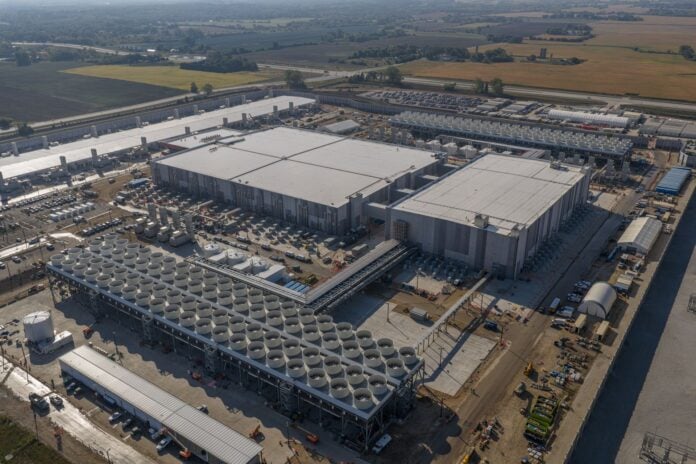
Warsh, speaking Friday at the Kansas City Fed’s annual Jackson Hole Economic Symposium, delivered his first address as Federal Reserve chair. The tone was deliberate: no rate cut signal, no pivot language, nothing to make high-multiple technology names easier to own relative to a 10-year Treasury yield that closed the day at 4.679 percent. That number is not historically extreme, but it is high enough that a company spending $145 billion this year on AI infrastructure needs to explain the return with precision it cannot yet provide.
The week itself was a strong one for the AI trade. Nvidia Corp. NVDA reported second-quarter revenue of $96.2 billion on Wednesday, with data-center sales up 138 percent year over year, and the market spent two days absorbing the size of that number. Friday’s 0.5 percent Nasdaq decline is the kind of orderly retracement that follows an oversized run. It was not a reassessment of the underlying AI thesis. It was a Friday.
Meta’s position inside that thesis is different from Nvidia’s. Nvidia sells the picks and shovels. Meta is buying them, at a scale that still makes some analysts uneasy. The $145 billion 2026 capital expenditure commitment, nearly double the prior year, came with a second-quarter revenue projection of $58 billion to $61 billion, a range suggesting the advertising business can cover the check. Whether it can keep covering it as the AI build accelerates is where the debate lives.
The ad engine has not broken. Business AI tools on WhatsApp and Messenger now log 10 million conversations per week, up from one million at the start of the year, according to the company’s most recent second-quarter earnings release. That trajectory matters because it points toward a structural shift in how Meta charges for access to its user base, not just as a target for banner ads, but as an intermediary between businesses and customers who interact via AI. The pricing model for that future is not yet established, and that ambiguity is part of what keeps the stock compressed.
Ray-Ban Meta AI glasses continued to show strong adoption through the summer. The wearable is not a revenue driver that moves the quarterly P&L, but it is the clearest evidence Meta has produced that it can build hardware consumers will voluntarily wear. AI glasses at a mainstream price point have no serious competitor on the market today. EssilorLuxottica, which manufactures the hardware, has extended its partnership through the decade, a supply chain commitment with a long horizon rather than a short pilot.
A settlement announced Thursday added another data point to the legal picture. Meta agreed to pay $17 billion across multiple U.S. states to resolve allegations that its platforms harmed children through addictive design, one of the largest social media settlements in American legal history. The headline figure was bad; the market reaction was nuanced. The settlement includes platform-level changes, including daily time limits and overnight restrictions for teen accounts, but it defines the liability. Investors who had been holding against the uncertainty of open-ended legal exposure are now holding against a known number. Shares rallied Thursday, gave back some of the gain Friday.
Evercore ISI raised its Meta price target to $860 from $820 this week, reiterating a Buy rating. The average 12-month target across 62 analysts tracked by S&P Global is $754.77, implying 31 percent upside from Friday’s close. The consensus rating is “Strong Buy,” though the distance between the target and the current price reflects genuine disagreement about the capex timeline.
The Llama open-source model strategy continues to generate developer mindshare without generating direct revenue. Meta’s bet is that making Llama freely available, the way Google made Android free, builds platform gravity that eventually translates into advertising and infrastructure revenue. The analogies are imperfect. But model download counts and enterprise adoption rates suggest Llama is not a failed experiment; it is the dominant open-weight model in its weight class. What that dominance is worth in dollars over the next three to five years is a question the company answers in general terms and the market discounts in the present.
Analysts who cover Meta as a business, rather than as an AI concept trade, tend to point to the same floor: the underlying advertising business generates enough cash to service the AI capex, absorb a $17 billion settlement, and still leave retained earnings on the balance sheet. Whether $575 is cheap relative to that floor or expensive relative to the risk embedded in the capex bet depends on the time horizon. For a one-year holder, 31 percent to the average analyst target is the math. For a longer-term holder, the question is whether the AI infrastructure Meta is building will be worth more than it costs. Friday’s close did not answer that. It rarely does.