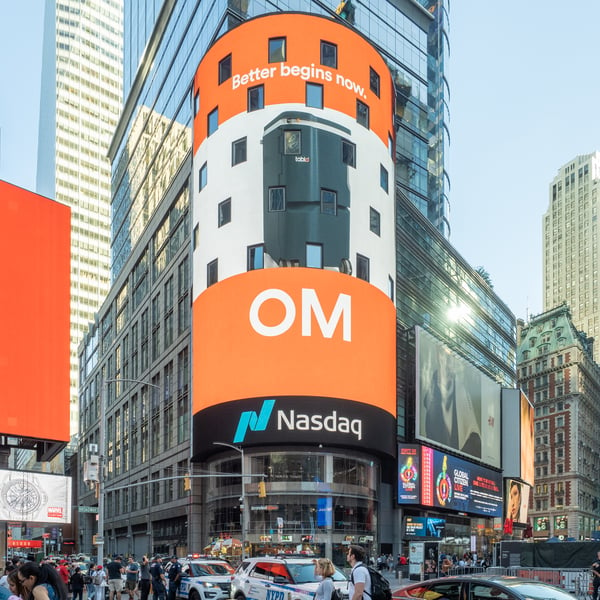

NEW YORK — The week’s most watched event didn’t move in the direction Nasdaq investors wanted.
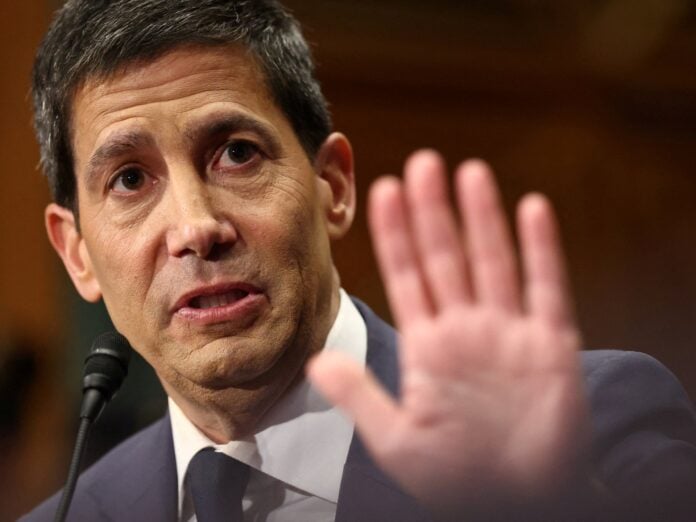
Federal Reserve Chair Kevin Warsh stood at the Jackson Hole symposium on Friday morning and told markets what they had spent the week hoping to avoid hearing: that summer inflation readings, however encouraging, did not tell him that underlying price trends had meaningfully improved, CBS News reported. By mid-afternoon, the Nasdaq Composite had slid 0.52% to 26,402.42, surrendering gains the benchmark had built through Monday and erasing what looked, early in the session, like another steady advance.
The pullback came despite the week’s central achievement remaining intact. NVIDIA Corporation’s blowout quarterly earnings on Wednesday had driven the Nasdaq to its best single session in weeks. The stock jumped 8.7% on Thursday as NVIDIA reported second-quarter fiscal 2027 revenue of $96.2 billion — against analyst expectations of $89.1 billion — and guided to $108 billion for the third quarter. By Friday’s close, those gains were not erased but they were partially offset, with NVDA retreating alongside other semiconductor names as Warsh’s comments recalibrated rate-cut expectations across the market.
The Nasdaq closed the week with a 0.9% gain. That number understates how differently Thursday and Friday traded. Thursday’s rally was about corporate earnings; Friday’s retreat was about monetary policy. Two separate markets sharing one benchmark.
Warsh’s remarks were his first keynote as chair at the annual Kansas City Fed symposium in Wyoming, a platform his predecessors used to signal major policy shifts. He used it differently. Rather than outlining a framework or reaction function, Warsh described his governance philosophy: a quieter central bank, less inclined to telegraph its next move. “While this summer’s PCE and CPI readings were better than expected,” he said, “they do not tell me that underlying trends have meaningfully improved.”
The yield on the 10-year Treasury rose to 4.679% by the close, reflecting the recalibration. Fed funds futures moved to price in a 57% probability of a September rate increase, up sharply from the day’s open, NBC News reported. The shift in rate expectations hit growth-oriented names hardest, with Tesla Inc. declining 2.36% on the session and AMD falling 0.89%.
NVIDIA’s earnings define every other data point from this week. The company reported data center revenue of $89 billion — a 138% increase over the same period a year earlier — and reached a $4 trillion market capitalization, a milestone no company had reached before. Jensen Huang, addressing analysts on the earnings call, said demand for the Blackwell architecture was accelerating and initial production shipments of the next-generation Vera Rubin platform had begun. For the full day-by-day breakdown, readers can follow the dedicated NVDA stock today report.
The rest of the Nasdaq’s megacap constituents showed what a week without a policy shock can produce. Amazon.com Inc. added 3.47% as AWS posted second-quarter revenue growth of 37% year-on-year with a 39.4% margin, expanding the cloud division’s annual run rate past $200 billion. The full picture on AMZN stock today includes an updated market capitalization approaching $2.76 trillion.
Microsoft Corporation gained 1.93% over the week as Azure approached a $100 billion annual revenue run rate and the company disclosed a $678 billion cloud and artificial intelligence services backlog. Apple Inc. rose 1.58%, extending gains driven by expectations around the fall product cycle. The MSFT stock today and AAPL stock today reports carry the detailed weekly moves.
Meta Platforms Inc. closed Friday at $575.99, with a market capitalization of $1.47 trillion. Palantir Technologies slid to $152.62, approximately 35% below its August highs, as the growth-stock correction from Warsh’s hawkish tilt found names with the most speculative premium first. SandiskBrands Corp. stood at $979.07, around 25% below its own recent peak. The detailed moves for PLTR stock today and SNDK stock today are available in separate reports.
The question Jackson Hole left open: whether Warsh’s comments represent a one-meeting recalibration or the opening of a longer tightening cycle. The Fed funds futures market moved sharply, but futures markets have repriced hawkishly before and reversed within weeks when incoming data softened. What Warsh specifically declined to do was commit to a reaction function — a formula for when the next rate change would come and what would trigger it. His stated preference for policy discretion over predictability means September’s meeting will carry more genuine uncertainty than any Fed decision since early 2026.
Semiconductor names outside NVIDIA also felt the rate pressure. The Nasdaq Composite’s broad composition, which includes several thousand stocks beyond the megacap names, showed thinner gains on Friday in small and mid-cap technology names. The Nasdaq Composite report tracks the full market breadth reading for the session. For context on the index’s concentration among its largest holdings and how five companies now account for more than 40% of the benchmark’s weight, the Nasdaq Index report runs through the composition data.
The week’s dynamic — a blowout earnings report from the sector’s bellwether company followed immediately by a central bank chair who declined to offer policy comfort — is the pattern that defines 2026 equity markets. Revenue is growing. The macro picture is less settled. The Nasdaq was up 0.9% on the week, and no one on either side of the NVDA trade should confuse that number with stability.