
NEW YORK — Five companies set the week’s direction. One central banker changed the Friday.
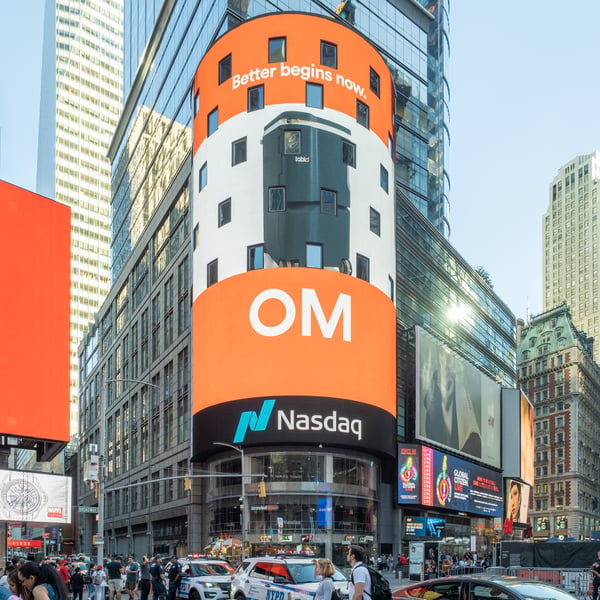
The Nasdaq-100 Index — the benchmark that tracks the 100 largest non-financial companies listed on Nasdaq and serves as the underlying for trillions of dollars in ETFs, options, and futures contracts — closed Friday roughly 0.5% lower after Federal Reserve Chair Kevin Warsh’s debut Jackson Hole address raised the probability of a September rate increase to 57%. For the week, the index posted a 0.9% gain, a number built almost entirely by NVIDIA Corporation’s blowout second-quarter fiscal 2027 earnings report.
The Nasdaq-100’s concentration story is among the most significant structural facts in global equity markets in 2026. Apple Inc. accounts for approximately 9% of the index’s weight; Microsoft Corporation for roughly 7%; NVIDIA Corporation for approximately 7%; Amazon.com Inc. for around 6%; and Broadcom for approximately 4.5%. Together, these five holdings represent more than 40% of the index’s total weight. The other 95 companies share the remainder. What this means in practice: when NVIDIA jumps 8.7% in a single session, as it did Thursday after reporting record revenue, the Nasdaq-100 moves substantially regardless of what the other 99 index members are doing.
NVIDIA’s results set the week’s frame. The company reported data center revenue of $89 billion in the second quarter of fiscal 2027, a 138% increase over the same period a year earlier, and guided third-quarter revenue to $108 billion. NVDA reached a $4 trillion market capitalization on the news. The full breakdown is in the NVDA stock today report.
The other megacap components contributed positively through the week. Amazon gained 3.47%, powered by Amazon Web Services second-quarter revenue growth of 37% year-on-year and a 39.4% operating margin expanding the division’s annual run rate beyond $200 billion. Microsoft rose 1.93% as Azure approached a $100 billion annual revenue run rate and the company disclosed a $678 billion cloud and AI services backlog. Apple added 1.58%, extending a run tied to fall product cycle expectations. The individual moves are covered in dedicated reports: AMZN stock today, MSFT stock today, and AAPL stock today.
Those gains ran into a wall Friday morning. Warsh, delivering his first keynote as Fed chair at the annual Jackson Hole symposium in Wyoming, described his approach to monetary policy as quieter and less committed to forward guidance than his predecessors. His substantive point was that the better-than-expected PCE and CPI readings from the summer had not changed his view of underlying inflation trends. “While this summer’s PCE and CPI readings were better than expected,” he said, “they do not tell me that underlying trends have meaningfully improved,” NBC News reported. The 10-year Treasury yield rose to 4.679% on the session. Growth-sensitive names — disproportionately represented in the Nasdaq-100’s weight distribution — sold off accordingly.
The concentration that makes the Nasdaq-100 a high-velocity vehicle in both directions also makes it a different instrument from its sister benchmark, the Nasdaq Composite, which includes more than 3,000 stocks and captures the full breadth of the Nasdaq-listed universe including small and mid-cap technology companies. The Nasdaq Composite’s weekly performance tracks the broader technology ecosystem; the Nasdaq-100 tracks a handful of companies at extraordinary scale. The Nasdaq Composite report covers the distinction and the breadth readings from Friday’s session.
Among index members that moved notably on Friday: Tesla Inc. fell 2.36%, among the session’s largest declines, reflecting its particular sensitivity to rate expectations given its growth valuation. Advanced Micro Devices slid 0.89%. Meta Platforms Inc. closed at $575.99. The Nasdaq Today report aggregates the full session picture.
The Nasdaq-100’s construction makes it a concentrated bet on the proposition that a small number of platform companies will sustain dominant market positions and growing earnings. That proposition performed well in 2025 and 2026 as AI-driven revenue growth materialized at Microsoft, Alphabet, Amazon, and now NVIDIA. What Warsh introduced Friday is a rate environment that could test those valuations. The index’s top holdings trade at significant premiums to the broader market on an earnings basis; higher discount rates reduce the present value of future earnings. The math is not complicated, and futures traders know it.
What remains unresolved after the week: whether NVIDIA’s extraordinary growth rate is durable enough to sustain the Nasdaq-100’s AI-era valuations in a higher-rate environment, or whether the index is pricing a world where the Fed accommodates growth-stock multiples. Warsh’s remarks suggest he is not interested in providing that accommodation, CBS News reported. The August jobs report, due September 5, will be the next significant data point for that question.